
Your Guide to an AI Receptionist for Small Business
Ever had that sinking feeling when you realize you missed a call from a potential new customer? For a small business, every single call matters. That's where an AI receptionist comes in—it's a smart software tool that acts as your front-line defense, automatically answering calls, booking appointments, and even qualifying new leads, 24/7.
Think of it as the most reliable team member you've ever had. It ensures you never miss a customer call or a golden opportunity, even long after you've locked up for the day.
What Is an AI Receptionist and Why It Matters Now
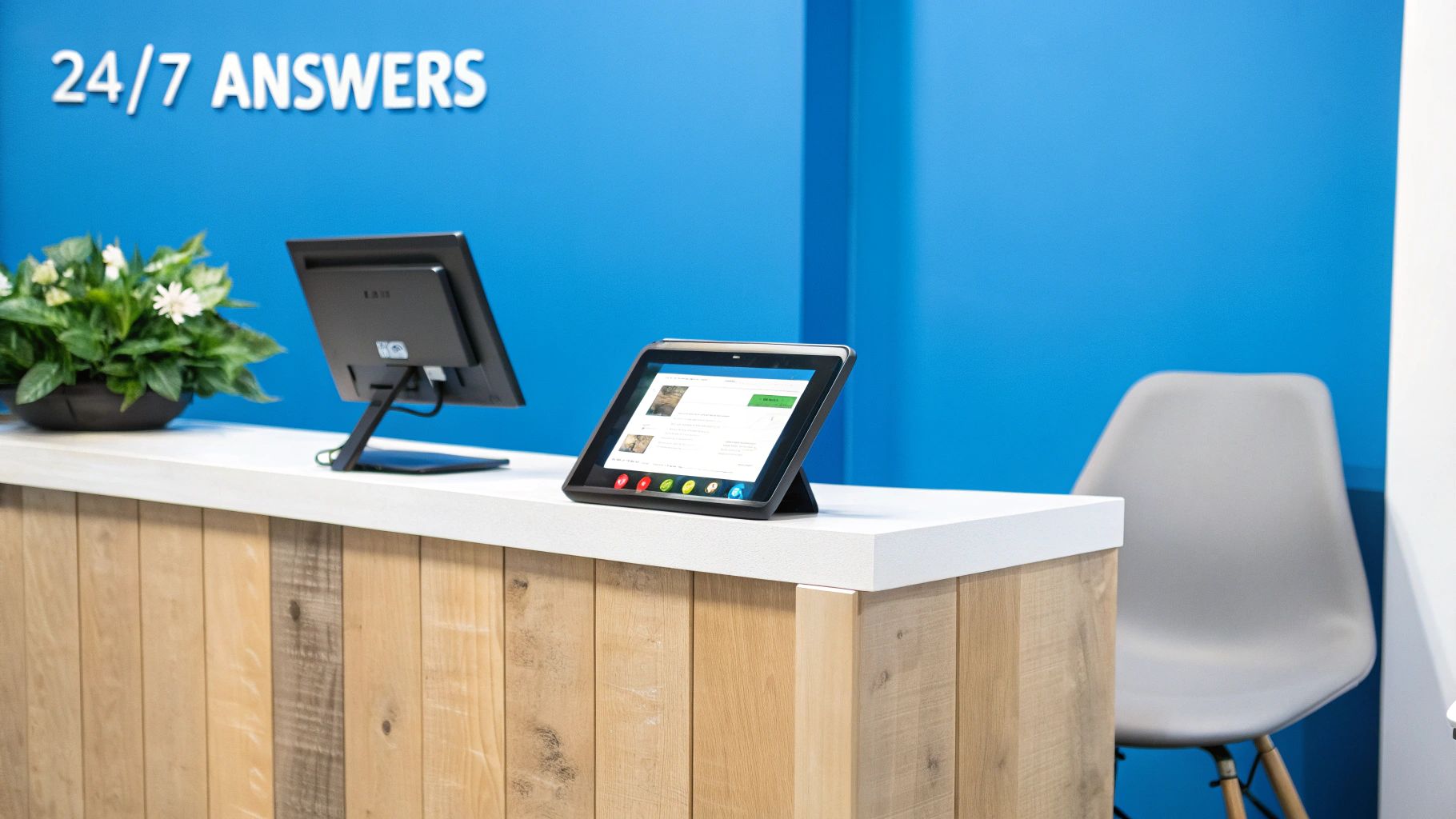
Picture a front desk that never sleeps, never takes a coffee break, and never calls in sick. That’s the core idea behind an AI receptionist. This isn't your parents' answering machine; it's a sophisticated system built on conversational AI that engages with callers in a surprisingly natural and helpful way.
This technology hits a major pain point for small businesses head-on: the dreaded missed call. We all know what happens when a potential customer calls and hits voicemail. They don't wait for a callback—they just hang up and dial your competitor. An AI receptionist stops that from happening by giving every caller an immediate, professional response.
The Problem with the Old Way of Doing Things
For decades, small business owners had two choices: hire a full-time receptionist or cross their fingers and hope voicemail was enough. A human receptionist is wonderful, but they come with a hefty salary, benefits, and can only handle one call at a time during set business hours. And voicemail? It just creates a delay, and today's customers have zero patience for that.
An AI receptionist bridges this gap perfectly. It delivers the instant service customers expect at a tiny fraction of the cost of a full-time employee, making sure every lead is captured and every client feels heard.
This move toward automated, instant communication isn't just a fleeting trend; it's becoming a fundamental part of running a modern business. The market for virtual receptionists is expected to explode from $3.85 billion to $9 billion between 2024 and 2033. With an estimated 157.1 million voice assistant users in the U.S. by 2026, people are more comfortable than ever talking to AI. You can dig deeper into these market trends and their implications for small businesses.
How an AI Receptionist Works in the Real World
Let's look at a local HVAC company. In the past, an emergency call about a dead furnace at 10 PM would go straight to a generic voicemail box. That frantic homeowner isn't waiting around; they're immediately dialing the next company on Google.
Now, after setting up an AI receptionist, that 10 PM call gets answered instantly.Caller: "Help! My furnace is out and it's freezing in here!"AI Receptionist: "I understand this is an emergency. I can schedule a priority visit for you. What is your address?"The system recognizes the urgency, collects their name and address, and schedules a priority service visit for 8 AM the next morning. The customer hangs up relieved, and the HVAC company has a confirmed job waiting for them before their competitors have even had their morning coffee. That’s the real-world difference between losing business and building a loyal customer for life.
The Real-World Benefits That Unlock Business Growth
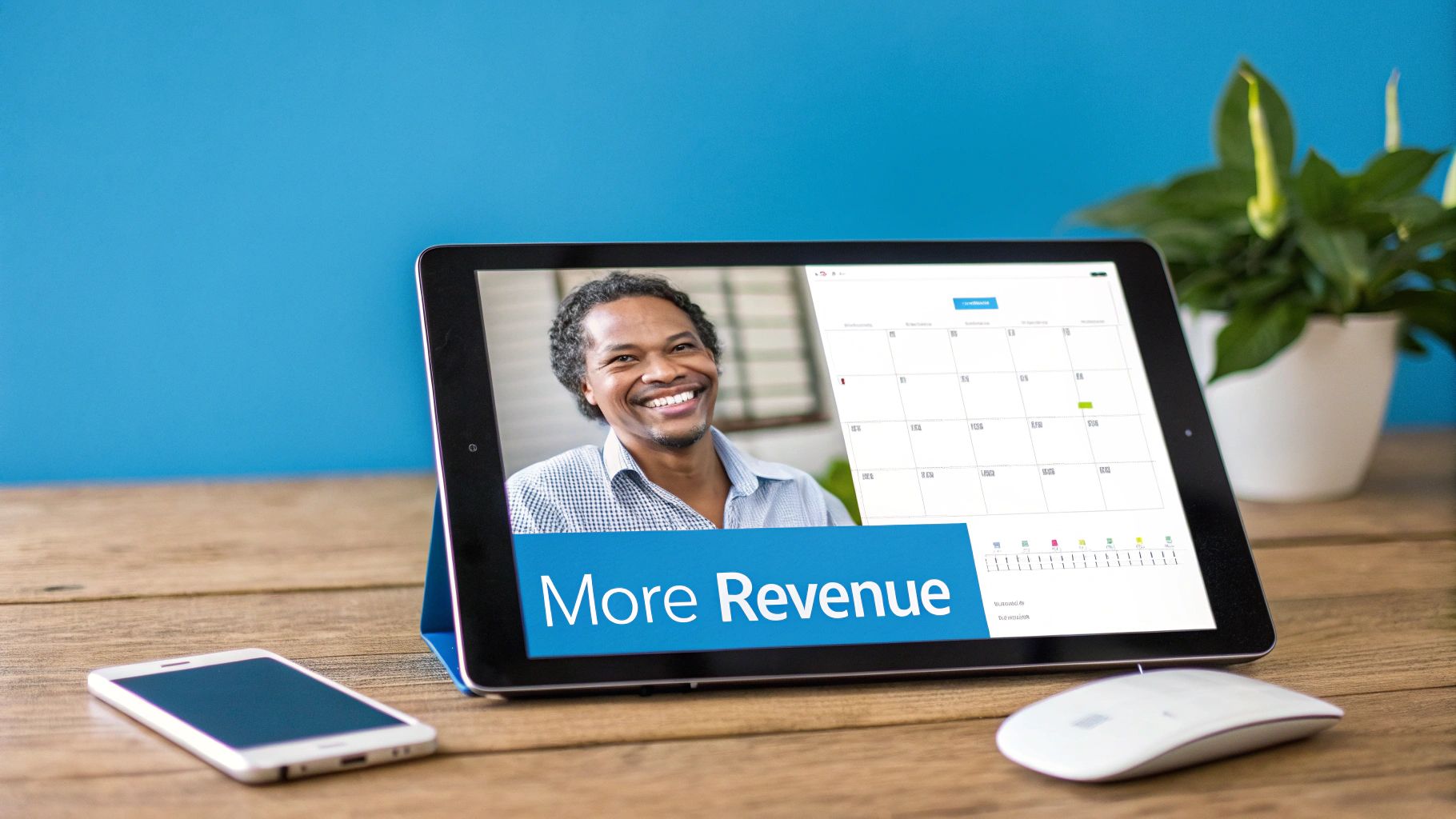
Bringing an AI receptionist into your small business isn't just about getting new software; it's about seeing real, tangible results. The true value shows up on your bottom line—in how it boosts your revenue, slashes your costs, and strengthens your customer relationships. These aren't just ideas, but measurable improvements that genuinely push your business forward.
At the end of the day, this technology succeeds because it turns missed opportunities into money in the bank. It also shrinks your operational costs and helps build a professional image that keeps customers coming back.
Capture More Revenue Around the Clock
Every single call you can't answer is a potential customer you just handed to a competitor. It’s that simple. An AI receptionist acts as your always-on sales assistant, working 24/7 to make sure that never happens. It answers every call, qualifies leads based on the rules you set, and books appointments, even long after you've closed for the day.
For example, a boutique real estate agency can program its AI to ask callers, "Are you looking to buy, sell, or rent?" and "What is your desired budget range?" Based on the answers, the AI can forward high-value buyer calls directly to an agent's cell phone while scheduling property showings for other inquiries. That small change added thousands in potential revenue to their pipeline. To see more real-world examples, you can check out some fascinating AI receptionist case studies.
Significantly Reduce Operational Costs
Hiring a full-time receptionist is a major investment. You're not just paying a salary; you're also covering payroll taxes, benefits, and vacation time. With the average receptionist salary easily topping $35,000 per year, that's a huge expense for a growing business. This is where an AI receptionist delivers a massive financial win.
An AI receptionist replaces a large, fixed labor cost with a small, predictable monthly fee. This can free up 80% or more of your front-desk budget, which you can then pour back into marketing, new equipment, or other activities that actually grow your business.
Instead of shelling out thousands for one person, you pay a tiny fraction for a service that can handle countless calls at once without ever needing a break. It's a game-changer for your budget.
Deliver a Superior Customer Experience
You only get one chance to make a first impression. When a potential customer calls, their experience on that first call sets the stage for everything that follows. Long hold times, confusing phone menus, or getting dumped into a voicemail box all scream "unprofessional." An AI receptionist gets rid of that friction completely.
Take a busy hair salon, for instance. Previously, they were constantly interrupting a client's cut to answer the phone. Now, their AI receptionist handles all booking inquiries.Caller: "Hi, I'd like to book a haircut for next Tuesday."AI: "Certainly! We have openings at 10:00 AM and 2:30 PM. Which one works for you?"It books, reschedules, or answers questions without any wait. That kind of smooth, professional service makes clients feel valued and keeps them loyal.
Calculating the ROI of Your AI Receptionist
Bringing an AI receptionist into your small business isn't just about modernizing your operations—it's a serious financial move. When you look past the monthly fee and really dig into the numbers, the return on investment (ROI) becomes incredibly clear. You're essentially turning a fixed front-desk expense into an asset that actively generates revenue.
The math behind it is refreshingly simple. You just weigh the direct savings from lower labor costs against the new income you gain from capturing opportunities that used to slip through the cracks. It's a formula that makes the value proposition hard to ignore.
Breaking Down the Financial Impact
Let's put this into a real-world context to see how the numbers stack up.
Imagine a local dental practice with a full-time receptionist earning $3,500 per month. They decide to switch to an AI receptionist service, which costs them $400 per month. Just like that, they've pocketed an immediate $3,100 in savings.
But that's only half the story. In its first month, the AI system handles every single call that comes in after hours or when the main line is busy. It ends up booking 10 new patient appointments that otherwise would have gone to voicemail. If we say each new patient is worth about $500 to the practice over their lifetime, that's another $5,000 in brand-new revenue.
The total monthly gain is clear:($3,100 in labor savings) + ($5,000 in new revenue) = $8,100 per month.
This simple scenario shows just how fast this kind of investment pays for itself—and then some. The technology doesn't just cut your overhead; it actively finds and captures business for you.
Quantifying Your Savings and Growth
This isn't a one-off example; this model works for almost any small business that relies on phone calls. Industry data consistently shows that an AI receptionist can slash front-desk labor costs by a staggering 80–95%. Even a part-time human receptionist might run you $1,200 per month before you even factor in taxes and benefits.
On the growth side, some businesses report capturing up to 30% more qualified leads and seeing a 15x ROI. You can dive deeper into these cost-saving statistics to get a feel for what’s possible.
The best part is that you can find a plan that fits your specific call volume and budget. Take a look at a breakdown of AI receptionist pricing options and you'll see how a small monthly investment can deliver a huge financial upside. It’s all about changing your perspective—your front desk isn't just a cost center anymore. It’s your new growth engine.
Key Features and Industry-Specific Use Cases
Not all AI receptionists are created equal. A truly effective one goes way beyond just answering the phone—it should feel like a core part of your team. The goal is to find a system with features that solve your real, day-to-day problems and actually help you grow.
The best platforms are built to handle the messy reality of a busy small business without needing constant hand-holding. They just work, making sure your front desk runs like a well-oiled machine, even when you're swamped.
Core Features Every Business Should Look For
Before we get into specific industries, there are a few non-negotiable features that every small business can benefit from. Think of these as the foundation of any good AI receptionist service.
- 24/7 Call Answering: This is the big one. It means every call gets answered instantly, whether it's at 3 AM on a Sunday or during your lunch break. No more missed opportunities because you couldn't get to the phone.
- Intelligent Call Routing: The system should be smart enough to screen callers with a few custom questions. For example, a gym can program its AI to ask, "Are you calling about membership or personal training?" It can then forward a "personal training" lead to a sales specialist's phone while answering membership questions automatically.
- Automated Appointment Scheduling: By plugging directly into your calendar (like Google Calendar or Acuity), the AI can book, reschedule, or cancel appointments based on your live availability. This is a massive time-saver.
- CRM Integration: This is a game-changer for organization. The AI can automatically create new contacts, log call notes, and update client records in your CRM. Your customer data stays fresh without you lifting a finger.
So how do these features actually translate into more money in your pocket? It's a simple flow of saving on labor costs while capturing more revenue.
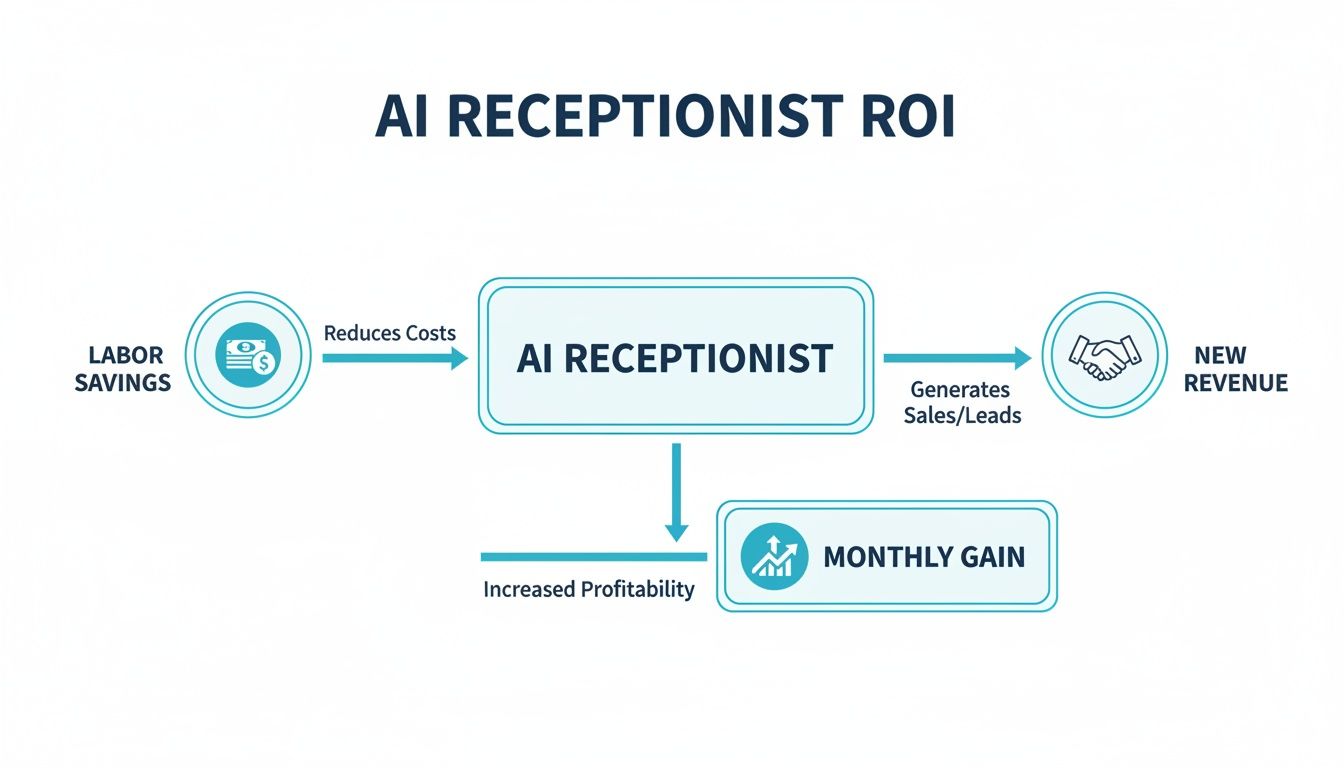
This process shows how cutting down on costs and grabbing new opportunities work together to give your business a serious financial boost each month.
How It Works in the Real World: Industry Examples
This is where an AI receptionist really starts to shine—when its features are put to work solving the unique problems of different industries. It stops being just a cool tool and becomes a genuine strategic advantage.
For Home Services (Plumbers, Electricians, HVAC)Imagine a frantic homeowner calls at 2 AM with a burst pipe. The AI receptionist instantly recognizes it's an emergency, calmly collects the address and the details of the problem, and automatically sends an alert to your on-call technician. It even schedules a follow-up for the next morning. A middle-of-the-night crisis is smoothly converted into a paying job.
For Healthcare Clinics (Dental, Medical)A HIPAA-compliant AI receptionist can be a lifesaver for a busy dental clinic. It can book new patient cleanings, send automated text reminders to cut down on no-shows, and answer common questions like, "Do you accept Delta Dental insurance?" This frees up your front-desk staff to give their full attention to the patients who are right there in the office.
Here's a powerful stat: AI receptionists can handle a virtually unlimited number of calls at once, so you never have a bottleneck during peak hours. Healthcare practices that have adopted them often report around a 30% bump in administrative efficiency thanks to automated scheduling and patient intake.
For Professional Services (Law Firms, Accounting)An accounting firm's AI can act as a screener for new business. It asks a few qualifying questions like, "Is your business an LLC or S-Corp?" and "Are you looking for bookkeeping, tax preparation, or both?" Based on the responses, it can book promising prospects directly into a partner’s calendar for a consultation. This makes sure your top people are only spending their valuable time on high-potential leads.
These scenarios aren't just hypotheticals; they show how a smart AI system can adapt to your specific workflow. To get a better sense of how the technology can be shaped for your business, you can explore these solutions for various business industries.
How to Choose and Implement Your AI Receptionist
Okay, so you're ready to bring an AI receptionist on board. Getting this right isn't about picking the one with the flashiest features—it's about finding the right fit for your team and making the rollout a breeze.
Think of it like hiring a new team member. You wouldn't just hire the first person who walked in; you'd check their references and make sure they have the right skills for the job. We'll walk through exactly how to do that, from picking a vendor to flipping the switch.
Your Vendor Evaluation Checklist
When you start looking at different AI receptionist for your small business options, it's easy to get lost in the marketing hype. The key is to cut through the noise and focus on what actually matters for your day-to-day operations.
This checklist will help you ask the right questions and compare vendors apples-to-apples.
AI Receptionist Vendor Evaluation Checklist
Ultimately, choosing a vendor isn't just about the software; you're looking for a partner. The right platform should feel like a natural extension of your team, one that you can rely on to handle the front lines flawlessly.
A Simple 4-Step Implementation Plan
Once you've picked your provider, getting started should be straightforward. A good plan gets you from signup to a fully functioning system without the headaches.
Here’s a simple 4-step roadmap to guide you.
Define Your Primary Goal: Before you touch any settings, ask yourself: what’s the #1 problem we need this to solve? Is it capturing all those missed after-hours calls? Or is it freeing up your staff from booking appointments all day? Nailing this down first makes every other decision easier. For example, a roofer's primary goal might be, "Capture and qualify all storm damage leads after 5 PM."
Map Your Customer Journeys: Think through how you want different callers to be handled. A potential new client shouldn't get the same greeting as an existing customer who needs help. Sketch out these simple pathways so you can set up the AI to route calls intelligently. You can learn more about how AI receptionists integrate with popular CRM systems to make this flow even smarter.
Configure and Test Your Scripts: Now for the fun part. Work with your provider to write the scripts your AI will use. The goal is to sound helpful and human, not like a robot reading a manual. Before you go live, have your team call in and pretend to be customers. Run through a few common scenarios to iron out any kinks. For instance, have someone call pretending to be a new customer and another call pretending to reschedule an existing appointment.
Go Live and Monitor Performance: Once you're happy with the tests, it’s time to launch. For the first couple of weeks, keep a close eye on the analytics and call logs. This real-world data is gold—it will show you exactly where you can tweak a script or adjust a call route to make the experience even better.
Ready to Upgrade Your Front Desk?
We've walked through how an AI receptionist for a small business isn't some far-off concept anymore—it's a real tool that helps you grow. It's about more than just technology; it's about saving real money, seizing every opportunity, and giving your customers the fast, professional service they've come to expect.
If there's one thing to remember, it's this: you simply can't afford to let calls slip through the cracks. In today's market, every missed call is a potential customer walking away.
Want to see what I mean? Go ahead, take a small, practical step right now. Pull up your call log from last week. How many of those calls went straight to voicemail? Each one was a missed conversation.
Now, picture turning every single one of those into a booked appointment, a solid sales lead, or just a happy customer who feels heard. That's the immediate, powerful impact an AI receptionist brings to the table.
It’s about converting those missed chances into real revenue and building a reputation for reliability, one answered call at a time. This is your opportunity to stop leaving money on the table and start running a smarter, more customer-centric business.
Frequently Asked Questions
Jumping into any new technology brings up a lot of questions. Let's tackle some of the most common ones we hear from small business owners who are curious about AI receptionists.
Will an AI Receptionist Annoy My Customers by Sounding Robotic?
That’s a fair question, and probably the biggest worry people have. The good news is that today's conversational AI is worlds away from the clunky, robotic voices you might be imagining. Modern systems are designed to understand not just words, but also context and tone, which makes the conversation feel surprisingly natural and human.
You can even program it with your brand's specific personality—whether that’s formal and professional or warm and friendly.
The real secret is blending automation with a human escape hatch. A well-designed system knows its limits. When a caller has a complex or sensitive issue, the AI can instantly transfer the call to a real person. You get all the efficiency without ever trapping a customer in a frustrating loop.
Is My Business Too Small for This Technology?
Not at all. In fact, you could argue that AI receptionists make the biggest difference for smaller businesses. If you're a solo operator or have a tiny team, just one missed call could be a huge loss of revenue. This tech is built to scale, with flexible pricing that works for just about any budget.
Think of it this way: instead of paying a full-time salary, you're looking at a small monthly subscription. It's a genuinely affordable way to get the same 24/7 phone coverage that your bigger competitors have, leveling the playing field without the enterprise-level price tag.
How Does an AI Receptionist Integrate with My Existing Tools?
This is where the magic really happens. A good AI receptionist isn't a standalone tool; it’s designed to plug right into the software you already use to run your business. This creates a smooth, automated workflow that saves a ton of time.
Here are a few common examples:
- Calendars: It can connect directly to your Google Calendar or Outlook to see your real-time availability and book appointments for you—no more back-and-forth emails.
- CRMs: It can automatically log call details, create new leads, and update customer profiles in systems like HubSpot or Salesforce. A call from a new number can trigger the AI to create a new "Lead" contact in your CRM, complete with a note about what they called for.
This kind of integration kills manual data entry. The AI handles the admin work behind the scenes, so your records are always up-to-date and all your systems are working together perfectly.
Ready to see how an AI receptionist can transform your front desk? Recepta.ai offers a powerful blend of AI and human support to ensure you capture every opportunity, 24/7. Discover how much you can save and grow by exploring our solutions.