

Boost Leads with a realtor virtual receptionist

Think of a realtor virtual receptionist as your ultimate front desk, one that never sleeps, takes breaks, or misses a call. It's a specialized service, usually powered by smart AI, that acts as a 24/7 first point of contact for your real estate business. It does so much more than just take messages; it actively captures and qualifies leads, schedules appointments, and handles routine client questions so you never lose a hot lead because you were tied up in a closing or showing a property after hours.
Your 24/7 Digital Front Desk For Real Estate

In real estate, timing is everything. A single missed call can easily be a missed commission check. The real struggle for most agents isn't finding leads—it's responding to them instantly while juggling client meetings, property tours, and mountains of paperwork. This is exactly where a realtor virtual receptionist becomes your most valuable player.
Let’s paint a picture. It’s 8 PM on a Tuesday, and you’re in the middle of a tense negotiation for a client's offer. Your phone buzzes with a call from a new Zillow lead who wants to see one of your listings now. Instead of that call going to a voicemail they’ll likely ignore, your virtual receptionist picks up immediately. It gathers their details, confirms the property address, and books a showing for the next day right into your calendar. Problem solved.
The Modern Agent’s Strategic Advantage
This isn't some generic answering machine. A purpose-built system like this is designed to understand the specific rhythms and needs of a real estate professional. It knows the difference between a casual browser on your website and a pre-approved buyer calling about a specific address. If you're curious about how this digital presence works around the clock, looking into a dedicated chatbot for real estate can offer some great insights.
A virtual receptionist essentially clones your professional presence, ensuring every potential client receives a prompt, professional, and helpful response, regardless of the time of day. This consistency builds trust and stops those high-value leads from slipping through your fingers.
This technology isn't just a niche trend; it's exploding. The global virtual receptionist market is expected to hit a staggering USD 10.85 billion by 2035. That growth is fueled by businesses like yours that need to automate without losing that personal touch. North America is leading the way, with real estate firms investing heavily in these solutions to manage the constant flow of inquiries.
This shift shows that a virtual assistant is no longer a "nice-to-have" but a core part of running a modern, successful real estate operation. You can learn more about how this works by checking out our guide on the benefits of a real estate answering service.
Traditional Receptionist vs Realtor Virtual Receptionist
To truly grasp the difference, let's look at a side-by-side comparison. It quickly becomes clear how a virtual receptionist offers a more flexible and cost-effective solution tailored for the on-the-go nature of real estate.
As you can see, the virtual model provides unparalleled flexibility and coverage at a fraction of the cost. It’s a modern solution for the modern agent who needs to be responsive and agile to compete effectively.
Essential Features That Drive Agent Productivity
A great virtual receptionist for real estate does a lot more than just answer the phone; it becomes a core part of your business engine. The best systems are packed with features designed to solve the real, everyday headaches agents deal with, turning that constant stream of calls into organized, ready-to-go opportunities. Let's break down the features that truly make a difference.
24/7 Call Answering and Lead Capture
The real estate market doesn't clock out at 5 PM, and neither should your lead capture. Think about it: a motivated buyer in another time zone stumbles across your listing on Realtor.com at 2 AM. Without a 24/7 service, that call goes to voicemail—a black hole where good leads often go to die.
A realtor virtual receptionist picks up every single time, giving callers a professional and helpful experience, no matter the hour. It doesn't just take a message. It actively talks to the caller, grabs their contact info, and finds out exactly what they're interested in. You wake up to a qualified lead, not just another missed call.
Intelligent Lead Qualification
Let's be honest, not every call is a golden opportunity. A smart virtual assistant acts as your front line, sifting the serious buyers and sellers from the "just looking" crowd. It does this by asking the right questions from the get-go.
For instance, when a potential buyer calls about your listing at 123 Main Street, the system can ask:
- "Great choice! Just to help the agent prepare, are you already working with another agent?"
- "To make sure you're ready to make an offer, have you been pre-approved for a mortgage?"
- "And what's your ideal timeframe for moving?"
Getting answers to these questions upfront is huge. It instantly qualifies the lead, letting you know who to call back first and where to focus your energy for the best results.
Seamless Appointment Scheduling
The endless email chain just to book one showing is a massive time-waster. A virtual receptionist puts an end to that chaos by plugging directly into your calendar.
This is what it looks like in practice—a client can book a time with you in a single tap.
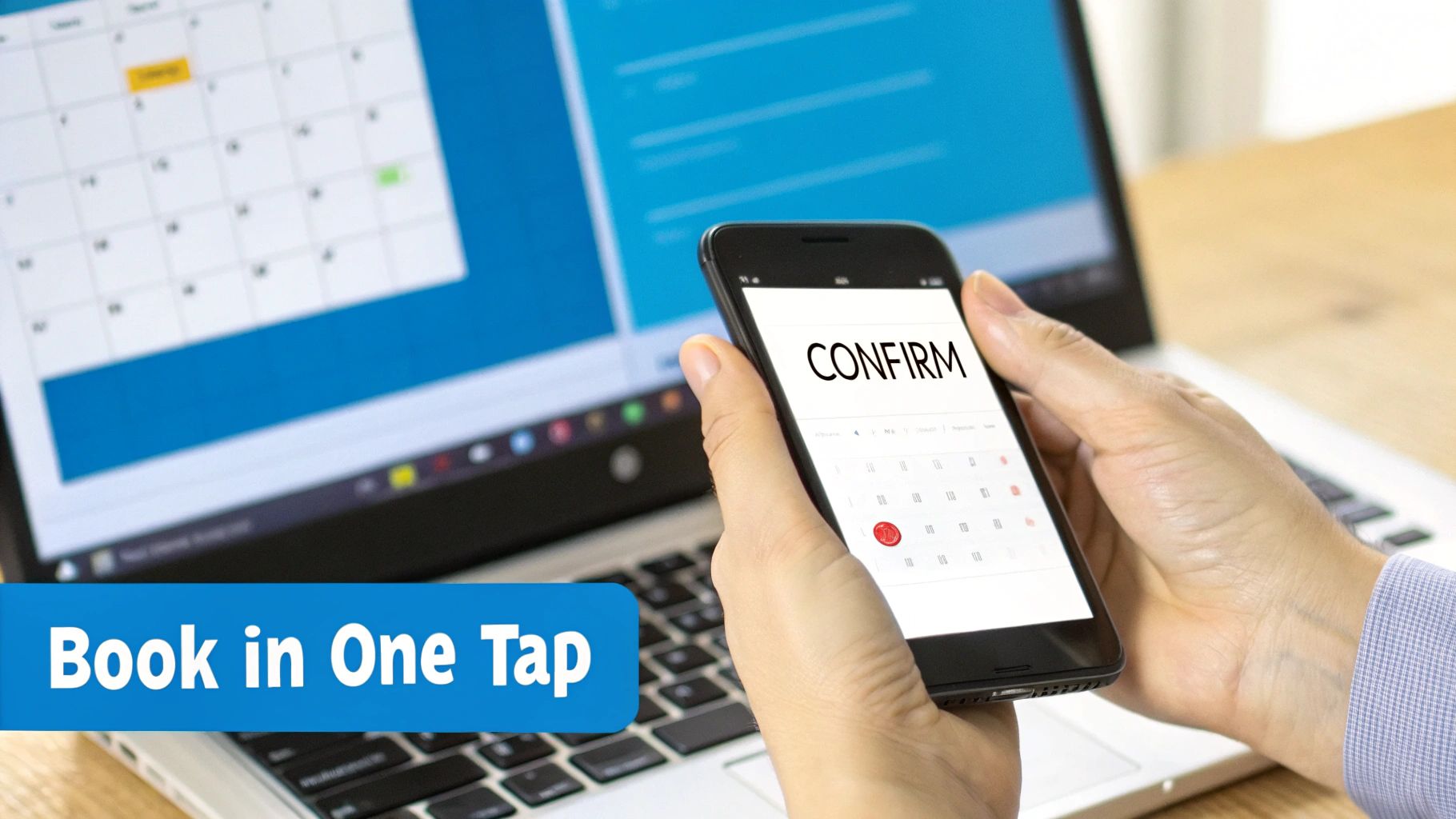
The system sees your real-time availability and empowers callers to schedule a showing, a consultation, or a property valuation right there on the call. For example, a caller can say, "I'd like to see 123 Main Street," and the receptionist responds, "Of course. The agent has openings tomorrow at 10 AM and 2 PM. Which works best for you?" Once booked, it sends a confirmation to both you and the client. No more phone tag.
Automatic CRM Integration
Manually punching lead info into your CRM is not only boring, but it's also where mistakes happen. This is where a seamless integration changes everything. After a call ends, the virtual receptionist automatically creates a new contact in your CRM, whether you use Follow Up Boss, LionDesk, or something else.
A full summary of the call, including how the person answered those qualifying questions, gets logged right into their contact record. This means no more manual data entry, no more leads falling through the cracks, and all the context you need before you even pick up the phone to call them back.
For agents wanting to stay on top of their game, checking out the best AI for real estate agents can uncover even more ways to enhance your setup. And if you're curious how this kind of tech helps beyond real estate, our guide on the AI receptionist for small business is a great read.
Ultimately, these features work in concert to create a powerful, automated system. It saves you time, makes sure you never miss an opportunity, and frees you up to do what you do best: close deals.
How a Virtual Receptionist Performs in the Real World
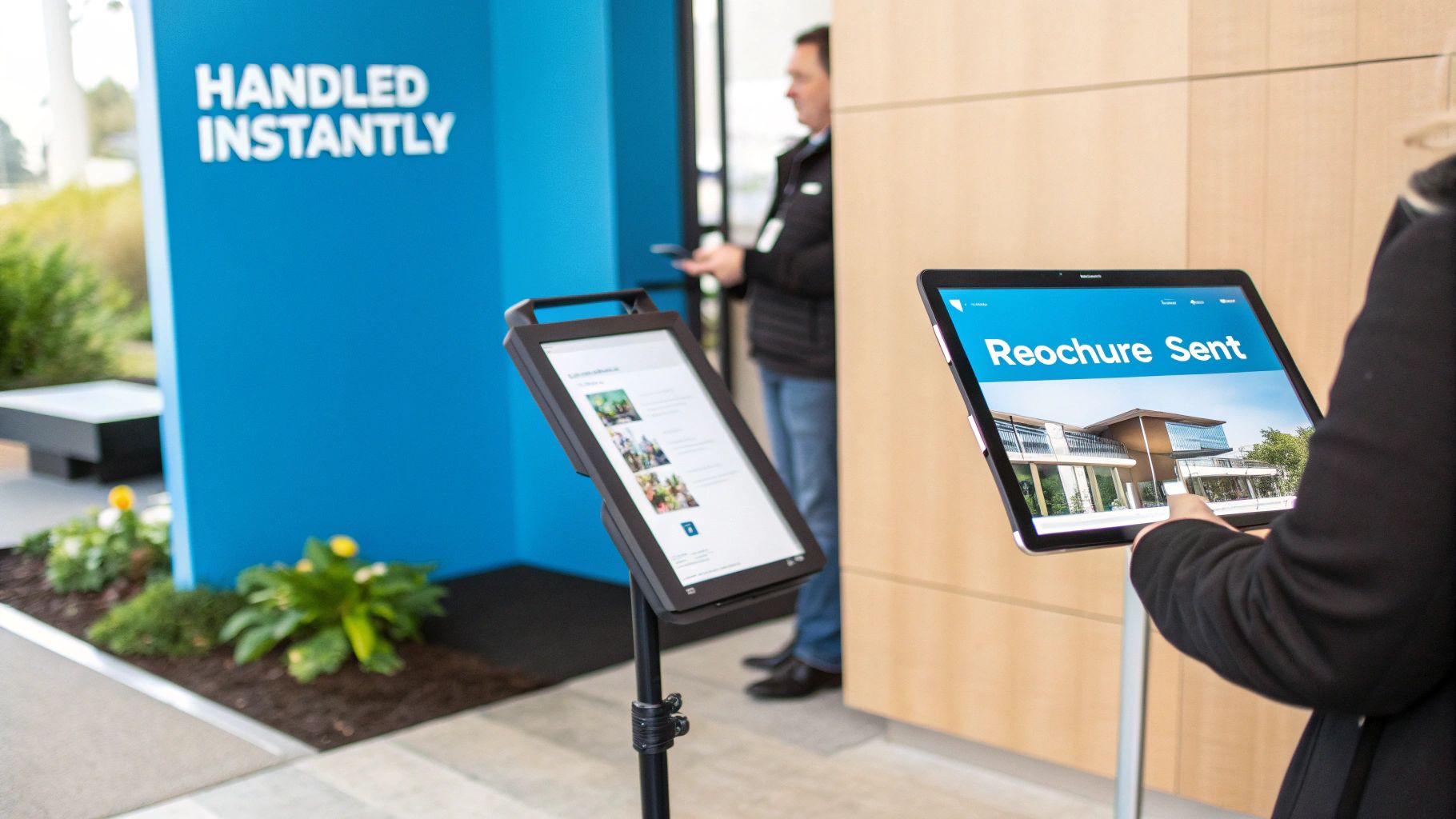
The list of features is great, but the real test for any realtor virtual receptionist is how it handles the pressure of day-to-day business. Let’s walk through a few common scenarios every agent knows all too well and see how this kind of tool can turn a frantic moment into a perfectly handled opportunity.
Scenario 1: Managing the Open House Rush
The Problem: You’re hosting a busy open house. People are walking through the door, and your phone is blowing up. Callers want the address again, they're asking about the school district, or they're trying to book a private showing for later. If you answer, you ignore the buyers right in front of you. If you don't, you lose a lead. It’s a classic no-win situation.
The Solution: This is where a virtual receptionist steps in. It fields every single call, instantly understanding the context.
- It answers common questions about the property—"Yes, the HOA fee is $250 per month and it covers landscaping and pool maintenance"—by pulling from a script you've approved.
- It gathers contact info from people who say they're on their way, so you have a clean list for follow-up.
- It sends a digital brochure via text right before hanging up, giving the caller all the property highlights in a beautiful format.
The Benefit: You get to stay fully present with the people at the open house, giving them your undivided attention. Meanwhile, your virtual receptionist makes sure not a single phone lead slips through the cracks. You end the day with a pre-qualified list of new contacts, all without missing a beat.
Scenario 2: Handling the "Hot New Listing" Flood
The Problem: You’ve just listed a fantastic property, and your phone immediately starts ringing off the hook. You’re trying to manage calls from dozens of eager buyers and other agents, and it's impossible to keep up. Good prospects hit your voicemail or a busy signal, which is the fastest way to lose momentum.
The Solution: The virtual receptionist acts as your professional front desk, managing the influx with perfect calm. Instead of callers getting a hurried or frustrated agent, they get a polite, efficient response.
The system can tell callers, "This property is generating a lot of interest! The first available showing times are on Saturday. Would you prefer 10 AM or 11:30 AM?" That chaotic flood of calls is instantly organized into a tidy schedule of qualified appointments.
The Benefit: You stop losing leads to your voicemail box and project an image of total professionalism. Every interested person is logged, and your calendar fills itself, letting you ride the wave of that initial listing buzz.
Scenario 3: Nurturing Your Database with Outbound Calls
The Problem: Everyone knows their past client database is a goldmine for repeat business and referrals, but who has the time for consistent outreach? The task of calling hundreds of people just to check in or share a market update always seems to fall to the bottom of the list.
The Solution: A smart virtual receptionist can do more than just answer the phone; you can task it with making outbound calls. For example, it can reach out to your sphere with a personalized message: "Hi [Client Name], this is [Agent Name]'s assistant. A home just like yours sold on Elm Street for a record price, and we wanted to offer you a free home valuation. Are you interested?" If they say yes, it can book that appointment right into your calendar. To get deeper into this strategy, it's worth reviewing some expert call handling best practices.
The Benefit: You stay top-of-mind with the most important people in your network, effortlessly generating seller leads from the contacts you already have. It’s a completely automated way to mine for gold.
Is a Virtual Receptionist Actually Worth the Money? Let's Run the Numbers.
When you're looking at a tool like a virtual receptionist, the real question is simple: does it make you more money than it costs? It's easy to get lost in the features, but the smart move is to look at the financial impact. This isn't just another expense; it’s an investment in a system designed to deliver a clear, measurable return.
The first place to look is a straight-up cost comparison. Hiring a traditional, in-house receptionist involves way more than just their hourly pay. You have to factor in salary, benefits, payroll taxes, sick days, and vacation time, not to mention the overhead for a desk, computer, and office space. All in, that can easily climb to $40,000 or more a year for just one person working a standard 40-hour week.
A virtual receptionist flips that model on its head. Instead of a massive fixed cost, you’re looking at a predictable monthly fee. You can check out some of the flexible pricing plans to see how it works. This approach ditches the huge financial weight and long-term commitment of a W-2 employee for something much more nimble.
From Missed Calls to Closed Deals
Now for the exciting part. Let's see what happens when you start capturing the leads that used to slip through the cracks and go to voicemail. Think about it: what if you snagged just two extra, qualified buyer leads every month?
Let’s do some quick, back-of-the-napkin math using conservative numbers:
- Average Home Price: $400,000
- Average Commission Rate: 2.5%
- Commission Per Deal: $10,000
If your virtual receptionist helps you close just two of those extra deals over the course of a year, that's an additional $20,000 in your pocket. Suddenly, a small monthly expense doesn't just pay for itself—it becomes a serious revenue-generating machine.
The Hidden Payoff: Your Time and Reputation
Beyond the hard cash, there's a "soft" ROI that's just as important, even if it's tougher to track on a spreadsheet. Every single call that gets answered professionally reinforces your brand and builds trust from that very first "hello." A great first impression leads to happier clients, better reviews, and—you guessed it—more referrals.
But the biggest soft return? You get your time back. By handing off the constant interruptions and administrative busywork, you reclaim dozens of hours every month. That’s more time for what really moves the needle: negotiating, showing properties, and closing deals.
This shift is why the market for live virtual receptionist services is exploding, projected to hit USD 1.5 billion in 2024. As agents and teams juggle calls from different time zones, these services provide that polished, professional touch without the traditional staffing headaches. You can dive deeper into this trend in the full market growth analysis.
At the end of the day, the ROI isn't just about saving money. It's about creating more opportunities to make it.
A Step-by-Step Implementation Guide
Getting started with a virtual receptionist might seem like a huge technical project, but it’s actually more like a simple afternoon to-do list. Let's walk through how to get it set up and working for you, step by step.
The secret to a smooth rollout isn't about the tech—it's about the strategy. If you take a moment to plan before you flip the switch, you can make sure the system works exactly how you need it to from the get-go. This way, you get the biggest return on your investment without any headaches.
This simple flow chart breaks down the core thinking behind a successful launch.
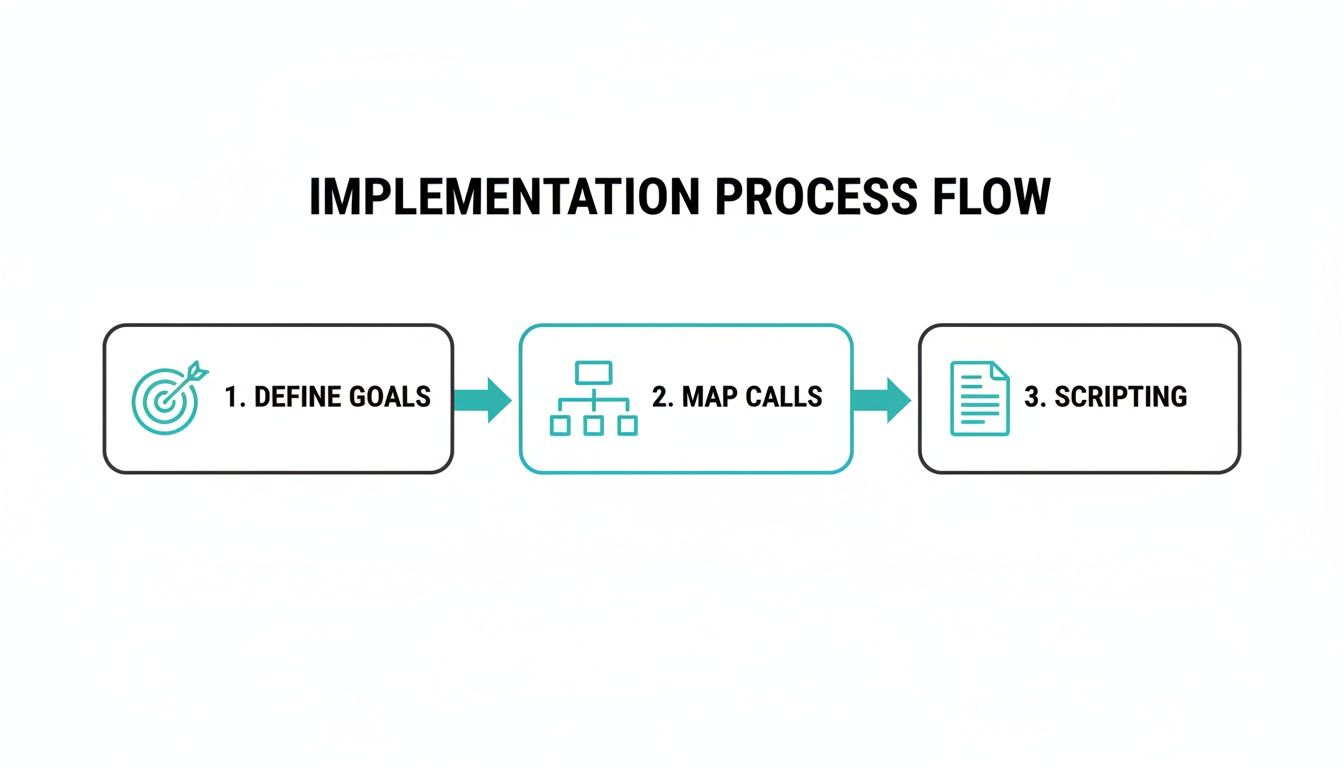
As you can see, a successful setup is all about planning before you even touch the software.
Your Quick-Start Checklist
Getting your new virtual front desk online is easier than you think. Just follow these five steps to make sure you’ve covered all the bases for a seamless transition.
- Define Your Primary Goal: First, figure out your "why." Are you aiming to capture every single lead from your Facebook ads, or is your main mission to pre-qualify every incoming caller before they ever hit your phone? Pinpointing your top priority will shape every other decision you make.
- Map Your Current Call Flow: Grab a pen and paper and sketch out what happens when someone calls you right now. For example: Call comes in -> If I'm busy, it goes to voicemail -> I listen to VM 2 hours later -> I call back, they don't answer. Knowing where things fall apart shows you exactly where your new receptionist will have the biggest impact.
- Craft Custom Scripts: This is your chance to inject your personality into the system. You’ll want different scripts for different callers. For a potential buyer, the script should ask key qualifying questions like, "Have you already been pre-approved for a mortgage?" A seller's script, on the other hand, might ask, "Are you currently working with another agent?"
- Connect Your Tech Stack: True automation happens when your tools talk to each other. Link your virtual receptionist to your CRM, like Follow Up Boss, and your calendar (think Google Calendar). This simple step means new leads and appointments are automatically logged, saving you from tedious data entry.
- Establish Smart Escalation Paths: Not every call should be handled by an AI. Decide when a call absolutely needs a human. For instance, you can set a rule that if a caller says the word "offer" or mentions an existing client's name, the call is transferred directly to your cell phone.
By focusing on these five steps, you're not just turning on a service; you're building a customized communication system that works for your specific business needs and client types.
This kind of strategic thinking is becoming standard practice. The virtual receptionist market is on a tear, projected to hit USD 9 billion by 2033. That’s a massive 134% growth spurt, which shows just how many businesses are realizing these tools are no longer a luxury—they’re essential. You can dig into the AI receptionist market trends to see why this is such a smart move for your business.
Of course. Here is the rewritten section with a more human, expert tone:
Common Questions About Virtual Receptionists for Realtors
Even with all the benefits laid out, I get it—bringing any new system into your real estate business feels like a big step. It’s smart to have questions. Let's tackle some of the most common concerns I hear from agents when they're thinking about using a realtor virtual receptionist.
Will It Sound Robotic to My Clients?
This is probably the number one worry. We've all been trapped in those frustrating, clunky phone menus, and the last thing you want is for a million-dollar client to hang up in annoyance. The good news is that today's conversational AI is a completely different beast. It's designed to sound natural, warm, and genuinely helpful.
Think of it less like a robot and more like a well-trained assistant who follows your exact instructions. You can customize the scripts to inject your own brand voice into every call. For instance, instead of a generic "How can I help you?", your system could say, "Thanks for calling Main Street Realty! Are you calling about one of our listings, or would you like to schedule a home valuation?" That small, personalized touch immediately makes callers feel like they've reached the right place.
How Does It Connect with My Existing Software?
No agent has time for a new tool that doesn't play nicely with the systems they already use. A good virtual receptionist is built to be the central hub for your communications, not just another siloed app.
Connecting everything is usually a simple, one-time setup. It can link directly with the tools you live in every day:
- Your CRM: Whether you're a Follow Up Boss power user or run your business on LionDesk, new lead details and call notes are logged automatically. No more copy-pasting.
- Your Calendar: It syncs seamlessly with Google Calendar or Calendly to book showings and appointments right into your open slots, avoiding any double-bookings.
This means a call can come in, a lead gets qualified, and an appointment is on your calendar—all while you're in a closing or showing a home.
Can It Handle Unique Real Estate Conversations?
Real estate has its own language. A generic receptionist might stumble when asked about contingencies, addendums, or specific HOA rules. This is where a customizable system really shines.
You can essentially "train" your virtual receptionist by building out a custom knowledge base. You can teach it:
- Specific Property Details: For your listing at 456 Oak Ave, you can load in facts like "The roof was replaced in 2022," or "The elementary school is Pine Ridge Elementary." When a caller asks, the system provides the answer instantly.
- Industry-Specific Terms: It understands the lingo and can respond intelligently.
- Different Inquiry Types: It knows how to treat a call from a pre-approved buyer differently than one from a seller who's just testing the waters.
This level of detail ensures every conversation is accurate and helpful, which only reinforces your reputation as the go-to expert in your market.
Ready to see how an AI receptionist can actually work in your real estate business? Recepta.ai is a 24/7 solution designed specifically to help you capture more leads and free up your time so you can focus on closing deals. You can try it out with a 30-day risk-free trial and see the difference for yourself. Learn more at https://recepta.ai.