
Top 10 Retail Industry KPI Metrics for Growth
Retail KPI work has matured because the industry stopped pretending one number could explain performance. Major retail guides now converge around a compact set of measures that cover revenue and conversion, customer value and loyalty, inventory and margin, and experience and fulfillment, including sales volume, conversion rate, average order value, customer retention, customer acquisition cost, inventory turnover, product margins, customer satisfaction, and return rate, as outlined in ThoughtSpot's retail KPI framework. That shift matters if you run a service-heavy retail operation, because the sale often starts before the till, on a phone call, a booking request, or a follow-up interaction.
Too many teams still track store productivity after the fact and miss the operational moments that create revenue in the first place. Retail guidance often emphasizes foot traffic, conversion, inventory, and dashboard discipline, yet leaves a clear gap around phone inquiries, appointment booking, missed-call recovery, and response quality, a gap highlighted in Improvado's retail KPI discussion. If your business depends on inbound demand, your retail industry KPI set has to connect customer contact with commercial outcomes.
That's why this list focuses on ten KPIs that move decisions. Some are classic retail measures. Some come from contact operations. Together they give you a practical operating model for home services, healthcare, legal, insurance, and multi-location teams. For ecommerce operators, Carti's Shopify KPI guide is also worth reviewing alongside the service and call-handling metrics covered here.
1. Conversion Rate
Conversion rate is where revenue meets execution. In service-led retail, I define it as: how many inbound inquiries become booked appointments, consultations, or completed sales. If calls are coming in but schedules stay half full, this KPI tells you the leak is happening before fulfillment ever begins.
The standard retail logic still applies. Conversion rate is one of the foundational measures repeated across major KPI guides because it shows whether attention turns into commercial action. For businesses that rely on phones, chat, or form fills, the same principle applies to human interactions, not just store visits or site sessions.
How to calculate it
Use a formula that matches the channel:
- Phone conversion rate: booked appointments or sales ÷ inbound answered calls
- Lead conversion rate: booked appointments or sales ÷ qualified inquiries
- Location conversion rate: booked appointments or sales ÷ total inquiries for that branch
A practical example: an HVAC business might separate emergency repair calls from estimate requests. Emergency calls should usually convert at a higher rate because urgency is already present. If you blend both together, the average hides what staff or automation need to improve.
What actually improves it
Call recordings and transcripts usually tell the truth fast. Teams with weak conversion rates often have one of four problems:
- Slow qualification: agents spend too long gathering details before offering a next step
- Weak scheduling language: the conversation stays informational instead of moving to a booking
- Poor after-hours coverage: the call comes in, nobody answers, and the customer moves on
- Inconsistent escalation: complex inquiries sit in limbo instead of getting routed cleanly
Practical rule: track conversion by call type, location, and time of day. A single blended rate hides operational problems.
A dental office, for example, may find evening calls convert better because callers are ready to commit and there's less front-desk congestion. A law firm may discover consultations rise when intake asks tighter qualification questions before handing the lead to an attorney.
For teams trying to improve close rates, better scripting matters, but only when it sounds natural. The strongest scripts remove friction, ask one commitment question at the right moment, and make the next step feel simple. Recepta's guide on sales techniques to close a sale is useful if your team needs a more structured booking conversation.
2. Average Handle Time

Average Handle Time, or AHT, tells you how long customer interactions take from start to finish, including talk time, hold time, and any after-call work. It's an efficiency KPI, but it's easy to misuse. A shorter call isn't always a better call.
In retail operations, AHT matters most when demand is uneven. A medical office that gets morning appointment spikes needs calls handled quickly enough to avoid queue buildup. A home services franchise needs a process that captures job details without forcing callers through a long interrogation.
Where teams get this wrong
The common mistake is rewarding speed alone. That usually creates rushed calls, repeat contacts, and lower booking quality. AHT should sit next to CSAT and first contact resolution, not by itself.
A better approach is to compare AHT by interaction type:
- Simple scheduling: should be fast and consistent
- Insurance or benefits questions: usually take longer
- Emergency service triage: needs speed, but not at the cost of missing critical details
- Consultative intake: can be longer if it improves fit and reduces later friction
A practical scenario: a plumbing company might find that blocked-drain calls are resolved quickly, while remodel inquiries take longer because they require more qualification. That's not inefficiency. That's process reality.
How to make AHT useful
Use call recordings and logs to identify delay points. Usually the culprit isn't conversation quality. It's a broken workflow such as switching screens, searching for appointment slots, or repeating customer details already provided.
When AHT rises, check process before blaming people.
Automatic call logging helps because it removes manual note-taking and gives you cleaner timing data. If you're evaluating AI reception or mixed human-AI workflows, AHT can also show whether routine questions are being handled upfront so specialists only spend time on higher-value interactions.
What works in practice is a balanced target. Keep simple calls short. Allow complex ones enough time to produce a real outcome. If your AHT drops but repeat calls increase, you didn't gain efficiency. You just moved the work downstream.
3. First Contact Resolution Rate
First Contact Resolution Rate measures whether the customer's issue gets solved in the first interaction. In plain terms, the caller got what they needed without calling back, waiting on a manual follow-up, or being bounced between people. That makes it one of the cleanest indicators of operational quality.
This KPI matters more than many retail operators think. A store can look productive on paper while the front line creates hidden friction. If patients call twice to schedule, if policyholders need a second conversation to confirm documents, or if a service customer gets transferred repeatedly, you're burning time and goodwill.
What good FCR looks like
A strong FCR process usually includes three ingredients:
- Fast access to information: customer history, availability, policies, or pricing
- Clear authority: the person or system handling the interaction can complete common tasks
- Smart routing: specialized issues go directly to the right person
A dental clinic offers a straightforward example. If a caller can schedule, confirm insurance basics, and receive prep instructions in one call, the business avoids a second touchpoint and the patient feels taken care of. In legal intake, good FCR may mean the firm captures essential case details and sets the next step without a callback from staff.
How to raise it without masking problems
Be careful with self-reported resolution. Teams often mark an interaction as resolved because the call ended, not because the customer was done. The cleaner way is to review repeat-contact patterns and spot-check with short post-call surveys.
You'll also need a quality standard. Recepta's article on what quality assurance means in call center operations is relevant here because FCR rises when teams audit whether the issue was handled, not just politely managed.
Field note: unresolved contacts usually point to a knowledge gap, a permissions gap, or a routing gap. Fix the system that caused the repeat call.
A pest control operator, for instance, may find that agents can answer service-area questions but not quote timing or prep expectations. That forces follow-ups. Adding those answers to the knowledge base often lifts FCR faster than more staffing does.
4. Customer Acquisition Cost
Customer Acquisition Cost, or CAC, tells you how much it costs to win a new customer. Retail KPI guides consistently treat customer acquisition cost as a core metric because it connects demand generation to profitability, not just volume, as noted in the earlier ThoughtSpot framework. For service-based retail, CAC should include marketing spend, sales effort, and the cost of handling inbound inquiries.
Operational teams often miss the full picture. Marketing can generate leads, but if calls go unanswered or intake is slow, acquisition cost rises because you paid to create demand you didn't convert.
How to calculate CAC in a service-led retail model
Use a formula that reflects your actual funnel:
- CAC: total acquisition spend over a period ÷ number of new customers acquired
Acquisition spend can include paid media, agency costs, software tied to lead capture, sales labor, and contact-handling costs if those functions are part of acquisition. The exact definition matters less than consistency. Spider Strategies recommends keeping a compact KPI set, using a mix of leading and lagging indicators, and standardizing formulas and source systems before making comparisons across teams or channels in its retail KPI guidance.
What makes CAC actionable
Segment it. A blended CAC number is rarely enough to make decisions.
- By channel: search, referral, direct, local listings, social
- By location: essential for franchise and multi-branch operators
- By service line: emergency jobs, recurring services, consultations, elective bookings
- By contact path: live answer, AI-assisted answer, voicemail recovery, web form
A practical example: a home cleaning business may find referral leads are inexpensive but inconsistent, while paid search drives volume but needs tighter intake to stay profitable. A medical practice may learn that after-hours answering captures new-patient demand that daytime staff were missing.
For the underlying math on lead economics, Recepta's article on how to calculate cost per lead helps clarify the top-of-funnel side, and this guide to ad spend returns is useful when you want to compare acquisition cost with channel performance.
5. Missed Call Rate
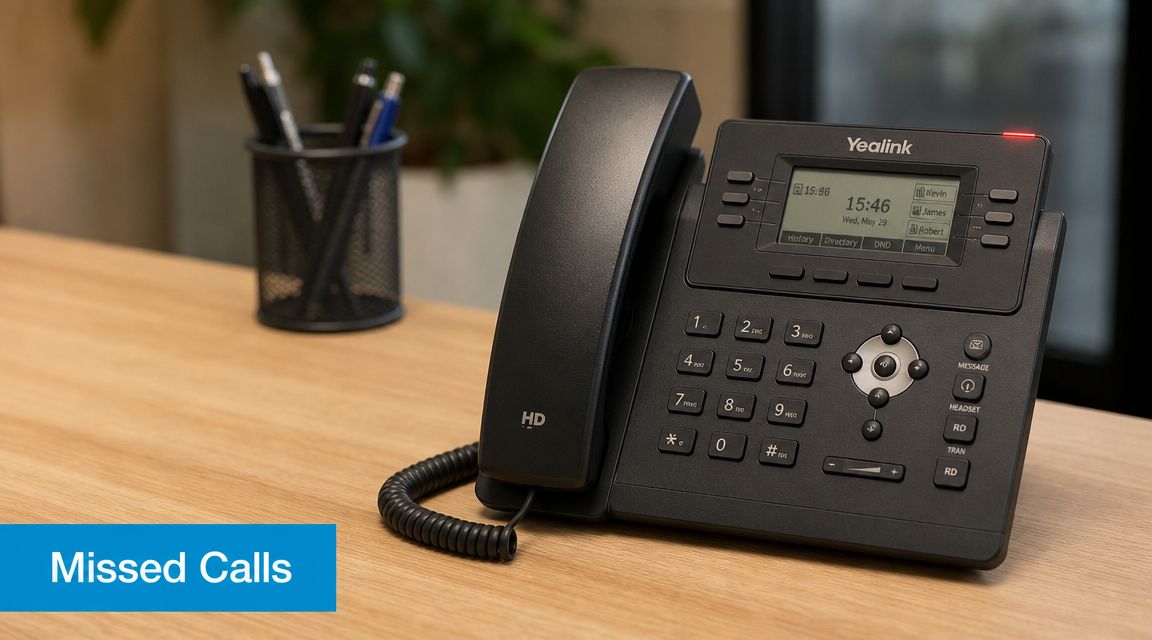
Missed Call Rate is one of the most neglected retail industry KPI measures in service-heavy businesses. That's surprising, because an unanswered call is often a lost sale, a lost appointment, or a frustrated existing customer. If you only track what happens after a customer connects, you're ignoring one of the cleanest leaks in the system.
The overlooked angle in many retail KPI articles is exactly this. Industry content often focuses on store conversion, sales per square foot, inventory turnover, and dashboard summaries, while giving far less guidance on call-answer rate, response time, lead capture completeness, and missed-call recovery. For businesses with heavy inbound inquiry volume, that's not a side issue. It's core performance.
How to use missed call data well
Start with a simple definition: unanswered inbound calls divided by total inbound calls during the same period. Then break it apart.
- By hour of day: identify staffing gaps
- By day of week: spot recurring overload periods
- By location: critical for multi-location operators
- By campaign or service line: learn which demand sources suffer most
- By new vs. existing customer intent: the response strategy may differ
A practical example: an HVAC company often gets surges during weather events. If those calls roll to voicemail, the problem isn't just service quality. It's uncollected revenue.
What usually fixes it
The solution isn't always more headcount. Often it's better routing, overflow handling, or an AI receptionist that can answer basic questions, capture urgency, and book available slots while escalating exceptions.
Missed call rate should be treated like stockout risk. If demand arrives and you can't serve it, the revenue window closes fast.
A home cleaning operator might use call pattern data to shift staffing toward weekends. A dental clinic might route routine scheduling through automation while protecting front-desk time for in-office patients. The key is to measure what customers experienced, not what the schedule said should have happened.
6. Customer Satisfaction Score

Customer Satisfaction Score, usually called CSAT, measures how satisfied customers feel after a specific interaction. It's one of the foundational KPIs repeated across retail guidance because it captures experience and fulfillment, not just output. In service-led retail, it's especially useful after calls, bookings, reschedules, and support conversations.
CSAT works best when it stays narrow. Don't ask customers to rate the entire brand if what you really want to evaluate is the appointment-booking experience. Tie the survey to a single interaction and you'll get cleaner feedback.
How to gather usable CSAT
Keep it short. One satisfaction question plus an optional comment is often enough.
Common channels include:
- SMS after a call or appointment
- Email after a service interaction
- IVR survey immediately after the conversation
A practical scenario: a medical practice might send a quick text after scheduling, asking whether the caller got the help they needed. A legal office might send a follow-up after intake to learn whether the consultation process felt clear and professional.
What to do with low scores
Don't just average them into a dashboard. Read the comments and tag the failure point. Most low CSAT responses in contact operations come from a few recurring issues:
- Long wait or no answer
- Confusing next steps
- Repeated information requests
- Unclear pricing or eligibility
- Poor handoff between teams
This KPI also helps keep AHT honest. A fast call with weak CSAT usually means the team optimized the wrong thing. If callers feel rushed or uncertain, the downstream costs show up later in no-shows, churn, and repeat contacts.
The best use of CSAT is operational, not performative. Review it weekly, map it to transcripts or call summaries, and coach on specific moments. If a location's satisfaction drops after schedule changes or staffing shifts, you'll see it quickly.
7. Lead Quality Score
Lead Quality Score answers a question that raw lead volume can't: is this inquiry worth fast attention from the team that received it? In many businesses, sales and service friction comes from treating every inbound contact as equally valuable. They're not.
A good lead quality model helps you separate urgent buyers, strong-fit prospects, and low-probability inquiries before your staff spends time in the wrong place. For a retail industry KPI framework that includes customer behavior and employee performance, this metric sits right at the intersection of both.
Build the score around real qualification
Keep the model simple enough that staff and systems use it consistently. Many teams need only a handful of variables:
- Intent: are they ready to book, still researching, or comparing options
- Fit: do they fall inside your service area, budget, product scope, or case type
- Urgency: does the need require immediate action
- Value potential: one-time transaction or recurring relationship
- Completeness: do you have enough information to act
A pest control franchise, for instance, may score a commercial inquiry differently from a residential one because the buying process and account value are different. A law firm may rate leads based on practice area fit and whether the caller has the basic facts needed for a proper intake.
Here's a useful training resource before you score leads:
What works in the field
The best scoring systems are revised against real outcomes. If “high quality” leads routinely fail to book, your criteria are off. If low-scored leads often convert later, you may be filtering too hard.
Use call reviews to check whether qualification is consistent. In one home services business, the biggest issue may be agents skipping a service-area question. In a healthcare setting, it may be missing insurance or availability details that determine whether the inquiry is workable.
Lead quality becomes more valuable when it changes workflow. High-score leads get fast follow-up. Lower-score leads get nurturing, self-service information, or a lighter-touch path. That's how the KPI earns its keep.
8. Appointment Show Rate
Appointment Show Rate tells you whether booked demand turns into kept demand. In healthcare, legal, home services, and consultative retail, this KPI is often more financially important than teams realize. A full calendar means very little if customers don't show up or aren't available when the appointment window arrives.
The inverse measure, no-show rate, is often easier to discuss internally because it highlights waste. Empty slots don't just reduce revenue. They disrupt staffing, routing, and utilization.
How to measure and interpret it
The formula is straightforward: attended appointments divided by scheduled appointments for a given period. But interpretation requires context.
Break the data out by:
- New vs. existing customers
- Service type
- Channel used to book
- Time between booking and appointment
- Location and daypart
A practical example: a dental office may see lower show rates for appointments booked far in advance. A cleaning service may see stronger attendance when customers can confirm or reschedule by text without calling back.
What lifts show rate in practice
Reminder design matters more than reminder volume. Too many reminders feel noisy. Too few leave customers disconnected from the commitment they made.
The strongest systems usually include a clear sequence:
- Initial confirmation: sent right after booking
- Advance reminder: useful when the booking window is longer
- Final reminder: close enough to the appointment to prompt action
- Easy reschedule path: lets the customer change plans instead of disappearing
A no-show problem is often a communication problem wearing an operations label.
For home service teams, the reminder should clarify arrival windows and prep expectations. For legal or medical appointments, it should restate what the customer needs to bring or know. If the customer is uncertain, no-shows rise.
This KPI also helps evaluate intake quality. If a location books aggressively but attendance is weak, the issue may be that callers weren't properly qualified, expectations weren't clear, or reminders weren't aligned with customer behavior.
9. Customer Retention Rate
Customer retention rate shows whether customers stay with you over time. Retail KPI frameworks consistently include customer retention because repeat relationships are a core measure of loyalty and commercial health, and Tableau's retail KPI guide also highlights retention among its important measures in its retail KPI overview. For recurring service businesses, retention often says more about operational quality than topline growth does.
If your phones are answered well, appointments run smoothly, and follow-up is consistent, retention usually improves. If customers struggle to reach you, need repeated explanations, or feel forgotten after the first transaction, retention weakens even when acquisition still looks healthy.
How to make retention operational
Don't track one portfolio-wide number and stop there. Retention should be segmented by cohort, service line, and location. Querio's retail KPI guidance makes a similar point about sales per square foot. Portfolio averages can hide localized underperformance, and the same logic applies to customer continuity in multi-site businesses, as discussed in Querio's retail KPI article.
Use retention analysis to answer practical questions:
- Which locations keep customers best
- Which service lines have the weakest repeat behavior
- Whether churn follows a poor first experience
- Whether reminders, follow-ups, or maintenance scheduling influence continuity
A practical example: an HVAC business with maintenance plans should examine retention separately from one-off repair customers. A medical office should compare first-visit retention against repeat-care retention, because the first return visit often determines whether a patient relationship is forming.
What usually improves retention
Retention improves when the business reduces friction after the initial sale. That can mean renewal reminders, easier rebooking, better issue resolution, and proactive outreach before the customer has to ask.
For a deeper playbook, Recepta's guide to customer retention strategies is a useful reference. The key is to connect retention work to service operations, not just marketing. Loyalty isn't built by campaigns alone. It's built by reliable follow-through.
10. Net Promoter Score
Net Promoter Score, or NPS, is still one of the simplest ways to check whether customers would recommend you. The method is familiar: ask how likely they are to recommend the business on a scale from 0 to 10, classify responses into promoters, passives, and detractors, and calculate the difference between the share of promoters and detractors.
That simplicity is why NPS remains useful. It doesn't replace operational KPIs, but it helps you understand whether the broader customer relationship is strengthening or weakening.
When NPS is useful, and when it isn't
NPS works best when you want to monitor loyalty trends across time, locations, or service lines. It's less useful as a diagnostic tool by itself. A low score tells you there's a problem. It doesn't tell you whether the issue was a missed call, a bad appointment experience, or a confusing invoice.
That's why the follow-up question matters so much. Ask why the customer gave the score. Then code the reasons into themes your team can act on.
A practical example: an insurance agency may get respectable satisfaction on individual calls but lower NPS if customers feel policy updates are hard to understand. A home services company may deliver solid service but still earn detractor feedback if arrival windows aren't communicated clearly.
How to use it without overcomplicating it
Use NPS on a steady cadence, then compare it against the KPIs earlier in this list.
- If NPS drops and missed calls rise, accessibility is likely part of the problem
- If NPS drops and show rates fall, expectations may be unclear
- If NPS drops while CSAT stays stable, the issue may be cumulative, not tied to one interaction
Keep the survey cadence predictable and the audience definition consistent. Otherwise, trend lines become hard to trust. Used well, NPS helps leadership spot whether front-line execution is creating advocates, not just transactions.
Top 10 Retail KPI Comparison
| Metric | Implementation Complexity 🔄 | Resource Requirements ⚡ | Expected Outcomes 📊 | Ideal Use Cases 💡 | Key Advantages ⭐ |
|---|---|---|---|---|---|
| Conversion Rate | Medium, CRM + attribution setup and tracking | Moderate, analytics, call transcription, A/B testing | Increased bookings/sales; measurable ROI from calls | Sales-driven services and appointment-heavy practices | Direct revenue correlation; clear optimization signals |
| Average Handle Time (AHT) | Low–Medium, auto-logging and segmentation needed | Low, timing tools, call recordings, agent training | Lower operational cost per call if quality preserved | High-volume call centers and routine inquiry handling | Improves efficiency and staffing decisions |
| First Contact Resolution (FCR) | High, knowledge bases, authority & verification required | High, training, CRM access, follow-up surveys | Fewer repeat contacts; higher CSAT; reduced costs | Complex-service providers aiming to cut callbacks | Strong predictor of satisfaction and cost savings |
| Customer Acquisition Cost (CAC) | Medium, cost allocation and channel tracking | Moderate, finance, marketing analytics, CRM integration | Lowered acquisition spend; better channel ROI | Businesses optimizing marketing spend and lead funnels | Measures acquisition efficiency; guides budget decisions |
| Missed Call Rate | Low, simple call logging and reporting | Low, phone system metrics or AI receptionist | Reduced lost leads; improved responsiveness | After-hours services, emergency-response providers | Directly reduces missed opportunities; easy to improve |
| Customer Satisfaction Score (CSAT) | Low–Medium, post-interaction survey setup | Low, survey tool, minor analysis effort | Actionable feedback; improved retention when tracked | Any customer-facing service seeking quality gains | Direct measure of perceived service quality |
| Lead Quality Score | Medium, define criteria and validation process | Moderate, qualification scripts, AI scoring or sales input | Better prioritization; higher close rates | Sales teams prioritizing high-LTV opportunities | Focuses effort on most convertible leads |
| Appointment Show Rate (No-Show Rate) | Low, scheduling + reminder automation | Low, reminder channels (SMS/call/email) and integrations | Fewer no-shows; higher utilization and revenue | Medical, dental, and time-sensitive service bookings | Immediate revenue preservation with simple tactics |
| Customer Retention Rate (Churn) | Medium, cohort tracking and analysis | Moderate, CRM, retention programs, outreach | Higher lifetime value and predictable revenue | Recurring-revenue and subscription service models | Indicates long-term business health and value |
| Net Promoter Score (NPS) | Low, single-question survey; follow-ups recommended | Low, survey distribution and analysis tools | Predicts referrals and growth; loyalty tracking | Brands prioritizing advocacy and benchmarking | Simple, comparable loyalty metric with clear insights |
From Metrics to Momentum
A retail industry KPI program only works when the numbers change decisions. Plenty of businesses collect dashboards. Far fewer use those dashboards to fix intake, improve scheduling, protect margin, and strengthen retention. The gap isn't access to data. It's discipline.
The strongest operators keep the KPI set compact. That approach aligns with retail guidance that recommends tracking about 10 to 15 core measures, with a deliberate mix of leading indicators and lagging indicators, documented formulas, and regular review cadences, as outlined in the earlier Spider Strategies reference. In practice, that means you don't need fifty metrics. You need a handful that explain demand creation, demand capture, service execution, and customer continuity.
For most service-based businesses, the right starting mix is obvious once you look at current pain points. If calls are being lost, start with missed call rate and conversion rate. If the schedule looks full but revenue is inconsistent, focus on show rate and first contact resolution. If growth is expensive, work on CAC and lead quality. If customers don't come back, put retention, CSAT, and NPS under a microscope.
The operational lesson is simple. Every KPI in this list should have an owner, a review cadence, and a response playbook. If conversion rate slips, someone should check transcripts and scheduling language. If AHT rises, someone should inspect routing and admin friction. If retention weakens at one location, someone should compare customer contact quality there with stronger-performing branches. A KPI without a response path becomes reporting theater.
It also helps to think about these metrics in sequence instead of isolation. Demand arrives first. That's where missed call rate and lead quality matter. Then demand gets handled. That's where AHT, FCR, and CSAT matter. Then demand becomes revenue. That's where conversion rate, CAC, and show rate matter. Finally, experience compounds into loyalty. That's where retention and NPS matter. When you track the chain this way, weak performance is easier to diagnose.
One of the biggest blind spots in retail measurement is the customer contact layer. Traditional retail guides are strong on store productivity, inventory efficiency, and sales reporting. They're weaker on the phone call, follow-up, and booking workflows that often determine whether a customer ever reaches the till. For home services, healthcare, legal, finance, and franchise operators, those front-line interactions are not secondary metrics. They are the operating system behind growth.
That's where an integrated platform can help, provided it does more than log calls. If your system centralizes call activity, booking outcomes, summaries, and escalation patterns, the KPI review becomes faster and more reliable. Recepta.ai is one example of a platform used for AI receptionist workflows, appointment scheduling, lead capture, follow-ups, and analytics tied to customer interactions. The point isn't to buy software for its own sake. The point is to reduce manual gaps so your KPI reporting reflects what customers experienced.
Start with two or three KPIs, not all ten. Establish a clean baseline. Standardize the formula. Review weekly. Then tie each number to one operational change at a time. That's how metrics become momentum.
If your business depends on calls, bookings, and follow-ups to create revenue, Recepta.ai is worth evaluating. It gives teams a way to answer inquiries around the clock, capture lead details, book appointments, and review interaction data in one workflow so retail KPIs become easier to monitor and act on.