
Build Rapport With Customers Using Proven Strategies

Building a real connection with a customer isn't about following a script. It's about genuine empathy, sharp listening skills, and adding a personal touch that makes people feel seen. This is how you shift from a simple transaction to building real trust—turning a first-time caller into a loyal advocate for your brand.
It all boils down to making them feel heard, understood, and genuinely valued every single time they interact with you.
Why Rapport Is Your Strongest Business Asset
Let's be clear: building rapport isn't just a "nice-to-have" skill for your front desk. It's a core business strategy that directly fuels your bottom line. In a crowded marketplace, a genuine human connection gives you a powerful edge that a lower price or a flashy feature list just can't compete with. It's the difference between a one-off sale and a long-term relationship.
Think about it from the perspective of a home services business, like a plumber. One plumber shows up for an emergency call, fixes the leak, hands over the bill, and leaves. Another one fixes the leak, but then takes two minutes to explain why it happened in plain English and asks if the homeowner has any other concerns. That simple conversation builds instant trust. That's rapport in action, turning a crisis into a future maintenance contract.
The Tangible ROI of Building Customer Rapport
The real magic happens when you understand how to build brand loyalty, which is all about creating that solid, emotional bond with your customers. The financial upside of getting this right is massive. When people feel you actually care, they don't just come back—they stick with you even when a competitor dangles a discount, and they're far more forgiving if you ever make a mistake.
The proof is in the numbers.
When you dig into the data, the connection is undeniable. Strong rapport acts like a protective shield for your business, driving the kind of loyalty that no marketing budget can buy.
In essence, rapport acts as a powerful insulator for your business. It protects your reputation, encourages repeat business, and transforms your customer base into a loyal community that champions your brand.
The Foundational Pillars of Rapport
When you get down to it, the ability to build rapport with customers stands on three simple, yet powerful, pillars. For any business where trust is the main currency—from a law office to a local HVAC company—these are non-negotiable skills for your team.
Empathy: This is more than just feeling sorry for someone. It’s about truly putting yourself in their shoes and seeing the situation from their perspective. For example, if a customer is frustrated about a shipping delay, empathy is saying, "I understand how frustrating that must be, especially when you were expecting the delivery today."
Active Listening: This isn't just waiting for your turn to talk. It's about paying full attention, absorbing what the customer is saying (and what they're not saying), and reflecting it back to show you're on the same page. For example, you don't just hear "my internet is down"; you hear the panic in their voice because they have a work deadline.
Authentic Personalization: This means treating people like people, not account numbers. It's remembering a detail from a previous conversation or referencing their history with your company to show they're more than just another ticket in the queue. For example, a vet's office might say, "How has Fluffy been since his last check-up? I remember he wasn't a fan of the new food."
Mastering these three elements is the secret to creating consistently positive and memorable customer service experience examples.
Adapting Your Approach for Every Channel
Building real rapport with customers isn't a one-size-fits-all game. The channel you're using—phone, in-person, email—completely changes the rules. A warm, friendly tone over the phone can fall flat in an email, and nothing beats the power of body language when you're face-to-face. To truly connect, you have to be a bit of a chameleon, adapting your style on the fly.
This isn't about memorizing scripts. It's about understanding the unique feel of each platform. The goal is always the same: make the customer feel seen, heard, and valued. But how you get there looks different every time.
Every conversation is a fork in the road. You either strengthen the relationship or you chip away at it.
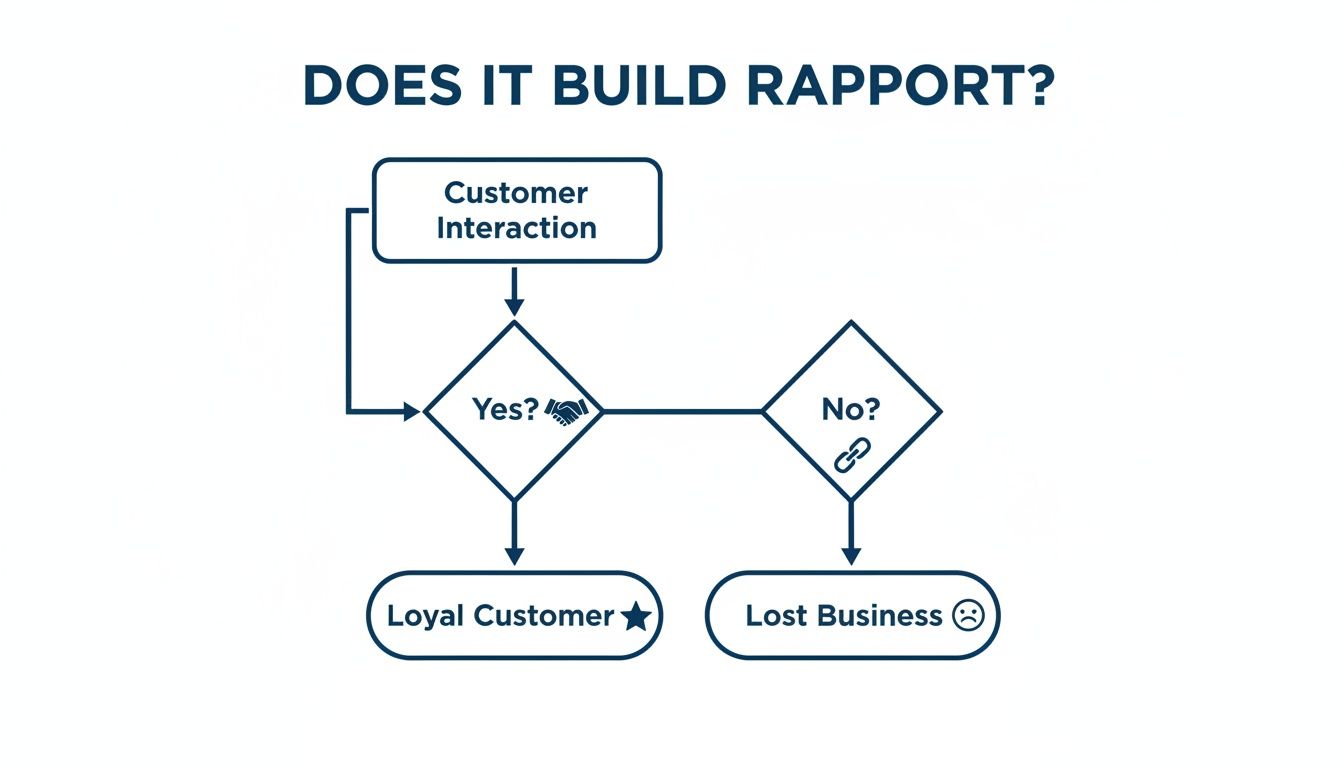
As you can see, there's a direct line between genuine rapport and customer loyalty. Get it wrong, and you're just pushing business out the door.
Building Rapport Over the Phone
On the phone, your voice is everything. With no visual cues to lean on, your tone, pacing, and word choice have to do all the heavy lifting. The trick is to project warmth and competence from the very first "hello."
One of the most powerful, yet simple, techniques is tonal matching. If a customer calls in sounding frantic, hitting them with a slow, monotone voice feels like you're dismissing their urgency. Instead, meet their energy level and then gently guide the conversation to a calmer place. It shows you're on their wavelength.
Here are a few other things that work wonders on the phone:
- Use their name, but don't overdo it. A simple, "Okay, Sarah, I'm pulling up your account now" makes the interaction feel personal, not transactional.
- Smile when you talk. I know, it sounds cliché. But it genuinely changes the sound of your voice, making you come across as more open and friendly. Try it.
- Give active listening cues. Little interjections like "I see," "Okay," and "That makes sense" show you're locked in and paying attention without interrupting their train of thought.
Imagine a medical receptionist talking to a worried patient. Instead of just asking for an ID number, they might say, "I understand you're worried about the results, John. Let’s see what we can find out for you right away." That simple sentence combines empathy, uses the patient's name, and provides a clear next step.
True connection over the phone isn't just about what you say. It's about how you make the other person feel through your voice alone. You're projecting confidence and empathy through the receiver.
Creating Connections In Person
When you're face-to-face, like during a home service call, you're swimming in non-verbal cues. Your ability to read the room—and project positive body language—is just as crucial as what comes out of your mouth. For an electrician or plumber walking into a client's home, this is where trust is built in seconds.
Start with the basics: make eye contact and offer a real smile. Pay attention to your posture. Crossing your arms immediately creates a barrier, but keeping an open stance makes you seem approachable and trustworthy.
Finding common ground is another fantastic tool, but it has to be authentic. Nobody likes a phony.
Let’s take an HVAC technician who spots a family photo on the mantelpiece.
- Inauthentic: "Oh, cute kids! I have two just like them." (Only say this if it's true, otherwise it can sound hollow).
- Authentic: "That's a beautiful family photo. You must be proud." (This is a simple, genuine observation that opens the door for conversation without making stuff up).
By focusing on authentic, human moments, you build trust that feels earned, not manufactured. This is a key piece of any solid omnichannel customer service strategy, because it ensures that personal touch carries through every interaction.
Nailing Rapport in Email and Chat
In the digital world of email and chat, it's dangerously easy to sound like a robot. You lose all the nuance of tone and body language, so you have to be much more intentional with your words. Injecting a bit of humanity requires conscious effort.
Ditch the generic templates. Instead, add a personal touch that shows you're paying attention. Reference a previous conversation or a specific detail they mentioned. It proves you see them as a person, not just another ticket number.
Just look at the difference between these two chat responses:
The second one is miles better, right? It validates the customer's frustration, uses his name, and shows personal ownership. Tiny tweaks in wording can completely transform a cold, transactional exchange into a supportive, human one.
The Art of Active Listening and Responding with Empathy
A real connection with a customer is built one conversation at a time, and it all starts with making them feel genuinely heard. This is where we get into the nuts and bolts of active listening and empathetic responses—skills that can turn even the most difficult conversations into moments that build loyalty.
True active listening isn't just staying quiet while the customer talks. It’s about absorbing their words, picking up on the emotion behind them, and then proving you get it. It’s the difference between just hearing sounds and actually understanding the message.

Paraphrasing for Clarity and Connection
One of the most effective tools in your toolkit is paraphrasing for clarity. This is where you simply summarize the customer's issue in your own words to make sure you've got it right. It’s a simple move that immediately shows you're paying attention and are zeroed in on their problem.
Let's say a customer calls your HVAC company, clearly stressed, and says, "My AC unit is making a weird rattling noise, and it’s not blowing cold air. I'm worried it's going to die in the middle of this heatwave!"
Instead of jumping straight into scheduling, pause and paraphrase:
"Okay, so if I'm hearing you correctly, the AC is making an unusual rattling sound and isn't cooling the house at all. You're concerned it will fail completely with the hot weather coming. Is that right?"
This one sentence does two crucial things: it validates their concern and makes sure you’re both on the same page before you even think about a solution. That level of focus is what people remember. After all, getting it right the first time is a massive driver of customer loyalty, largely because it saves people the frustration of having to repeat themselves. Given that 74% of customers are willing to forgive a company mistake after excellent service, empathetic problem-solving is an incredibly powerful tool.
Responding with Genuine Empathy
Once a customer feels heard, the next move is to respond with empathy. Empathy isn't about agreeing with them or making excuses for your company; it's about acknowledging their feelings. It's your way of saying, "I get why you feel that way, and it makes sense." Digging into the different forms of empathy in customer service can give your team an even deeper well of strategies to pull from.
Using empathetic phrases shows you're on their side, ready to find a solution together, not just some faceless representative.
A few phrases that work wonders:
- "That sounds incredibly frustrating."
- "I can definitely see why you'd be upset about that."
- "I'm so sorry you've had to deal with this."
- "It makes complete sense that you're concerned."
These statements don't admit fault, but they absolutely acknowledge the customer's emotional state. That simple act can de-escalate tension in an instant and start rebuilding trust.
Practical Comparisons: Say This, Not That
The words you choose can either build a bridge or put up a wall. To build rapport with customers, your team needs the right language for those tough situations. Here’s a quick look at a common scenario in a service business.
Scenario: A customer is upset because a technician arrived two hours late without calling.
Using Technology to Deepen Human Connection
It might sound strange, but the right technology doesn't push people away—it actually paves the way for better human connections. Forward-thinking businesses are using tools like CRMs and AI assistants not to replace their team, but to give them the background information they need to start building rapport from the very first hello.
The whole idea is to let technology manage the mundane, repetitive stuff. This frees up your team to do what they do best: listen, empathize, and solve the kinds of complex problems that a machine just can't handle.

Give Your Team Instant Context
A Customer Relationship Management (CRM) system is probably one of the most powerful rapport-building tools you can have. When it’s used right, it turns a cold call into a personal, informed conversation by putting a customer's entire history, their preferences, and past interactions right at your team's fingertips.
Think about the difference this makes. Instead of a customer having to tell their story for the fifth time, your representative can greet them with a quiet confidence that immediately puts them at ease.
For a home services company: "Hi, Mrs. Smith. I see Mike was out last month to fix the garbage disposal. Are you calling about that, or is this something new we can help with?"
For a legal firm: "Good morning, Mr. Chen. I have your file right here and see you spoke with Sarah last week about the discovery documents. Let me connect you to her now."
This simple acknowledgment of a customer's history makes them feel seen and valued. It instantly shifts the dynamic from a one-off transaction to an ongoing relationship, proving they are more than just an account number to you.
This level of preparation is the bedrock of a fantastic customer experience. It shows you're organized and, more importantly, that you care enough to remember their journey with your business. If you're looking to really nail this process, digging into the specifics of CRM integration and its benefits is a great next step.
Automate the Routine, Prioritize the Person
This is where automation, especially AI, comes in to play a brilliant supporting role. AI-powered tools, like a virtual receptionist, can perfectly handle the routine tasks that used to eat up your team's day—things like scheduling appointments, answering frequently asked questions, or doing that initial lead qualification.
By handing off these predictable interactions to automation, you empower your skilled human agents to focus on the conversations that demand genuine empathy and creative problem-solving.
Imagine this:
- An AI can book a routine dental cleaning in a matter of seconds, any time of day or night.
- This frees up your front desk staff to spend ten unhurried minutes on the phone with an anxious patient who needs reassurance about an upcoming procedure.
This smart division of labor lets your team invest their emotional energy where it truly matters. You end up with a system where technology provides efficiency and scale, while your people provide the irreplaceable warmth and understanding that builds the kind of loyalty that lasts for years.
Common Mistakes That Erode Customer Trust
Knowing all the right moves is great, but sometimes it’s the things you don't do that make the biggest difference. Certain missteps don’t just halt your progress in building a connection; they actively destroy the trust you've worked so hard to earn.
If you want to build lasting rapport with customers, you have to be vigilant about avoiding these common pitfalls.
One of the quickest ways to make a customer feel like a case number is by leaning too heavily on robotic, impersonal scripts. People can tell when they're getting a canned response, and it immediately sends the message that you aren't truly listening. This is especially damaging when they’re already upset or frustrated.
Another classic mistake is making promises your team simply can't keep. It's tempting to tell a customer a technician will be there "first thing in the morning" just to get them off the phone. While it might seem like a quick fix, it blows up in your face when that promise is inevitably broken, creating a much bigger trust issue.
Overlooking the Optimism Gap
A particularly dangerous blind spot for many businesses is what's known as the “optimism gap.” This is the canyon between how great you think your service is and what your customers are actually experiencing. You might be convinced your team is a model of empathy and efficiency, but your customers might feel like they're being ignored.
This gap widens when you aren't actively seeking out—and truly listening to—honest feedback. When you shy away from customer complaints, you lose the opportunity to fix the small, nagging issues that eventually become deal-breakers.
Think about it: A customer who gets transferred three times and has to repeat their entire story is a perfect example of how a simple process failure kills rapport. Each handoff practically shouts, "We don't talk to each other, and we don't value your time."
Closing this gap means treating feedback not as an attack, but as a gift. Here are a few practical ways to spot these blind spots before they do real damage:
- Dive into negative feedback weekly. Don't just close the ticket and move on. Look for trends. Is the same issue, product, or team member popping up over and over again?
- Send out simple post-interaction surveys. A single question like, “How easy was it to get the help you needed today?” can tell you everything you need to know.
- Stop hiding from bad reviews. Address negative comments publicly and professionally. It shows potential customers that you’re listening and serious about fixing problems.
In the end, avoiding these blunders boils down to creating a culture of accountability and genuine care. When your entire team prioritizes honesty and active listening, you stop trust from eroding before it even starts.
Got Questions About Building Rapport? We’ve Got Answers.
Even when you know why building rapport is important, the how can still be tricky. Putting these ideas into practice brings up real-world questions, and getting the details right makes all the difference. Here are a few of the most common hurdles business owners run into and how to clear them.
How Do I Get My Whole Team on Board with This?
Training your team to build rapport consistently is less about handing them a script and more about fostering a culture of genuine connection. Scripts have their place, but they can't replace authentic human interaction.
A great place to start is with role-playing. Run through common scenarios your team faces every day—think calming an agitated customer or patiently walking someone through a complicated process. For example, have one person play a customer whose package is lost and another play the agent. Then, switch roles. This builds muscle memory for empathy.
Also, consider recording and reviewing actual calls together (with permission, of course). This isn't about calling people out; it's about spotting what works and finding teachable moments. Focus your feedback on active listening and empathy, not just sticking to a script. When you make rapport-building a key part of performance reviews and celebrate the wins, your team will see it’s a genuine priority.
Is It Even Possible to Build Rapport with an Angry Customer?
Yes, it absolutely is. In fact, these moments can be your biggest opportunities to create a loyal customer for life, but you have to handle them with care. The approach is all about de-escalation, not defense.
The most critical first step? Just listen. Let them get it all out without interrupting. This simple act validates their frustration and shows you’re taking them seriously.
Once they've had their say, acknowledge their feelings with something like, "I can absolutely see why you're upset about this." Then, offer a direct, sincere apology for the problem they experienced. Don't make excuses. For example, say "I'm so sorry that the wrong part was delivered. That's our mistake, and I'm going to fix it for you right now," instead of "The warehouse sometimes messes up orders."
By staying calm, validating their emotions, and quickly shifting the conversation toward a solution, you can turn a negative situation into a moment of trust. You’re not just solving a problem; you’re showing them you care.
How Can We Actually Measure Rapport?
Rapport might feel like a soft skill, but you can definitely track its impact on your bottom line with hard data. The most obvious places to look are your Customer Satisfaction (CSAT) scores and Net Promoter Score (NPS). Are they trending up since you started focusing on building better connections?
Beyond those, keep an eye on a few other key indicators:
- A lift in your overall customer retention rate. Happy customers stick around.
- A higher customer lifetime value (CLV). They don't just stay, they spend more.
- A drop in the number of negative online reviews.
You can also get more granular. Analyzing call or chat transcripts for positive keywords or a high first-contact resolution rate can offer direct evidence. And sometimes, the simplest approach is best: a quick one-question survey after an interaction asking the customer to rate their experience with your team member can give you fantastic, real-time feedback.
Ready to capture every opportunity and deliver a seamless customer experience? Recepta.ai provides a 24/7 AI-powered receptionist backed by human expertise, ensuring you never miss a call and every customer feels heard. Learn how we can help you build stronger relationships and grow your business at https://recepta.ai.