
Caller ID Blocking Cell Phone: Your Complete 2026 Guide
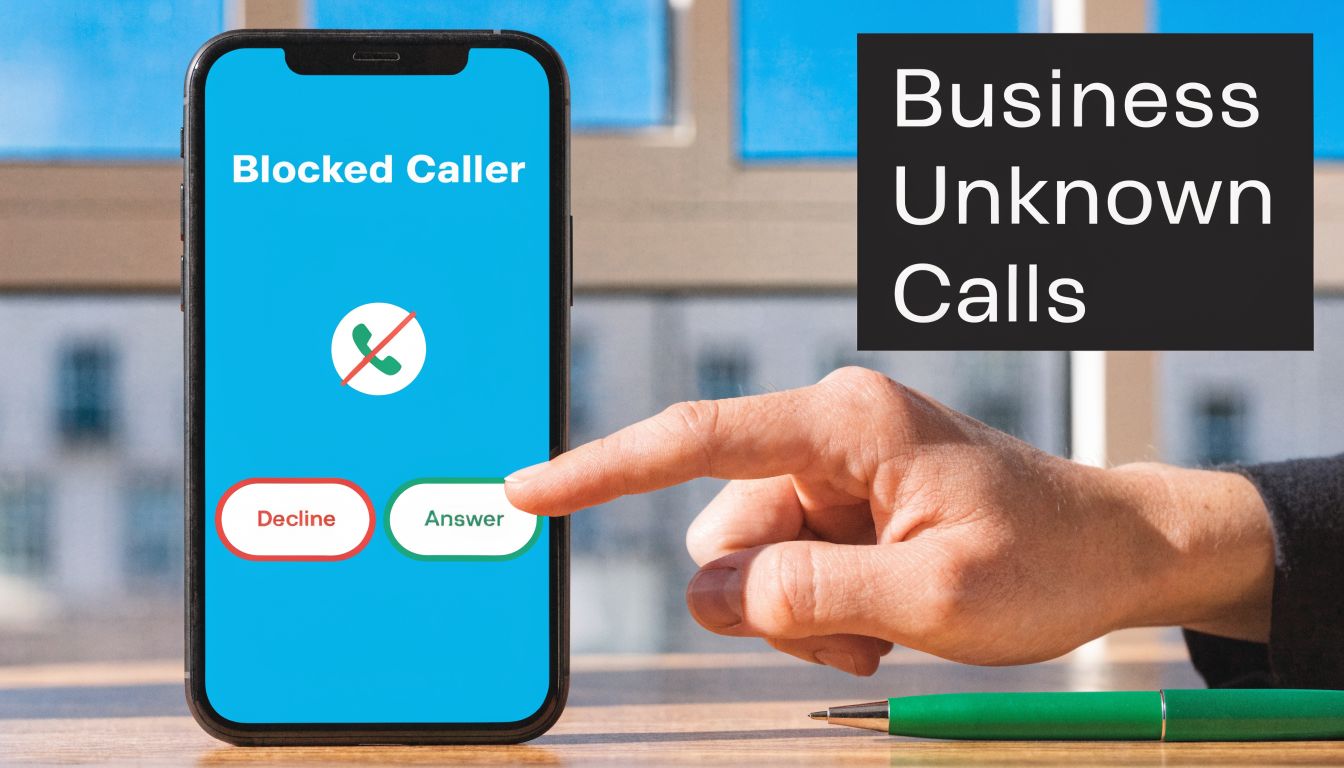
Your dispatcher sees “Blocked Caller” on the screen at 4:52 p.m. It’s late, trucks are wrapping up, and nobody wants to pick up a call that looks like spam. Ten minutes later, the voicemail turns out to be a homeowner with a burst pipe who called three companies in a row.
That’s the core issue with caller id blocking cell phone behavior in business. It isn’t just a privacy feature. It changes who answers, who gets ignored, and who wins the job.
Small businesses usually come at this topic from the wrong side. They ask, “How do I hide my number?” when the more important question is, “What happens to my revenue when customers, carriers, and apps hide or distrust phone identity?” If your business depends on calls for estimates, appointment confirmations, intake, follow-ups, or emergency service, caller ID strategy stops being a phone setting and becomes an operations issue.
Why Caller ID Blocking Is a Double-Edged Sword for Your Business
A blocked number can help in narrow situations. A business owner might want privacy when checking a vendor, calling back a suspicious inbound lead, or making a sensitive inquiry from a personal device. That part is real.
But most companies feel the downside far more often than the benefit. A 2020 Pew Research Center survey found that 80% of Americans do not generally answer cellphone calls from unknown numbers. If your outbound line appears unfamiliar, private, or suspicious, you’re starting the call at a disadvantage before anyone says hello.
Where businesses get hurt
The damage usually shows up in ordinary moments:
- Service businesses miss first-contact leads because homeowners screen unknown calls while they’re at work.
- Dental and medical offices lose confirmations when patients ignore a number they don’t recognize.
- Law firms and insurance teams lose callbacks because people don’t trust hidden numbers discussing sensitive matters.
- Franchise locations create confusion when each location calls from a different, unrecognized line.
The double edge is simple. Blocking can protect the caller. It can also destroy trust.
Practical rule: If the goal of the call is to start a relationship, hiding identity usually works against you.
When blocking makes sense and when it doesn’t
There are still legitimate uses. A contractor may want to call a marketplace seller without exposing a personal mobile number. A firm may want a junior staff member to make a one-off inquiry that shouldn’t trigger future callbacks.
Use blocking sparingly when the call is exploratory, sensitive, or personal. Don’t use it for lead response, appointment setting, collections, intake, or any conversation where recognition matters. In those moments, the phone number isn’t just transport. It’s part of your credibility.
How to Block Your Number for a Single Call
If you need to hide your number for one call in the U.S. or Canada, the standard method is simple: dial *67 before the number.
That means if you’re calling 555-123-4567, you dial *67 555-123-4567. The recipient will usually see something like “Private,” “Blocked,” or “Unknown” instead of your number.
The exact steps
- Open your phone app and go to the keypad.
- Enter *67 first.
- Type the full number, including area code.
- Press call.
This works best when you want privacy for one situation without changing your phone’s default behavior.
Good business use cases
Not every private call is shady. Some are practical.
- Supplier pricing checks: A plumbing company owner may want to compare distributor quotes without immediately revealing the business line.
- Sensitive legal inquiries: A staff member may need to make an initial contact before sharing direct office details.
- Owner callback from a personal phone: If the owner is using a personal mobile after hours and doesn’t want that number circulated, a one-time block can be reasonable.
Where this method fails
Single-call blocking is tactical, not strategic. It has limits.
- It can trigger instant screening. If the person you’re calling doesn’t accept hidden calls, your call may never ring through.
- It’s poor for callbacks. If the recipient wants to call back, they can’t.
- It sends the wrong signal in sales and service. Hidden identity raises suspicion even when your reason is legitimate.
If you’re calling to win trust, don’t start by removing the one thing the other person uses to decide whether to answer.
A practical test before you use it
Ask one question: Do I want this person to save my number and call me back later?
If the answer is yes, don’t use *67. Use a dedicated business line, a secondary work number, or a trackable campaign number instead. Single-call blocking is best reserved for short, one-off interactions where privacy matters more than continuity.
That distinction matters. Too many owners use *67 as a convenience tool, then wonder why follow-up turns messy and response rates stay weak.
Permanently Hiding Your Caller ID on iPhone and Android
Permanent caller ID blocking changes your default setting so every outbound call shows as private unless you turn it back on. It’s easy to enable. It’s usually a bad fit for any business-facing line.
The problem isn’t just that people dislike hidden numbers. It’s that modern call screening has trained users to trust visible, verifiable identity more than ever. As noted in research on blacklist effectiveness and STIR/SHAKEN-linked spoofing reduction, STIR/SHAKEN can reduce spoofing success by up to 70%, which makes authenticated and visible numbers more credible and permanently hidden numbers more suspect.
On an iPhone
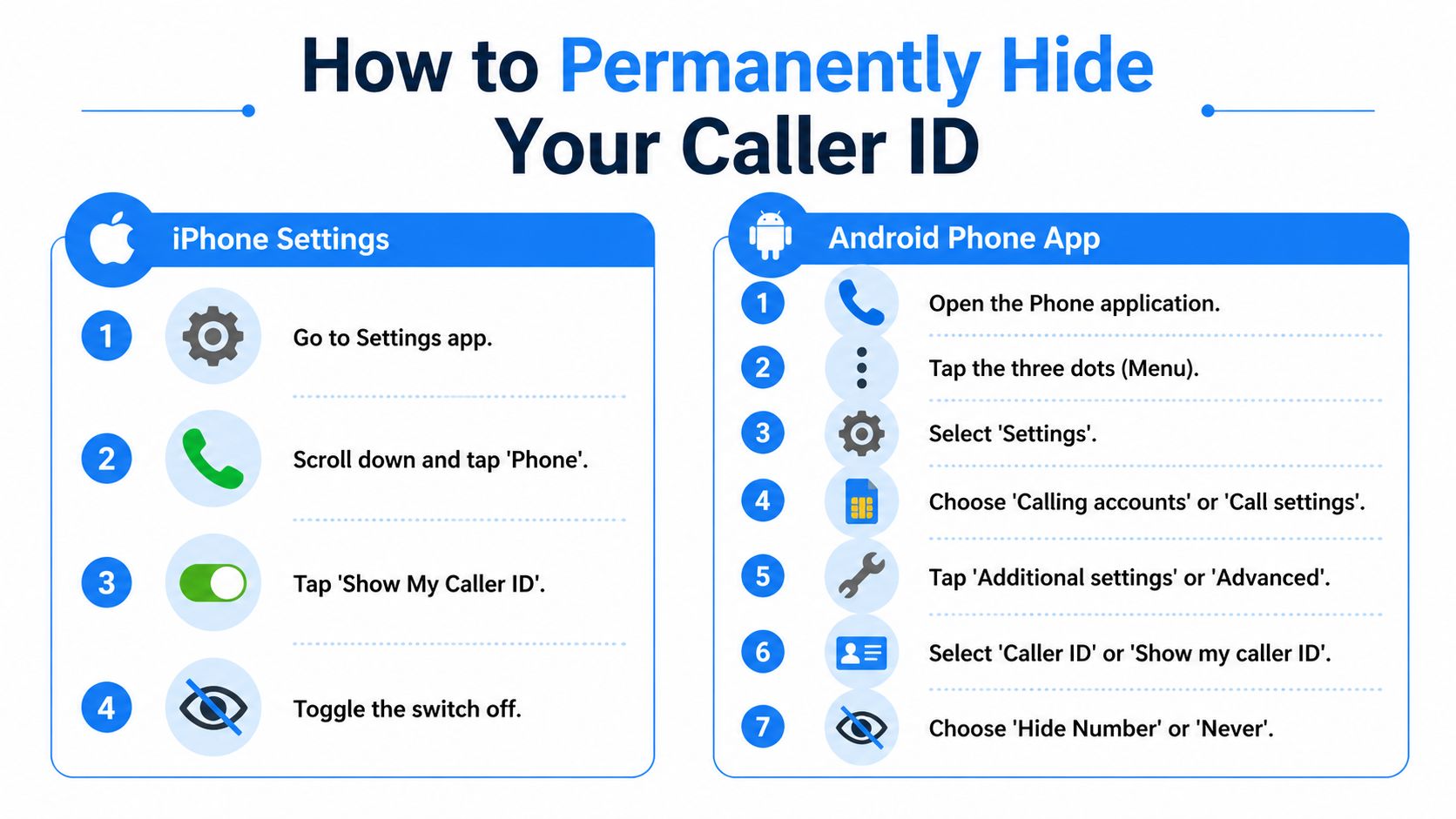
On iPhone, the path is usually straightforward:
- Open Settings
- Tap Phone
- Tap Show My Caller ID
- Toggle it off
Some carriers remove this option from the device menu. If you don’t see it, the carrier is likely controlling caller ID presentation at the account level.
On an Android phone
Android varies more by manufacturer and carrier, but the general path is similar:
- Open the Phone app
- Tap the three-dot menu
- Open Settings
- Choose Calling accounts or Call settings
- Open Additional settings or Advanced
- Tap Caller ID
- Select Hide number
Menu labels differ between Samsung, Pixel, Motorola, and carrier-branded dialers. If the setting doesn’t appear, search “Caller ID” in the phone settings or contact the carrier.
Why permanent blocking is risky for business use
Permanent blocking creates operational friction fast.
| Situation | What happens when caller ID is hidden |
|---|---|
| Lead follow-up | Prospects hesitate because they can’t identify the caller |
| Appointment reminders | Patients and clients ignore the call or let it go to voicemail |
| Team callbacks | Staff forget the line is hidden and create inconsistent customer experience |
| Reputation management | Hidden calls look less legitimate than verified business numbers |
A better fallback is usually account design, not hidden identity. Use separate lines for separate purposes. Keep personal numbers private by routing calls through a business system instead of suppressing identity on the device itself.
If you’re already reworking how calls route across devices and team members, this guide to activating call forwarding is useful for setting up cleaner handoffs without relying on permanent caller ID blocking.
When permanent blocking is reasonable
There are narrow cases where a permanently hidden line makes sense:
- Owner or clinician personal line used temporarily for outreach
- Internal testing of how numbers display
- Short-term use during a transition between phone systems
For anything customer-facing, don’t make “Private Number” your default presentation. That setting solves your privacy problem by creating your customer’s trust problem.
Using Carrier Services and Third-Party Apps for Advanced Control
Device settings only tell part of the story. Carriers and third-party apps decide a lot of what happens before your call ever reaches the recipient. If you want to understand caller id blocking cell phone behavior in practice, you need to look beyond the handset.
Carrier tools do network-level filtering
Major carriers offer services that identify, label, or block suspicious calls. On the consumer side, these tools are framed as protection. On the business side, they shape whether your calls appear normal, suspicious, or blocked.
Carrier tools are useful because they can:
- Filter by network signals instead of only local phone settings
- Label likely spam before the phone rings
- Let users reject anonymous calls automatically
- Provide account-level controls that survive device changes
For a business owner, that means two things. First, your staff can use carrier features to reduce nuisance calls coming into the company. Second, the same logic can work against your outbound numbers if your calling patterns look risky.
Third-party apps influence customer behavior
Apps such as Truecaller and Hiya add another layer. They rely on their own databases, community reporting, and device-level screening. A number that isn’t blocked by the carrier can still look bad on the recipient’s phone if an app has flagged it.
That matters because a customer doesn’t care which layer judged your call. They only see the result on screen.
Many owners think, “My calls are going out, so the system is fine.” The real question is what the customer sees before deciding whether to answer.
What works better than guessing
Businesses should treat call presentation like email deliverability. You monitor it, test it, and adjust before it becomes a revenue leak.
Try this review process:
- Call your own business from each outbound line and note what displays on multiple devices.
- Test different mobile carriers if your market includes a broad consumer base.
- Check speed-to-lead habits so reps aren’t hammering the same list in a pattern that looks robotic.
- Separate departments by number so service, billing, and sales don’t all share one line identity.
If you’re splitting call flows between mobile devices, desk phones, and after-hours coverage, this guide on forwarding calls on a cell phone can help clean up routing without creating a tangle of hidden personal numbers.
The core lesson is simple. Your phone’s caller ID setting is only one vote. Carriers and apps cast the rest.
The True Cost of a Blocked Outbound Call
Businesses often underestimate how severe the penalty is when a call looks unfamiliar or suspicious. It’s not a minor dip. It changes the economics of outbound calling.
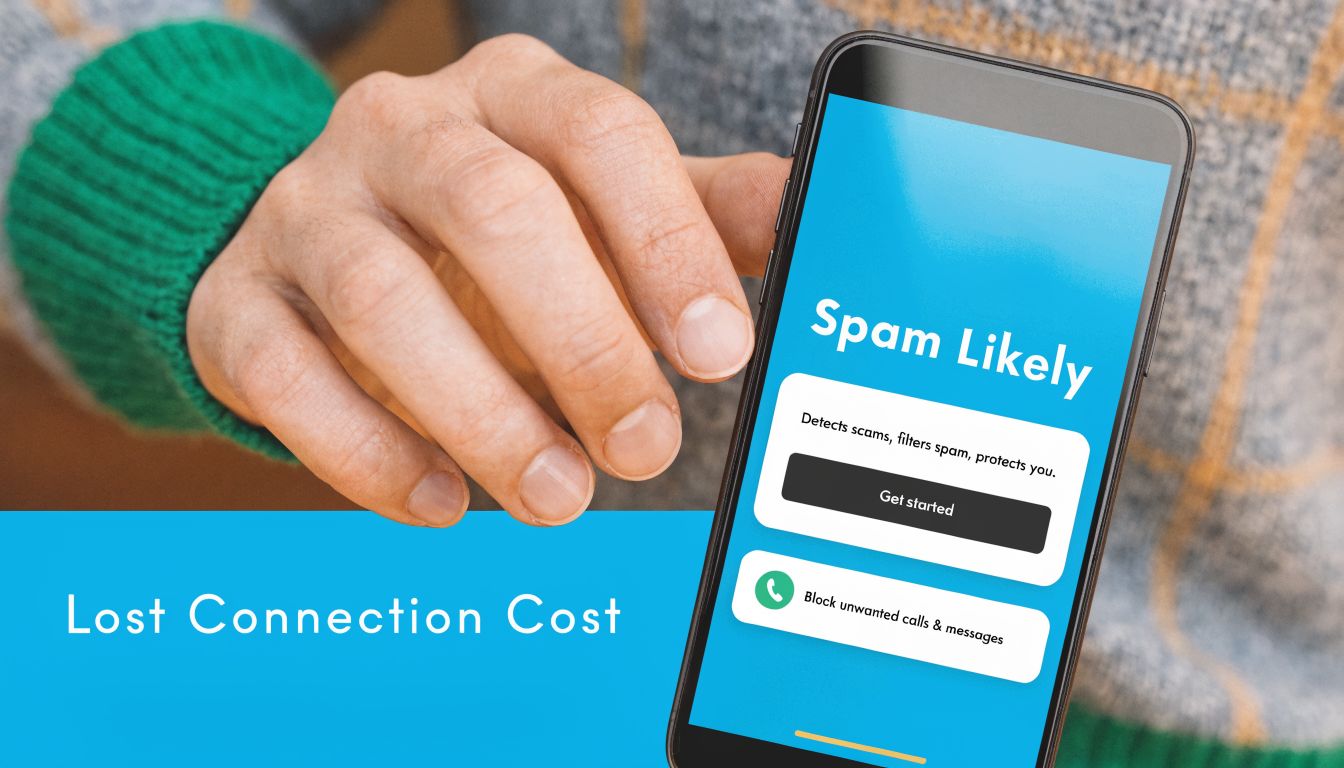
According to telecommunications analytics on flagged and unknown caller IDs, only 8% to 11% of unknown calls are answered, and 73% to 74% of calls labeled as spam are ignored entirely. For a small business, that’s the difference between a working phone channel and a broken one.
How the loss shows up in daily operations
An HVAC company calls back a homeowner who requested a quote during lunch. The callback appears as an unknown number. The homeowner ignores it and books with the next contractor who texts first.
A dental office calls to confirm tomorrow’s treatment visit. The patient lets it ring because the number looks unfamiliar. The chair schedule opens up late, staff scramble, and the day starts behind.
A law office returns an intake inquiry. The call shows as private. The prospect assumes it’s spam and never hears the attorney’s team.
These aren’t edge cases. They’re ordinary failures caused by low-trust call identity.
Why voicemail rarely fixes it
Many owners assume, “If they don’t answer, we’ll leave a voicemail.” That sounds reasonable. In practice, it’s weak recovery.
Voicemail can help, but it delays the interaction and adds another decision point. The customer has to listen, decide the message is legitimate, and choose to call back. Every extra step costs response.
The calls most at risk
The most vulnerable calls share a few traits:
- First-time outreach where the recipient doesn’t know your number yet
- Time-sensitive service callbacks that compete with other providers
- High-volume campaigns that can trigger spam suspicion
- Multi-location businesses where numbers change by office, rep, or forwarding path
If you rely on outbound calls to turn web leads into booked jobs, caller reputation belongs on the same dashboard as response time and booking rate.
Hidden and flagged calls don’t just lower contact rates. They change which leads ever enter a real sales conversation.
What to monitor
A practical owner doesn’t need telecom jargon first. They need a short watchlist.
| Signal to watch | Why it matters |
|---|---|
| Answer rate by outbound number | Shows whether one line is underperforming others |
| Voicemail-heavy campaigns | Suggests poor trust or bad timing |
| Missed callbacks after form submissions | Indicates your numbers may not be recognized |
| Carrier or app spam labels reported by customers | Direct evidence of reputation issues |
If you’re already trying to tie call performance to lead quality, this overview of call tracking software is a useful next step. Tracking tells you which numbers create conversations and which ones burn budget.
Professional Alternatives That Ensure Your Calls Get Answered
The strongest alternative to caller ID blocking isn’t a trick. It’s a better phone identity strategy.
If your business wants privacy and answer rates, don’t hide. Separate, authenticate, and present numbers clearly. That gives your team control without making customers guess who’s calling.
Use dedicated business numbers
A dedicated line solves the most common reason owners hide caller ID. They don’t want their personal cell circulating to customers.
Use one number for sales, another for service, and another for billing or reminders if needed. That structure keeps your private mobile private while giving the customer a consistent line to recognize and save.
Keep number hygiene tight
Poor reputation damages performance fast. According to caller ID authentication and answer-rate analysis, poor caller ID reputation can cause a 40% to 60% drop in answer rates, while implementing STIR/SHAKEN and managing number hygiene can boost answer rates by up to 35%.
That means basic discipline matters:
- Retire numbers that attract complaints or poor pickup patterns
- Avoid erratic spikes in outbound volume
- Match departments to stable numbers instead of rotating randomly
- Authenticate lines where your providers support it
Use branded and local identity where appropriate
Branded calling and local presence are often better than private calling for customer-facing work. A recognizable business name or familiar local number lowers hesitation.
That doesn’t mean gaming the system. It means presenting a number that fits the customer relationship. A local clinic should call from its clinic line. A service business should call from the market it serves. A franchise should avoid forcing every location through one generic number if local recognition matters.
Build a system, not a workaround
The best phone setup makes these things true at the same time:
- customers can recognize the caller
- staff don’t expose personal numbers
- missed calls route somewhere useful
- after-hours contacts still get handled
- follow-up stays consistent across locations and team members
If your current setup depends on reps using personal mobiles, hidden caller ID, and ad hoc forwarding, it’s already too fragile. A structured call answering service approach gives you a cleaner operating model than piecing privacy together one phone at a time.
Answering Your Caller ID Blocking Questions
Is it legal to block your number for business calls
Usually, yes for legitimate privacy reasons. The bigger issue isn’t legality. It’s compliance, consent, and whether the call itself follows the rules for your industry and market. Hiding your number doesn’t excuse bad calling practices.
Can blocked calls be traced
A blocked caller ID hides your number from the recipient, not from the phone network itself. Carriers and authorities can still access call information in the proper circumstances. Don’t treat caller ID blocking as anonymity.
Does caller ID blocking work the same in every country
No. Global caller rules vary significantly. The EU’s GDPR requires opt-in for business calls, while app-driven blocking is dominant in parts of Asia, and unprepared cross-border businesses can face 40% call drop-offs. If you serve customers in multiple countries, use local compliance review and local call presentation practices instead of assuming your domestic setup will translate cleanly.
Should a small business ever use blocked caller ID as a default
Almost never. Temporary blocking can be useful for isolated situations. As a default for sales, service, intake, or reminders, it usually creates more friction than protection.
If your team is missing calls, relying on voicemail, or losing leads because customers won't answer unfamiliar numbers, Recepta.ai gives you a more reliable option. It helps businesses handle inbound and outbound calls with AI plus human escalation, keep personal numbers private, route conversations intelligently, and stay responsive around the clock without building a patchwork phone process.