
How to Earn Referrals: Small Business Playbook
Some referral calls feel like magic.
A plumbing office gets a call that starts with, “My neighbor said you fixed their leak fast, and I want to book.” A dental practice hears, “My sister told me your front desk follows up.” A small law firm lands a new matter because a former client told a friend, “They kept me informed the whole way through.”
Then the owner asks the hard question. How do we make that happen again on purpose?
That’s where most small businesses stall. They like referrals, they appreciate referrals, they even assume referrals will keep coming. But they don’t build a process to earn them consistently. So the result is random lead flow, uneven months, and a lot of dependence on luck.
From Hope to Strategy Why Your Business Needs a Referral System
If you're still treating referrals like a bonus, you're leaving one of your strongest growth channels unmanaged. Referral business doesn't just feel better than cold outreach. It behaves better too.
The numbers behind that are hard to ignore. 65% of new business comes from referrals, consumers are 4x more likely to buy when referred by a friend, and B2B referrals deliver 71% higher conversion rates with 69% faster sales cycles, according to Rivo’s referral marketing benchmarks. That’s why referral marketing keeps outperforming channels that require more chasing, more follow-up, and more budget.
A lot of owners hear that and make the wrong move. They decide to rely only on word of mouth. That creates a different problem. You still need predictable lead flow from channels you can control. If you want that perspective in a home-service context, this breakdown on how to stop relying on referrals for leads is worth reading.
The better approach is balanced. Build dependable acquisition channels, then turn referrals into a system instead of a surprise.
Referrals work best when you treat them like an operating process, not a compliment.
That means defining when you ask, who you ask, how you track it, and what happens next. It also means tightening the customer experience before you ask anyone to put their reputation behind your business. If retention is weak, referrals stay weak too. A useful companion read is this list of customer retention strategies for service businesses, because people don't refer businesses they aren't confident will deliver consistently.
Owners who earn referrals repeatedly don't wait for goodwill to do all the work. They build a repeatable path from happy customer to shared recommendation to booked lead.
Laying the Foundation for a Powerful Referral Engine
Before you ask for one referral, fix the setup. Most referral programs fail because the business asks too early, asks the wrong person, or asks everybody the same way.
For service businesses, relationships are the advantage. In local categories, an optimized referral program can reach a referral conversion rate of 8-10% or more, compared with general e-commerce ranges of 1-3%. The practical target is to identify and nurture the 20% of referrers who can drive 50% of your referral income, based on the guidance discussed in this referral strategy video for service businesses.

Find the referable moment
The referable moment isn't “after service.” It's the point when the customer feels relief, trust, or gratitude most strongly.
For a plumber, that moment is often right after water is flowing normally again and the homeowner sees the mess cleaned up. For a dentist, it may be after a patient says the procedure was easier than expected or after they compliment the staff at checkout. For a lawyer, it usually lands when a matter is resolved cleanly and the client feels informed, not just victorious.
Use this simple test. If the customer is still evaluating, still confused, or still waiting, it’s too early. If they’re saying some version of “thank you, that was easier than I expected,” you’re close.
Here are strong examples:
- Plumbing company: Technician finishes a same-day repair, explains what caused the issue, and the customer relaxes because the emergency is over.
- Dental practice: Patient leaves a short positive review after a smooth visit and mentions they’ve avoided the dentist for years but felt comfortable.
- Law firm: Client sends a note thanking the team for communication and clarity after a case milestone or resolution.
Identify advocates, not just satisfied customers
A decent experience does not automatically create a referral source. What you want is an advocate.
Advocates tend to show their hand in visible ways. They leave reviews. They answer your texts quickly. They thank specific staff members by name. They ask for extra business cards. They mention neighbors, coworkers, family members, or community groups while talking with your team.
A practical shortlist looks like this:
- Review writers: If someone already posted a positive review, they've publicly endorsed you once. A referral ask is natural.
- Repeat buyers: A family that calls the same plumber every time has already chosen trust over shopping around.
- Community connectors: Realtors, insurance agents, property managers, physicians, local gym owners, and school administrators often know who needs reliable service.
- High-confidence clients: These are clients who explain your value to others without prompting. Staff usually knows who they are.
Practical rule: Ask the people who already show signals of trust. Don’t turn your whole database into a mass referral blast.
Build a simple advocate list
You don't need fancy software to start. A spreadsheet and a clear process are enough.
Create a short list with:
- Customer name
- Service type
- Date of best interaction
- Referral signal shown
- Next follow-up date
If your team struggles with customer warmth and follow-through, spend time improving the human side too. This guide on how to build rapport with customers in everyday interactions is useful because referral asks land better when trust was built well before the ask.
A strong referral engine starts long before the actual invitation. It starts when your business learns to recognize the exact moment a happy customer is most likely to say yes.
Designing Your Irresistible Referral Program
Most owners make the same mistake first. They obsess over the reward amount and ignore the mechanics.
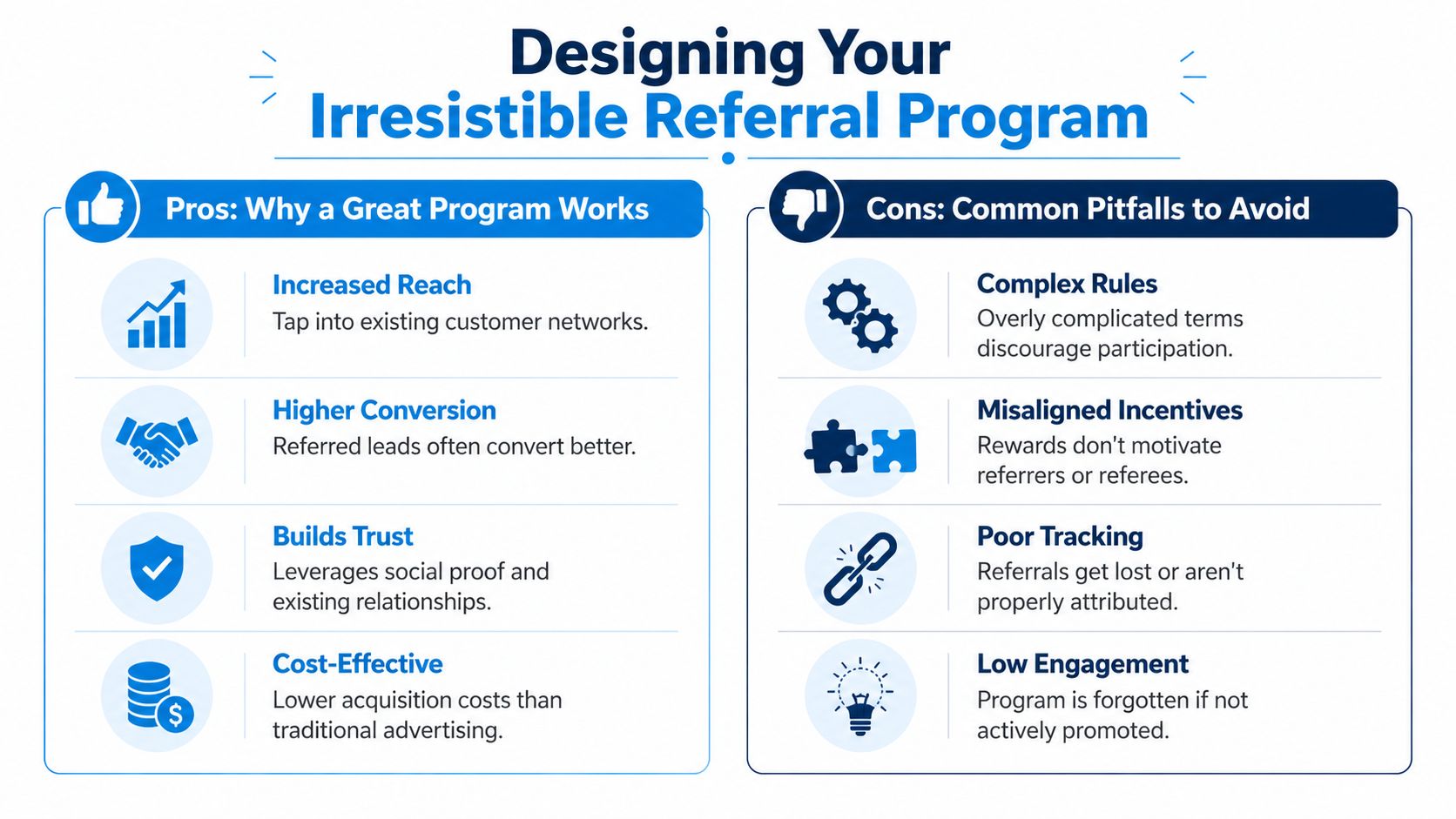
The reward matters, but the design matters more. If your program is clunky, hidden, or confusing, people won't use it. If it’s easy to understand and easy to share, participation goes up even when the reward is modest.
A structured workflow matters here. Programs stall when there’s no promotion and no feedback loop. Streamlining the sharing process helps prevent the 47% abandonment rate common in complicated referral programs, as outlined in this referral workflow guide from ITA Group.
Keep the offer easy to explain
If your front desk, technician, or office manager can't explain the program in one breath, it's too complicated.
A strong referral program usually has three parts:
- Who it's for
- What happens when they refer
- What both people get, if anything
Bad version: “Refer someone, but only if they’re in these service zones, and only if they’re a new customer, and only if they book within this timeframe, and terms apply.”
Good version: “If you send a friend to us and they book, we’ll thank both of you.”
That second version gets repeated. The first one gets ignored.
Choose the right reward model
Different businesses need different structures. The trick is matching the incentive to the buying behavior and trust level in your category.
Here’s a practical comparison:
| Program type | Best fit | Example |
|---|---|---|
| Dual-sided reward | Home services, dental, wellness, consumer services | A plumbing company gives the referrer a service credit and gives the new customer a first-visit benefit |
| Tiered reward | Businesses with repeat engagement and strong local loyalty | A dental office gives a small thank-you for one referral, then a larger perk after several successful referrals |
| Non-monetary reward | Legal, medical, advisory, premium professional services | A law firm offers a thoughtful thank-you, priority scheduling, or concierge-style attention where appropriate |
Dual-sided programs often work well because the customer doesn't feel like they're “selling” a friend. They feel like they're helping them. The emotional posture changes from self-interest to generosity.
Design around low friction
Busy customers do not want homework. They don’t want to fill out a form with six fields, read dense rules, or wonder whether the referral counted.
The practical standard is this. Your program should be explainable in about 10 seconds and usable in about 30.
For a plumber, that might be a text sent after the invoice with a simple share link. For a dentist, it could be a checkout card and a follow-up email. For a law office, it may be a short, professional email with language the client can forward directly.
Use these friction checks:
- One action to share: Give the customer a direct link or a prewritten message.
- One clear trigger: “When your friend books” is better than vague eligibility language.
- One visible contact path: Phone, text, or form. Don’t make people hunt.
- One owner internally: Someone on your team must own referral tracking.
If a customer has to stop and think about how your referral program works, you've already lost momentum.
Match the ask to the business model
A referral program for a sewer line repair company shouldn't look like one for a cosmetic dental practice.
A few examples:
- Plumbing business: Best when the incentive is immediate and practical. Service credits, maintenance perks, or future-visit value usually fit the mindset of a homeowner.
- Dental practice: Family-oriented and relationship-driven. Referral language should emphasize comfort, trust, and ease, not discounts alone.
- Law firm: The reward can't be the whole story. The stronger angle is confidence, professionalism, and making it easy for clients to introduce someone who needs help.
Promote it more than you think you should
A referral program buried on a website page doesn't count as a program. It counts as a forgotten tab.
Put it in the places customers already interact with:
- After-service email
- Invoice footer
- Text follow-up
- Front desk script
- Email signature
- Review request flow
- Client portal or booking confirmation
A lot of service businesses launch the program once and wonder why nothing happens. Customers are busy. Staff forgets. The moment passes. A working program has prompts built into the actual workflow, not just the marketing plan.
Avoid the common traps
Some referral offers underperform because the owner built them around internal convenience instead of customer behavior.
Watch for these patterns:
- Complicated rules: The more exceptions, the fewer shares.
- Weak timing: Asking on the invoice email alone misses the emotional peak.
- Invisible program: If staff doesn't mention it, customers assume it isn't important.
- No confirmation: Referrers lose interest if they never hear whether their effort mattered.
- No segmentation: Your strongest advocates should not get the same generic treatment as inactive customers.
Good referral design feels obvious to the customer. That’s the point. When someone trusts your business enough to recommend it, the handoff should feel effortless.
Crafting the Perfect Referral Ask Scripts and Templates
The best referral script doesn't sound like a script. It sounds like a natural extension of a good service experience.
Teams often hesitate because they believe asking will feel awkward. It usually feels awkward only when the timing is bad or the wording is vague. When the customer is already happy, a direct ask feels normal.

The core script that works across industries
The structure is simple:
- Acknowledge the positive outcome
- Make the ask clearly
- Tell them exactly what to do next
That sounds like this:
“I’m glad we could help. If you know anyone else who’s dealing with something similar, feel free to send them our way. I can text or email you the easiest way to share.”
That line works because it doesn’t ramble. It also gives the customer a light next step instead of putting the whole burden on them.
How a plumber should ask
A plumbing referral ask should sound casual, local, and useful.
In person after a completed job
“Glad we got that sorted out for you. If you’ve got a neighbor, family member, or friend dealing with a plumbing issue, send them to us. We’ll make it easy.”
Follow-up text
“Thanks again for choosing us today. If someone you know needs a reliable plumber, you can forward this message to them and we’ll take care of the rest.”
Invoice note
“Know someone who needs plumbing help? Reply and we’ll send you a quick referral link.”
This works because it fits the moment. The customer just saw the problem solved. Relief is high. Trust is fresh.
How a lawyer should ask
Legal referrals need a different tone. The ask should be respectful and specific, not salesy.
Client email after a successful matter or milestone
“I’m glad we could help you through this. If someone in your circle needs similar legal support, I’d appreciate an introduction. You can forward this email, or reply with their name and I’ll follow up appropriately.”
Short closing script on a call
“If anyone you know ever needs this kind of help, I’m always grateful for an introduction.”
That’s enough. Lawyers often overcomplicate the ask because they want to sound formal. Simpler usually lands better.
If your team needs help tightening language for outreach, these examples of a script for outbound calls that sounds natural can help staff sound more conversational and less rehearsed.
How a dentist should ask
Dental referrals work well when the message centers on comfort and trust. Patients often refer when they believe your office will reduce anxiety for someone they care about.
At checkout
“We’re really glad you came in today. If you know someone who’s been putting off dental care, feel free to send them our way. We’re happy to make the first visit easy.”
Follow-up email
“Thanks for visiting our office. If a friend or family member is looking for a dental team they can feel comfortable with, you can reply to this email and we’ll help.”
That wording matters. “Putting off dental care” is more relatable than “in need of dental services.”
A short training example can help teams hear the difference between stiff and natural delivery:
Add referral asks to places you already use
You don’t need a giant campaign. You need repeated, well-timed prompts in normal customer touchpoints.
Use referral language in:
- Email signatures
- Post-service texts
- Review follow-ups
- Billing emails
- Case-closing messages
- Recall reminders for dental and wellness practices
A template your staff can actually use
Here’s a universal version worth adapting:
Subject: Glad we could help
Thanks for working with us. If you know someone who could use the same kind of help, feel free to connect us. You can forward this message or reply and we’ll make the introduction easy.
Keep it short. Keep it human. The businesses that learn how to earn referrals consistently usually don't use flashy language. They ask clearly, at the right time, and make the next step obvious.
Automating Referral Capture and Follow-Up with Smart Tools
Most referral programs don't break at the ask. They break after the ask.
A happy customer sends someone your way, then the lead hits a voicemail box, sits in an inbox, or gets passed around with no owner. That's the fastest way to waste trust. Referred leads expect a smoother experience than cold leads because they arrived with borrowed confidence.
The automation gap is real. Only 22% of home service firms use AI for client follow-ups, while timely digital prompts produce a 40% higher referral rate than delayed manual calls. The same source notes that integrating AI tools can drive 30% more qualified leads and a 25% uplift in referrals, according to HousingWire’s discussion of referral process gaps and AI follow-up use.
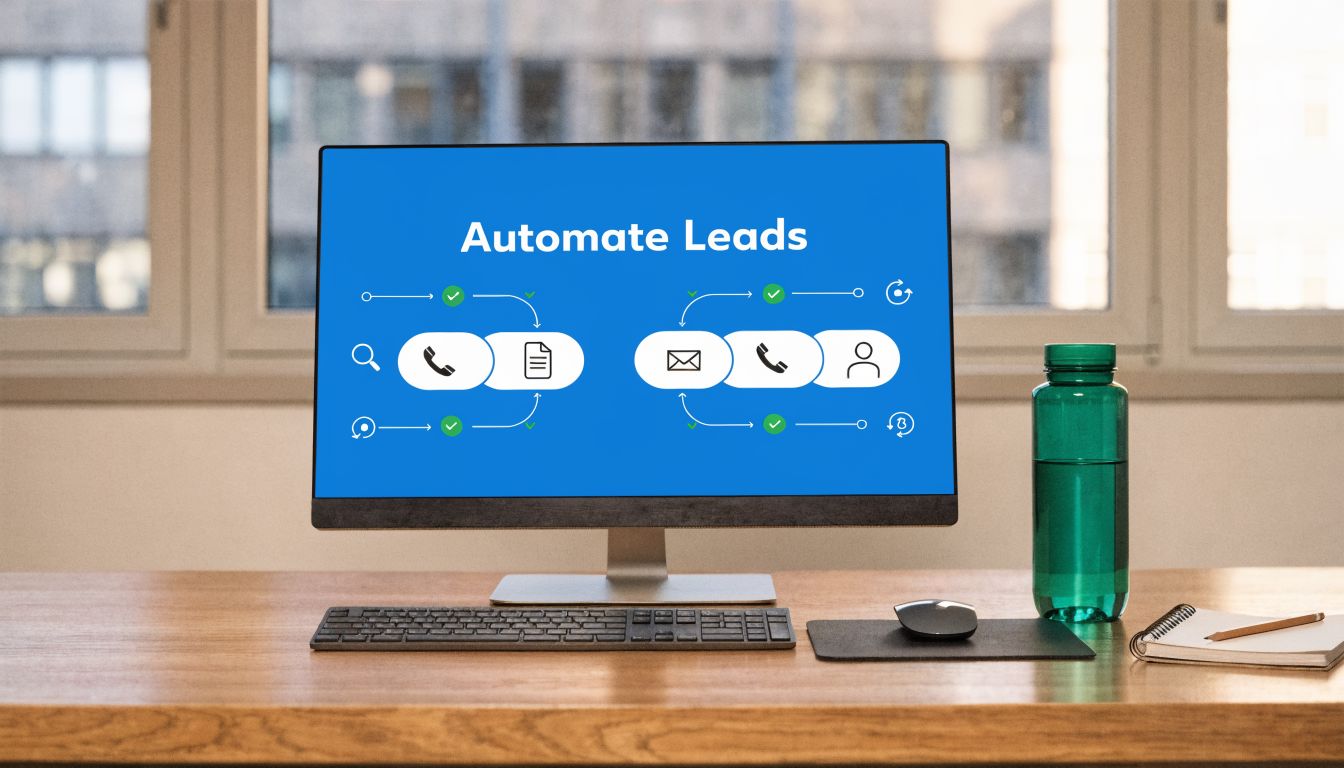
What automation should handle
You don't need a complicated stack. You need a reliable handoff.
A practical referral workflow should do four things well:
- Capture the lead immediately: If the referred person calls after hours, the business still needs to answer professionally.
- Tag the source clearly: Staff should know this person came from a customer referral, not a web form or ad.
- Route the follow-up fast: The right person gets notified and takes action without delay.
- Close the loop: The referrer gets acknowledged when appropriate, and the outcome gets recorded.
For a plumber, that might mean a referred homeowner calls at night, the call gets answered, contact details are logged, and the office books first thing in the morning. For a dental office, a referred patient can request an appointment without waiting for front desk hours. For a law firm, intake can capture the matter type and note who referred them before anyone misses the context.
A simple tool stack for small teams
A small business can build this with common tools:
- CRM to log the referral source
- Scheduling tool to reduce back-and-forth
- Call answering layer so referred leads aren't lost after hours
- Text or email automation for referral nudges after service
One option in that mix is lead management software for small business workflows. In practice, teams often pair a CRM with call handling and calendar routing so every referred lead gets recorded, assigned, and followed up on quickly. Recepta.ai fits that use case by handling inbound calls, lead capture, appointment scheduling, and syncing outcomes into connected systems.
The point of automation isn't to remove the human touch. It's to make sure the human touch happens every time.
What this looks like in the field
Plumbing company: Job completed. Customer gets a follow-up text with a referral prompt. Their neighbor calls that evening. The call is answered, tagged as a referral, and slotted for dispatch.
Dental practice: Patient receives a thank-you message after a smooth visit. They forward it to a spouse. The spouse books through a scheduling link and the source is recorded automatically.
Small law firm: Former client sends an introduction email. Intake logs the referral source immediately, sends the prospect the right next step, and alerts the attorney that this lead came through a trusted contact.
Automation doesn't replace judgment. It protects momentum. That matters because referred leads are often your easiest leads to win and the most frustrating leads to lose.
Measure What Matters Tracking and Optimizing Your Program
If you don't track referrals, you don't have a referral program. You have a story everyone tells themselves about where business comes from.
Owners either get sharper or stay vague. The businesses that improve referral performance know exactly how many asks are going out, how many referrals are coming in, how many convert, and what the channel is worth compared with everything else they spend money on.
A useful companion resource here is this guide to B2B lead growth indicators, especially if you want a clearer way to think about funnel metrics instead of relying on gut feel.
The few KPIs that matter most
You do not need a giant dashboard. Start with a small set of operational numbers.
Track these first:
| KPI | What it tells you | What to watch for |
|---|---|---|
| Referral rate | How often customers refer | Low rate usually means weak promotion or poor timing |
| Referral conversion rate | How many referred leads become customers | Low conversion often points to intake or follow-up issues |
| Participation | How many customers actually share | Helps identify whether the offer is compelling and easy to use |
| Source quality | Which customers or partners send the best leads | Helps you focus on top advocates |
| Referral ROI | What the program returns relative to cost | Proves whether the effort deserves more investment |
The benchmark worth remembering is that the average referral rate is 2.35%, while optimized programs in service businesses can aim higher. Extole also gives a simple ROI example: if 100 referrals cost $2,000 and generate customers with a lifetime value of $37,500, the resulting ROI is 1775%, as shown in Extole’s referral statistics and ROI example.
How to calculate referral ROI simply
Use a basic formula:
Referral ROI = (Revenue from referred customers - referral program cost) / referral program cost
You don't need finance-software complexity to start. You need discipline.
Include costs like:
- Referral rewards
- Staff time tied to administration
- Software used specifically for referral tracking or follow-up
- Any promotional material tied to the program
Then compare that against the revenue or lifetime value produced by referred customers.
Operational note: Track referred revenue separately from “word of mouth” whenever possible. If you lump everything together, you can't tell what your actual program is doing.
What the numbers usually mean
The power of referral tracking is not the report itself. It’s the diagnosis.
If participation is low, the issue is usually one of these:
- Staff isn't asking
- The ask is happening at the wrong moment
- The customer doesn't understand the program
- The process takes too many steps
If referrals are coming in but conversion is low, look at:
- Response speed
- Booking friction
- Intake quality
- Whether the referred prospect matches your ideal customer
If one referral source keeps producing quality business, give that source more attention. That may be a loyal family in your dental practice, a property manager for your plumbing business, or a former client for your legal office who regularly sends aligned matters.
Review your program monthly
A monthly review keeps the program alive without turning it into a burden.
Use a short review like this:
- What generated referrals this month
- Which asks were used
- Which sources converted best
- Where leads got stuck
- What one change to test next
That one change might be shifting from email to text for home services. It might be moving the ask earlier in the checkout flow for dental. It might be giving legal clients a forwardable introduction email instead of asking them to explain your services from scratch.
Close the loop with referrers
A lot of businesses forget this piece. Someone trusts you enough to refer, then hears nothing.
Even a simple acknowledgment matters:
- “Thanks, we heard from your friend.”
- “Your referral booked.”
- “Appreciate the introduction.”
That follow-up reinforces the behavior. It also teaches your best advocates that sending people your way leads to a professional experience, not a black hole.
The businesses that figure out how to earn referrals at a high level don't just ask well. They measure well. That's what lets them improve timing, sharpen scripts, and invest in the parts of the program that produce revenue.
Conclusion Turn Referrals Into Your Most Reliable Growth Channel
The businesses that win with referrals don't sit around hoping customers talk about them. They build the conditions that make referrals easy, timely, and repeatable.
That starts with doing work worth recommending. Then it gets more concrete. Find the referable moment. Ask the right customers. Build a simple offer. Give staff words they can use. Make sure no referred lead gets lost. Track the outcomes so you know what deserves more attention.
This is what turns referrals from random upside into a dependable operating system.
For a plumber, that may mean every completed job triggers a clean follow-up and a simple share path. For a dentist, it may mean training the front desk to recognize patient confidence and ask at checkout. For a lawyer, it may mean building a professional introduction process that respects the relationship and removes friction for the client.
You don't need to launch a complicated campaign this week. Start smaller than that.
Pick one service line. Identify one strong referable moment. Write one script. Decide where the referral gets logged. Train one person to own the follow-up.
That’s how you earn referrals consistently. Not through luck, and not by asking louder. Through a system that makes trust easy to pass from one customer to the next.
If you want to turn referrals into a trackable, always-on workflow, Recepta.ai helps service businesses capture inbound leads, route follow-up, schedule appointments, and keep referral handoffs from slipping through the cracks.