
10 Best Work at Home Answering Services for 2026
Stop Losing Leads to Voicemail. The market for virtual receptionist and answering services was valued at $3.2 billion in 2022 and projected to reach $6.8 billion by 2030, a 9.8% CAGR. That growth tells you something practical. Businesses in home services, healthcare, legal, and multi-location operations aren't buying these services for novelty. They're buying reliable coverage when their own staff is busy, off the clock, or overwhelmed.
Work at home answering services now sit inside a much larger remote operating model. In the U.S., telework was available for nearly 10% of all workers in 2021, according to the Bureau of Labor Statistics, and the infrastructure behind remote work has kept expanding since then. That matters because a distributed receptionist team is no longer an unusual setup. It's a standard delivery model.
The smart way to compare providers isn't just by feature lists. It's by operating model. Some services are human-first. Some are AI-first. Some are hybrid and use automation for speed, then hand off to people when nuance matters. If you choose the wrong model, you'll feel it fast: missed booking details, bloated bills from long calls, poor after-hours triage, or scripts that sound stiff when a caller needs reassurance.
Below are 10 work at home answering services grouped by how they operate in the field, with the trade-offs that matter when you're trying to capture leads, schedule appointments, and protect staff time.
1. Recepta.ai
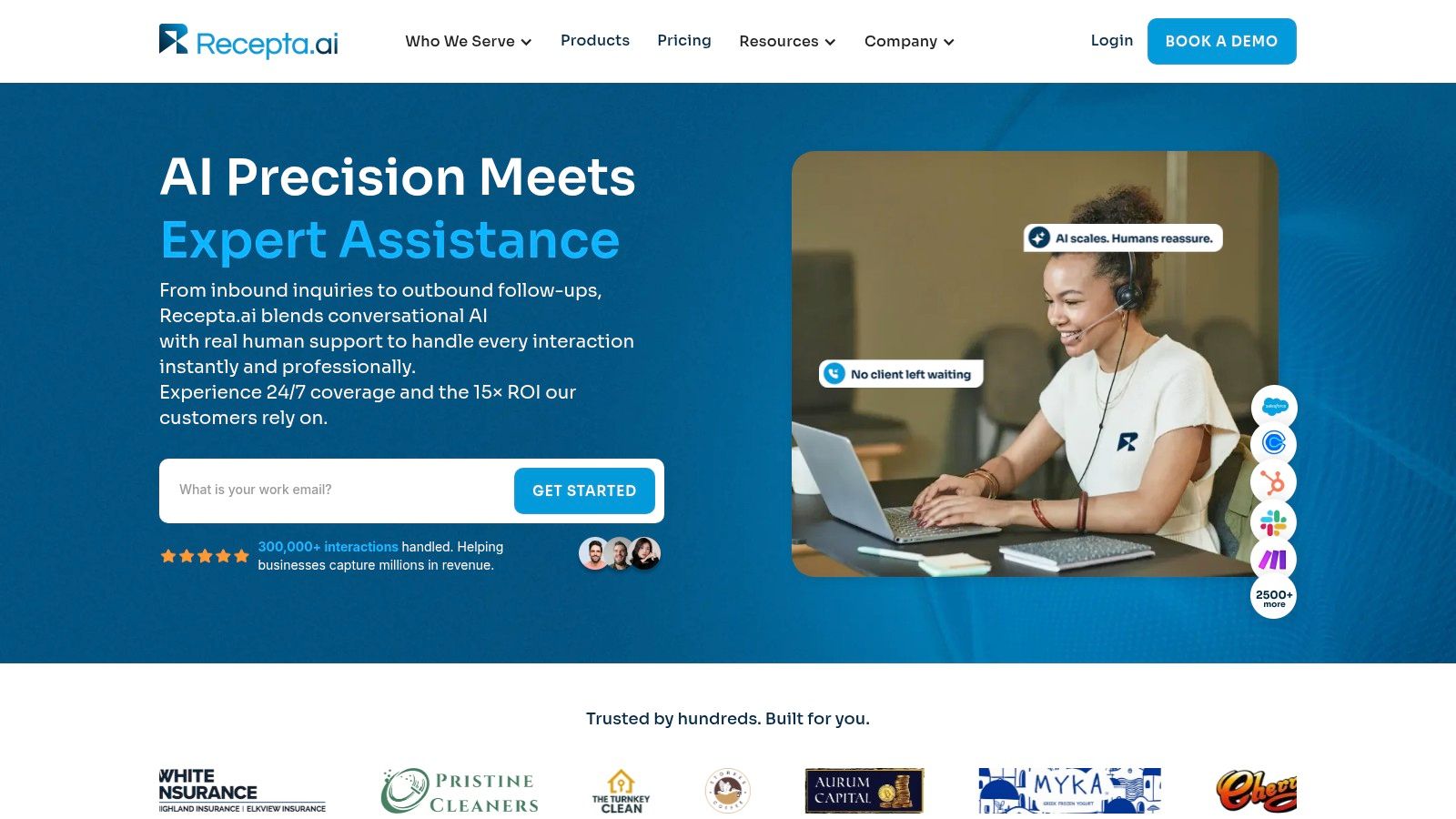
Recepta.ai is a strong fit if you want an AI-first answering service that can do more than pick up calls and pass along messages. It handles inbound calls, outbound follow-up, appointment booking, lead capture, and human escalation for situations that need judgment or a calmer hand. For businesses with uneven call volume or after-hours demand, that model solves a specific problem. It keeps routine interactions off your staff's plate without forcing every caller through a rigid script.
The operating model is the main reason to consider it. Recepta.ai sits in the AI-first category, but it is not AI-only. That distinction matters. Fully automated systems are usually cheapest at scale, but they can break down on reschedules, service questions, upset callers, or intake conversations with missing details. Human-first services handle nuance better, but minute-based billing can get expensive fast. Recepta.ai's hybrid structure is built for companies that want automation to carry the repetitive load and humans to step in only when the call justifies the cost.
In practice, that works well for teams that already run on calendars, CRMs, and dispatch or intake software. The goal is not just answering the phone. The goal is turning the call into the next action in your workflow. A booked estimate. A logged lead. A routed issue. A follow-up task your team does not have to enter by hand.
That trade-off is easy to miss if you only compare feature lists. Businesses choosing between per-minute receptionist plans and automation-heavy systems should look closely at how answering service pricing changes with call length, volume, and handoff needs. The cheapest monthly tier on paper often stops looking cheap once calls run long or staff still have to clean up the admin afterward.
Why the model works
AI answering tools usually fail in one of two places. They either sound too rigid, or they collect information without pushing it into the systems your team uses. Recepta.ai is better suited to workflow-driven businesses because it focuses on both parts of the job: handling the conversation and moving the result into operations.
That makes it a practical option for home services, legal intake, healthcare scheduling, insurance, real estate, and multi-location businesses. Those teams do not all need the same caller experience. They do need consistent coverage, clear data capture, and a reliable path for exceptions.
A few examples:
- Home services: Book estimates, answer common questions, and send urgent or high-value calls to a person.
- Healthcare and wellness: Handle scheduling and basic intake, then escalate sensitive situations.
- Legal and insurance: Capture structured lead details without making every inquiry wait for office staff.
- Franchise and multi-location teams: Route calls by location, service line, or urgency without building a large central phone team.
Practical rule: If staff still listen to voicemails, copy details into a CRM, and return basic calls hours later, the phone process is creating admin debt, not just interruptions.
Best for
Recepta.ai fits businesses that want to reduce front-desk workload while still giving callers a path to a human when the conversation gets more nuanced. I would shortlist it for companies that care less about a traditional receptionist feel and more about workflow completion. That includes booking, logging, routing, summarizing, and follow-up.
The trade-off is straightforward. If your brand depends on every caller hearing a polished live person from the first second, a human-first service may still be the better match. If your bigger issue is missed calls, inconsistent intake, after-hours coverage, or too much office time spent on repetitive phone work, an AI-first model with human backup is often the better operational fit.
2. Ruby
Ruby is a human-first service for businesses that care more about polished caller experience than squeezing every possible cost out of each interaction. It's been around long enough to have a mature operating model, and that shows in its custom greetings, call flows, scheduling support, payment collection options, and bilingual coverage.
For small businesses that want callers to feel like they're reaching a steady front office, Ruby is a safe pick. Legal practices, home service companies, and healthcare-adjacent teams often prefer this style because the service feels consistent and structured.
Where Ruby fits best
Ruby works best when your calls vary in tone but not wildly in complexity. Think intake, quote requests, basic appointment scheduling, call screening, and message relay. It can also help when the owner or office manager wants fewer interruptions without losing the personal touch.
The trade-off is the pricing model. Ruby uses minute-based plans, which are easy to understand at the start and harder to love during a month with long caller conversations or repeated reschedules.
Long calls are where minute-based services get expensive fast. If your team fields emotional, elderly, or highly consultative callers, budget for variance, not just the advertised tier.
One useful comparison point is cost structure. If you're weighing vendors with different billing approaches, this breakdown of business answering service cost helps frame the difference between per-minute and other models.
Best for
Ruby is a good fit for businesses that want premium human answering with clear workflows, visible pricing, and more front-desk polish than bare-bones message taking. It isn't my first choice for operations trying to automate heavily, but it is a solid choice for teams that want callers handled warmly and consistently.
3. Smith.ai
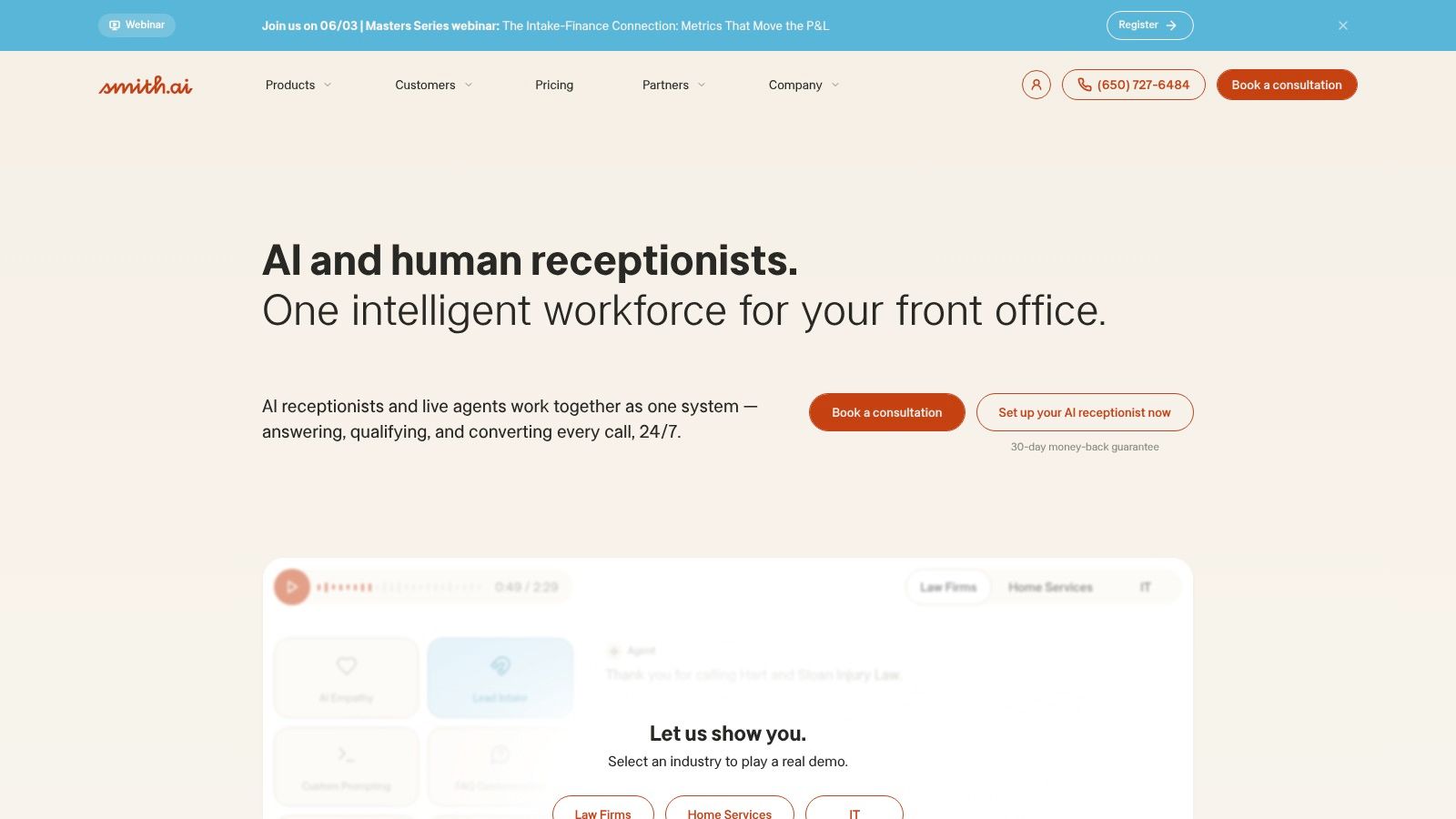
Smith.ai sits in the hybrid category and does a good job of owning that position. It offers live receptionists, an AI receptionist, call summaries, recordings, scheduling workflows, and strong CRM and calendar integrations. That's useful for firms that want automation to absorb repetitive traffic but still need people available for higher-stakes calls.
Its biggest practical advantage is pricing structure. Smith.ai's human plans are built around per-call billing rather than pure per-minute billing, which can make forecasting easier if your call lengths swing from short to long.
The real trade-off
Per-call pricing usually works better for businesses with uneven conversation lengths. If one customer calls to confirm an appointment and another spends ten minutes explaining a messy issue, your bill doesn't jump because one call ran long. That's a real advantage for law firms, consultative service providers, and lead-gen teams.
Where teams get caught is escalation design. If you use the AI layer but don't define exactly which calls need a live handoff, you'll either pay for too many escalations or frustrate callers by keeping them in automation too long.
A few scenarios where Smith.ai makes sense:
- Lead qualification before booking: Let AI gather basics, then pass stronger prospects to a live receptionist.
- Spam and nuisance call control: Use automation to filter low-value traffic before it reaches people.
- Calendar-heavy workflows: Connect scheduling directly into existing calendars so reception isn't working from a separate system.
Best for
Smith.ai is a good option for businesses that want one vendor for both automation and live support, especially when they already rely on CRM-driven intake or appointment workflows. It's not the cheapest route, but it can be efficient when you're deliberate about what the AI handles and what people should own.
4. PATLive
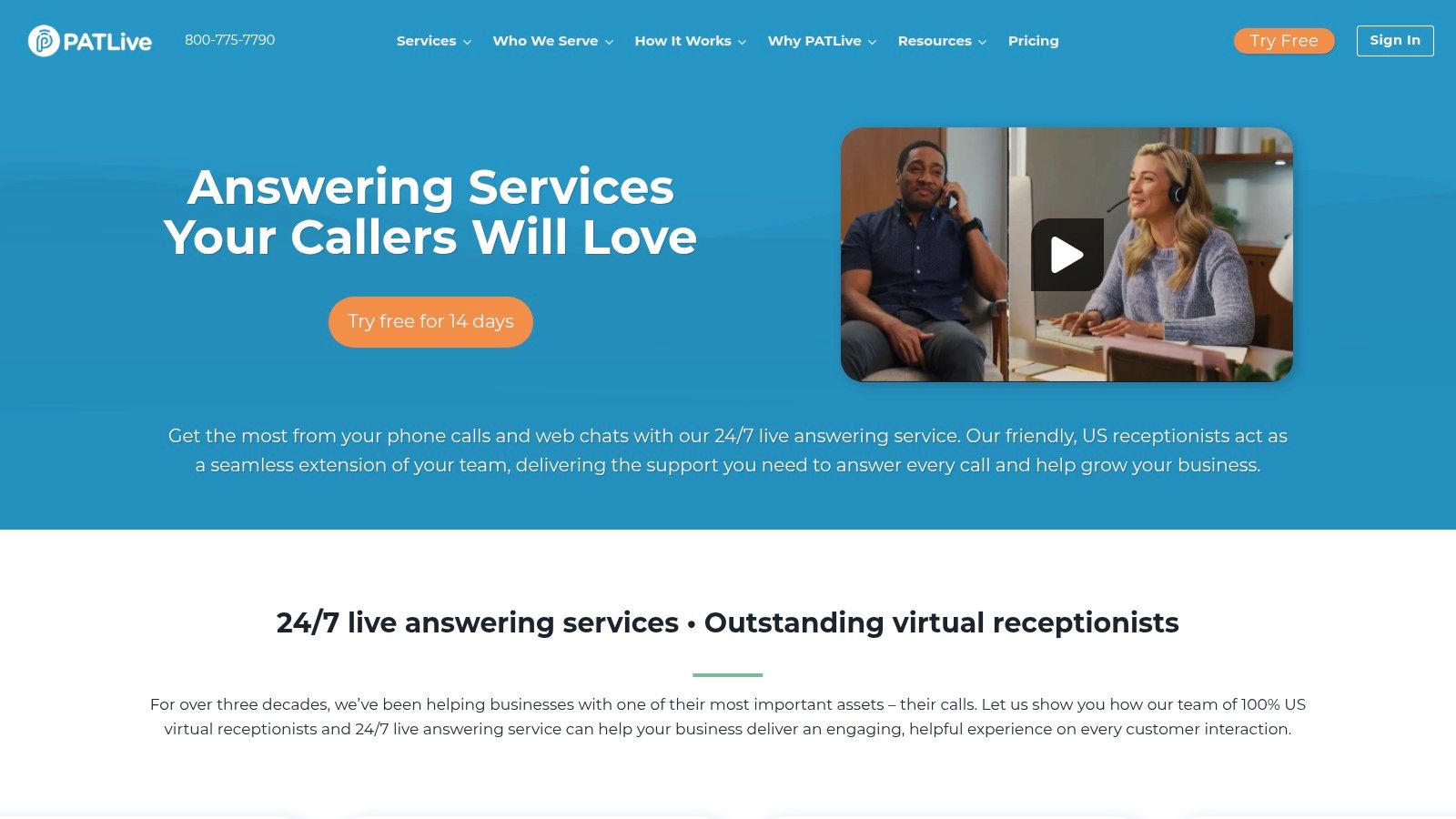
PATLive is one of the easier human-first services to test because the offer is straightforward. U.S.-based receptionists, no long-term contract requirement, common business tasks included, and a free trial. That simplicity matters if you don't want a long sales process just to learn whether outsourced answering will work for your business.
The service covers common use cases well: call screening, scheduling, intake, dispatch-style routing, and overflow support. It also offers bilingual support and web chat as add-ons.
Why some businesses choose PATLive first
PATLive is a practical starting point for owners who are moving off voicemail or inconsistent internal call coverage. You can get it running without redesigning your whole communications stack. For a small plumbing company, a property manager, or a local clinic, that lower-friction start has real value.
The main caution is the same one you'll see with many traditional services. Minute-based billing rewards short, clean calls. It punishes messy conversations, repeat explanations, and undertrained caller handling because every extra minute lands on the invoice.
If you're new to outsourcing phones, test your scripts on real after-hours scenarios first. Emergency calls, pricing questions, and reschedules expose weak call flows immediately.
PATLive also works well for teams comparing mainstream live answering providers before moving into a more automated setup. This guide to call answering service models is useful if you're trying to decide how much structure you need before signing up.
Best for
PATLive is best for businesses that want a traditional receptionist service with transparent plans, quick testing, and U.S.-based agents. It's less ideal for teams that want deep automation or highly customized workflows across many systems.
5. AnswerConnect
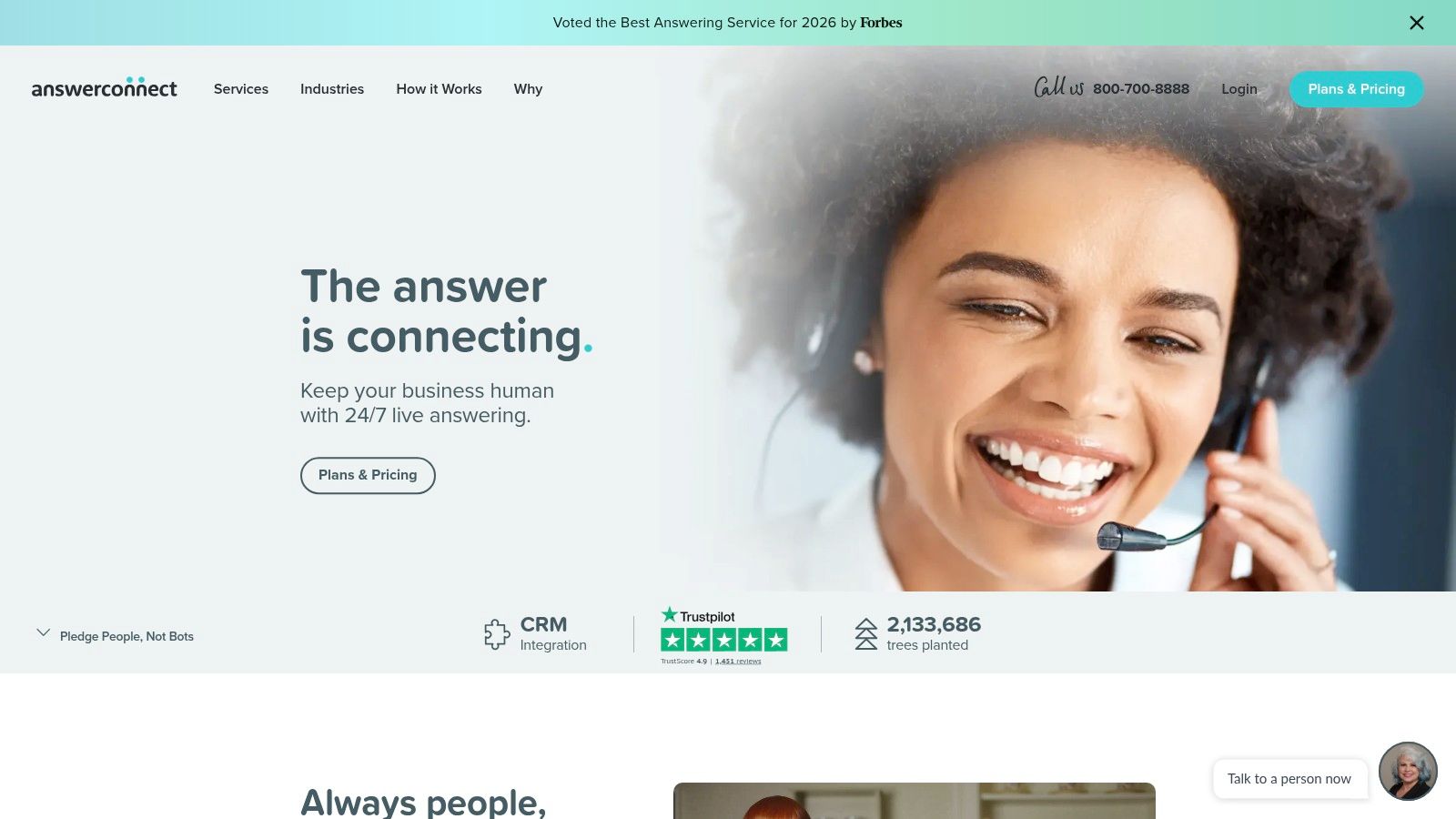
AnswerConnect is another human-first provider, but its practical appeal is the omnichannel angle. If you want phone answering and live chat under one roof, it makes the operation easier to manage than stitching together separate vendors.
The core offer is familiar: live receptionists, custom scripting, app and portal access, recordings, transcripts, and integrations. For businesses that get a mix of calls and website inquiries, the combined setup can tighten response handling.
What it does well
AnswerConnect works well when your team needs consistency more than complexity. A service business can route calls after hours, collect intake information, and use chat for daytime web leads without building separate playbooks for each channel.
I like it most for straightforward front-office coverage. That includes:
- Overflow handling during busy periods: Keep in-house staff focused while the service absorbs routine inbound traffic.
- After-hours lead capture: Collect name, service need, location, and urgency so the next shift starts with usable details.
- Basic omnichannel continuity: Keep phone and chat with the same provider so scripts stay aligned.
The watchout is plan economics. Like other minute-based providers, overages can creep up, and setup fees on some tiers matter if you're experimenting rather than committing. That's not necessarily a deal-breaker. It just means you should map expected call volume before assuming the entry plan will hold.
Best for
AnswerConnect is a solid fit for small and midsize businesses that want competent live coverage across phone and chat without moving into a more advanced AI-heavy model. It's dependable, easier to buy than many enterprise-style services, and strongest when your workflows are clear and repeatable.
6. Nexa
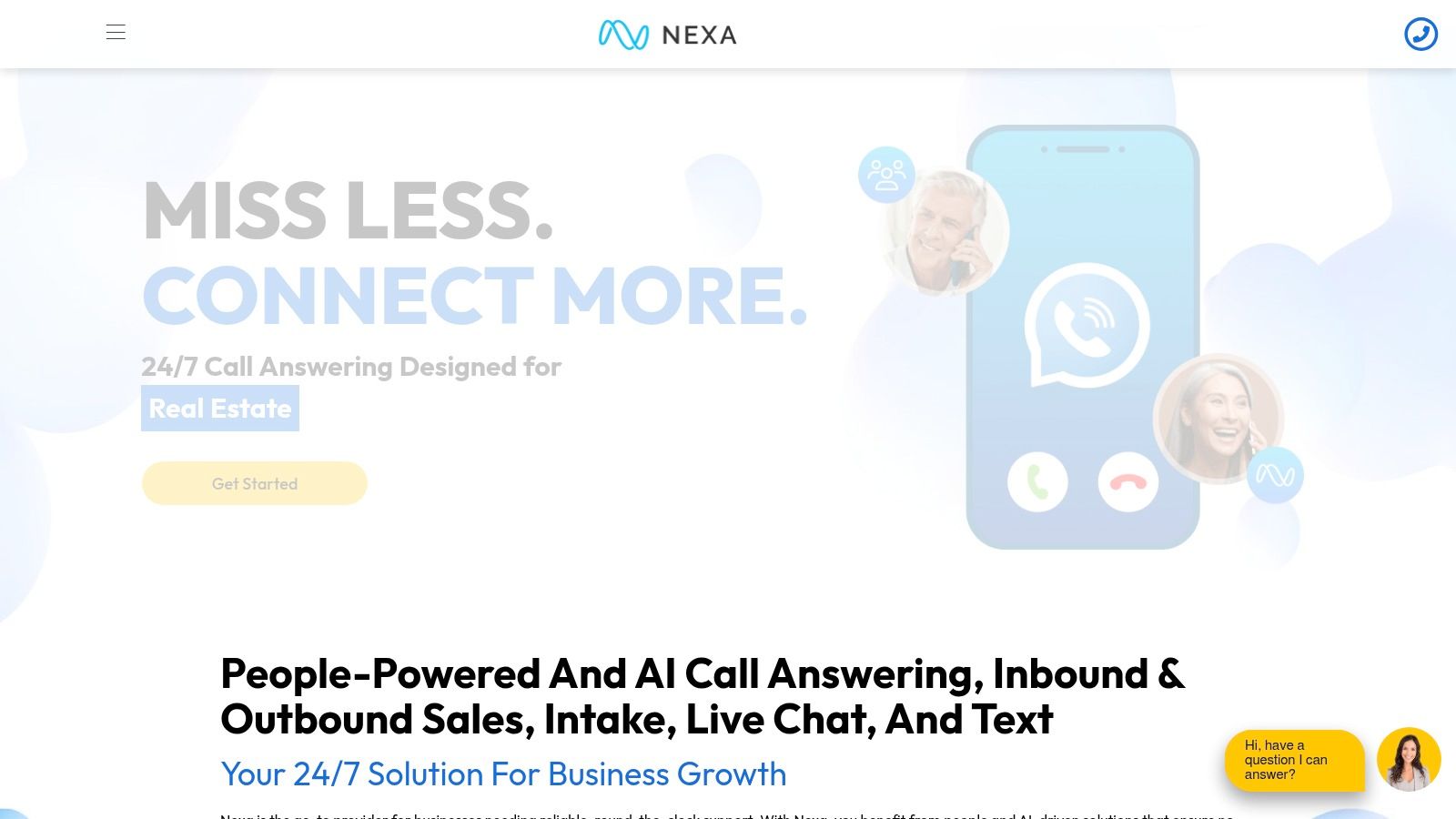
Nexa is built for businesses where answering the phone isn't a clerical task. It's part sales process, part triage desk, part after-hours coverage. That's why Nexa tends to resonate with home services, healthcare, legal, and other industries where a missed call can mean a lost lead or a delayed urgent response.
It combines live answering with chat and text, adds bilingual support, and puts emphasis on escalation workflows. That's more valuable than a generic script library when your business has on-call rotations, urgent service requests, or location-specific routing.
Best use case
Nexa makes sense when your operation has real-world complexity behind the phone line. A single inbound call might need to identify the caller, understand the problem, route based on time of day, and trigger the correct person on duty. Not every answering provider is disciplined enough for that.
Its quote-based pricing creates more friction in the buying process, but that's often the trade for a more managed service. The harder part is forecasting cost if the billing logic includes both talk time and after-call work. Businesses with highly variable call handling should ask very pointed billing questions up front.
Here's where Nexa usually performs well:
- After-hours service businesses: HVAC, plumbing, restoration, and other teams that need urgent triage.
- Healthcare-related intake: Situations where accuracy, escalation, and scripting discipline matter.
- Multi-channel operations: Teams that want phone, text, and chat managed together.
Best for
Nexa is a good choice for businesses that need process discipline more than bargain pricing. If your calls trigger dispatches, on-call notifications, or structured intake, it can be a better fit than a simpler receptionist service.
7. Abby Connect
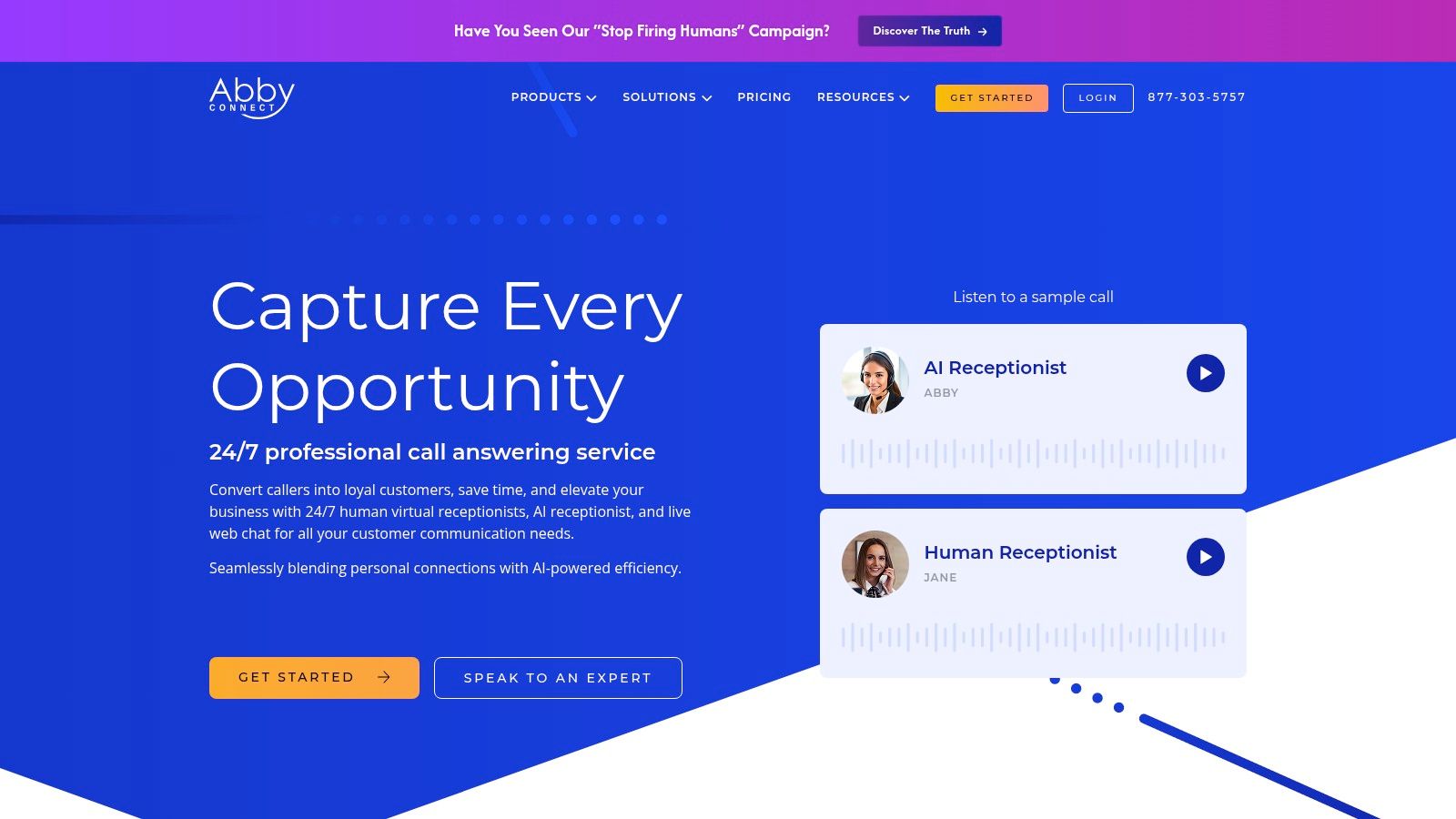
Abby Connect is one of the clearer examples of a vendor trying to serve both traditional and modern buyers. It offers human receptionist plans and AI receptionist plans, with published pricing for both. That side-by-side visibility is useful because it lets you choose based on workflow, not marketing language.
Its human model uses U.S.-based in-office teams rather than a loose remote pool. For some businesses, especially in healthcare and professional services, that quality-control angle matters.
Where Abby Connect stands out
The dedicated team approach is the differentiator. Instead of treating every call like generic overflow, Abby Connect tries to create familiarity so the receptionists sound more embedded in your business. That doesn't matter much for simple message taking. It matters a lot when callers ask follow-up questions or expect continuity.
The dual AI and human structure also makes Abby Connect easy to phase in. A business can start with AI for routine coverage, then add human support where needed instead of making an all-or-nothing decision on day one.
Better answering isn't just about answer speed. It's about whether the caller leaves the interaction confident that the business understood what happens next.
Best for
Abby Connect fits businesses that want transparent pricing, a more controlled receptionist environment, and the option to compare AI and human service inside the same vendor relationship. If you're a small business deciding between automation and traditional coverage, this roundup of the best answering service for small business helps frame the decision.
It's usually less attractive for very low call volumes because dedicated human service can be pricey relative to usage. But for firms that value consistency over cheapest-entry pricing, Abby Connect is worth serious consideration.
8. Davinci Virtual
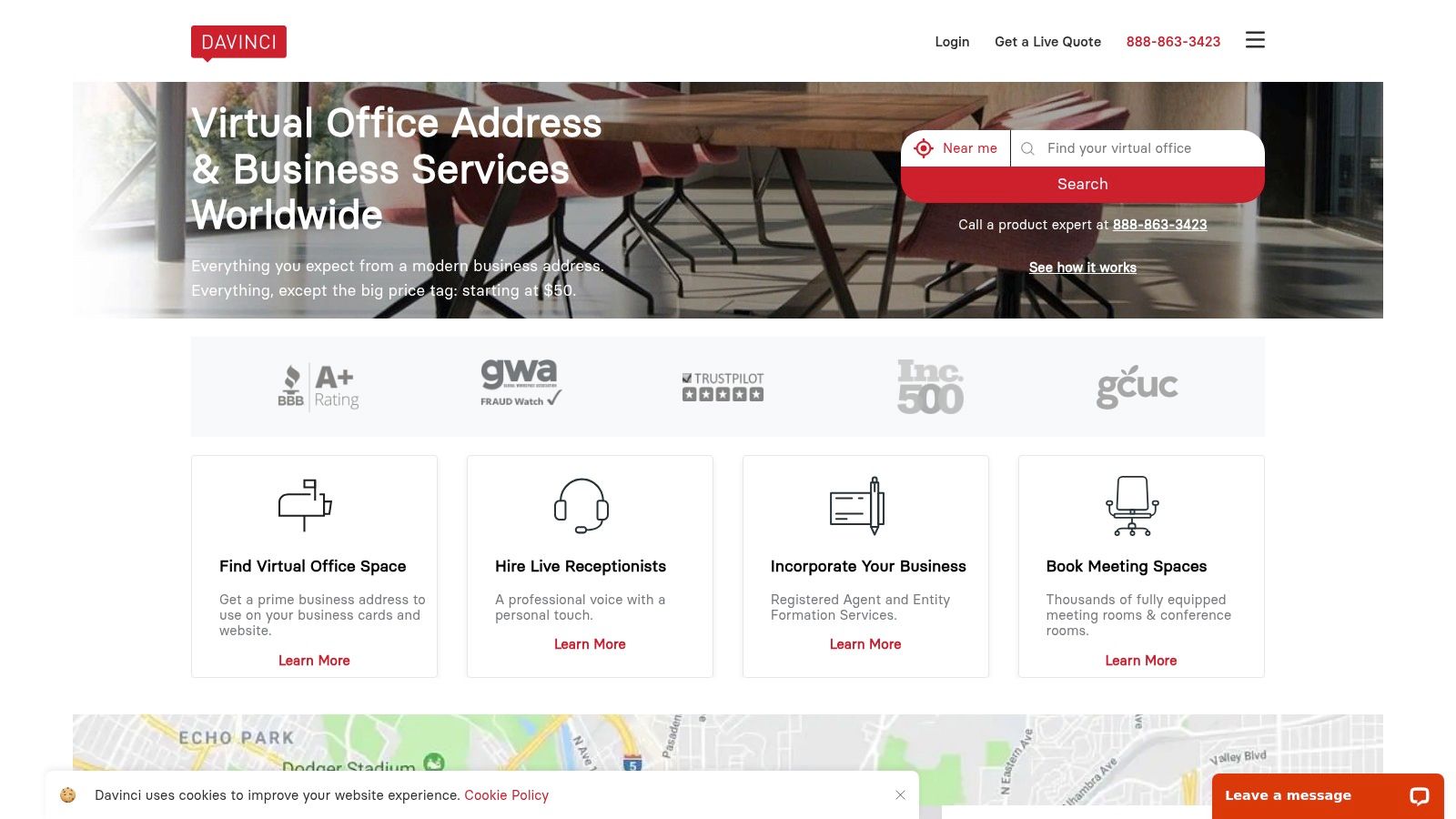
Davinci Virtual isn't just an answering service. It's a virtual office company that also offers live receptionist support. That combination gives it a different place in the market from most of the providers on this list.
If you need a business address, meeting room access, phone number services, and light receptionist coverage in one package, Davinci Virtual can simplify vendor sprawl. That's attractive for solo operators, small agencies, remote-first startups, and businesses trying to look established in a new market.
The practical trade-off
Davinci Virtual works best when phone handling is important, but not operationally central. If your phones drive the business, you'll probably want a more specialized provider. If the phone line mainly supports a broader virtual office presence, Davinci's bundled approach makes more sense.
Typical fit looks like this:
- Very small teams: You need a business number, call routing, and occasional receptionist coverage.
- New market entry: You want a local presence plus basic answering before committing to a fuller front-office setup.
- Professional services with lighter call flow: Think consultants, agencies, or solo firms with periodic inbound calls.
Its lower-entry plans are useful, but they usually come with small minute buckets. That's where businesses get surprised. The sticker price looks light until call volume rises or appointment scheduling gets layered in as an add-on.
Best for
Davinci Virtual is best for small teams that want bundled virtual office services with receptionist coverage attached. It's not my top recommendation for high-volume service operations, but it can be a sensible all-in-one option for businesses that need presence and coverage more than deep intake handling.
9. MAP Communications
MAP Communications is the compliance-forward human-first option in this list. It offers bilingual answering, a secure client portal, reporting, and public pricing, but its strongest appeal is to organizations that care about reliability, process, and documented security posture.
For healthcare, legal, property management, and other sectors where call content can be sensitive, that positioning matters. A lot of answering services talk generally about professionalism. MAP leans much harder into secure handling expectations.
Why buyers choose MAP
This is the provider I point to when a business says, "We need public pricing, but we also need a vendor our compliance team won't hate." The pay-as-you-go and scalable plan structure can also help organizations that don't want to overcommit while they test outsourced coverage.
Another angle matters here too. The broader remote-work labor pool is now deep enough to support distributed answering operations at scale. Secondary summaries of BLS-based telework data put the U.S. telework rate at about 22.8% to 23.7% of employed people in 2025, which helps explain why remote answering isn't a fringe staffing model anymore.
That doesn't automatically make every provider good. It does mean buyers should evaluate execution, not the fundamental viability of remote delivery.
Best for
MAP Communications is a strong choice for businesses that want live answering with a visible pricing structure and a more compliance-aware posture. It's especially practical when secure communication handling matters more than flashy automation.
10. Moneypenny (U.S.)
Moneypenny U.S. covers a broad middle ground. It offers people-answered service, AI answering, and hybrid coverage, with bilingual support, warm transfers, integrations, and app or dashboard access. If you want flexibility without forcing a hard choice between human and automated answering, it has a strong practical case.
This is useful for businesses whose call patterns change throughout the day. You might want human coverage during business hours, AI help after hours, and overflow support during spikes. Not every vendor handles that mix cleanly.
Where it works well
Moneypenny is a sensible fit when you want published pricing and multiple delivery models in one relationship. That reduces the chance you'll outgrow the service just because your call strategy changes.
The main caution is familiar. Minute-based overages still apply, and some estimate assumptions can make a plan look more comfortable on paper than it feels in production. That's why I'd treat published tiers as planning tools, not guarantees.
One more market signal is worth noting. Independent research estimated the remote workplace services market at USD 48.3 billion in 2026 and forecast it to reach USD 156.34 billion by 2031, with a 26.55% CAGR. For buyers, the takeaway isn't abstract growth. It's that the tools and managed services behind remote operations are getting more standardized, which supports more reliable distributed answering models.
Best for
Moneypenny is best for businesses that want optionality. If you aren't sure whether you'll land on people, AI, or a blend, it's one of the easier platforms to evaluate without boxing yourself into a single model too early.
Top 10 Work-at-Home Answering Services Comparison
Roughly one pricing detail decides whether an answering service feels efficient or expensive in practice: are you paying by the minute, by the call, or through a hybrid model that shifts work between AI and people? That billing logic matters as much as feature lists. The table below compares these 10 services by operating model first, so you can match them to your workflow instead of sorting by brand familiarity alone.
| Solution | Service model | Best fit | Main strengths | Main trade-offs |
|---|---|---|---|---|
| Recepta.ai | Hybrid, AI-first with human support | Businesses that want automation for intake, booking, and follow-up, but still need human handling for exceptions or higher-value conversations | Combines AI receptionist functions with live agent support, broad integration coverage, and fast setup for teams that want one system for routine and escalated interactions | Custom pricing requires a sales process, and the fit depends on how much of your call flow can be standardized |
| Ruby | Human-first with AI add-ons | Small businesses that treat the phone as part of the brand experience, especially legal, healthcare, and service firms | Polished live receptionist experience, bilingual support, scheduling, payments, and mobile tools | Premium pricing and minute-based billing can get expensive for longer calls |
| Smith.ai | Hybrid | Firms that want automation first, with human backup for qualified leads and scheduling | Clear per-call human plans, strong CRM and calendar integrations, call summaries, AI-to-human escalation | Costs can rise if many calls trigger escalations or downstream add-ons |
| PATLive | Human-first | Owners who want live U.S.-based answering with a simple onboarding process and low testing risk | 24/7 coverage, appointment scheduling, no setup fee, straightforward trial access | Minute-based pricing is less forgiving for long or complex calls |
| AnswerConnect | Human-first | Teams that want one vendor for phone answering and chat, with custom scripts and around-the-clock coverage | Omnichannel support, customizable handling, portal access, recordings and transcripts | Overage math and setup costs deserve close review before volume scales |
| Nexa | Human-first with workflow depth | Home services, healthcare, and legal teams that need structured triage and escalation | Strong operational call handling, bilingual support, reporting, and managed phone, chat, and text workflows | Quote-based pricing makes side-by-side budgeting slower |
| Abby Connect | Human-first with hybrid options | Businesses that want consistency from dedicated teams, especially in sensitive or relationship-driven environments | Dedicated receptionist teams, published pricing, HIPAA-available options, AI plans with human backup | Human plans cost more, and dedicated coverage is most valuable when call handling quality matters more than low price |
| Davinci Virtual | Human-first, budget-oriented | Very small businesses that need light answering plus virtual office services | Low entry cost, virtual numbers, voicemail, auto-receptionist, and office-related add-ons in one package | Better for lower call volume than for high-touch intake or complex scheduling |
| MAP Communications | Human-first, compliance-focused | Healthcare, legal, property management, and organizations with stricter security requirements | Strong compliance posture, bilingual answering, secure portal, recordings, and scalable plans | Less attractive if compliance is not a priority and you mainly want low-cost lead capture |
| Moneypenny (U.S.) | Hybrid | Businesses that want flexibility between live receptionists and AI without committing too early to one model | Multiple delivery options, warm transfers, CRM integrations, mobile dashboard, and visible plan structures | Minute overages still matter, especially if calls routinely run longer than expected |
The practical divide is straightforward. Human-first services suit businesses where tone, reassurance, and call control matter more than speed alone. AI-first and hybrid services suit teams that need faster intake, cleaner routing, after-hours capture, and lower labor cost on repetitive calls.
I usually advise clients to shortlist by call pattern, not by feature count.
If your office handles consults, urgent service requests, or emotionally sensitive calls, Ruby, Abby Connect, MAP Communications, and Nexa deserve closer review. If your call flow is repetitive and operational, such as appointment booking, lead qualification, FAQs, and follow-up, Recepta.ai and Smith.ai are often better aligned. If you want a lower-commitment test case, PATLive and Davinci Virtual are easier starting points. If you need phone plus chat under one roof, AnswerConnect stands out. If your requirements may change between live answering and automation, Moneypenny gives you more room to adjust.
The cost trade-off is where many buyers make the wrong call. Per-minute pricing works fine for short, scripted interactions, but it becomes expensive when receptionists stay on longer to explain, calm, screen, or schedule. Per-call pricing is easier to predict if calls vary in length. Hybrid models can lower cost and improve response times, but only if the AI can complete a meaningful share of the work instead of handing off every other call.
That is the key comparison point. Choose the service model that fits how your team handles customer conversations, not the one with the longest feature table.
From Answering Calls to Building Your Business
A missed call rarely stays just a missed call. It often becomes a lost lead, a delayed response, or extra admin work your team has to clean up later. That is why choosing a work-at-home answering service by category matters more than choosing by feature count.
The practical question is simple. Do you need a human-first service for trust-heavy conversations, an AI-first service for repetitive intake, or a hybrid model that splits routine work from exception handling?
Human-first providers fit businesses where tone, patience, and live judgment carry real weight. Ruby and Abby Connect are better suited to firms that want a polished front desk experience. Nexa and MAP Communications make more sense when calls need structured triage, escalation, or tighter process control. PATLive and Davinci Virtual are easier entry points for smaller teams that want coverage without a complicated rollout. AnswerConnect stands out for businesses that also need chat support in the same operation. Moneypenny gives buyers more flexibility if they expect their mix of live answering and automation to change over time.
AI-first and hybrid services solve a different problem. They reduce the drag of repetitive calls, speed up intake, and create cleaner records inside the systems your team already uses. That model works well for appointment-driven businesses, home service companies, and sales teams that care more about fast capture and routing than long, relationship-building call handling.
Staffing quality still matters, even with strong software. One hiring page from ASD shows how tightly managed this work can be: agents may handle 100+ inbound and outbound calls, web forms, or chats per day, must work at least 8 hours every weekend within a defined Friday-to-Sunday window, and are evaluated on transcription, spelling, grammar, and comprehension, with pay presented as an effective $22 to $27 per hour with bonuses. For buyers, that is a useful reminder. Service quality depends on hiring standards, supervision, workload design, and escalation rules, not just brand promises.
Use-case fit should drive the decision:
- Choose human-first for legal intake, medical scheduling, high-value consults, and any call where reassurance and conversation quality affect conversion.
- Choose AI-first for FAQs, lead capture, appointment requests, overflow routing, and other repeatable interactions with clear rules.
- Choose hybrid if your operation gets both. Routine calls can be handled fast, while edge cases move to a person.
My default recommendation for growing businesses is still hybrid, because it usually gives the best balance of response time, labor efficiency, and caller experience. But the right pick depends on workflow. If your calls are short and predictable, per-minute billing can work. If call length varies widely, per-call pricing is often easier to budget. If you are considering automation, check whether the AI completes the task or just passes work to an agent after a short delay.
Recepta.ai fits the AI-first or hybrid side of this market and is worth keeping on the shortlist if your team wants around-the-clock coverage, automated intake, and fewer manual handoffs. The better choice, though, is always the one that matches how your business handles real calls once the script breaks.