
Best Phone Answering Service: 7 Top Picks for 2026
A homeowner calls your plumbing company after hours because water is spreading across the kitchen floor. Your technician's driving, the office is closed, and the call reaches voicemail. Before anyone checks the message, the homeowner has booked another plumber.
The best phone answering service prevents that handoff to a competitor, but answering is only the beginning. Someone still needs to capture the address, recognize urgency, follow your dispatch rules, and document what happened.
Start with the buying situation rather than the vendor. AI-first buyers should consider Recepta.ai or Smith.ai; human-first teams should compare Ruby and AnswerConnect; all-human buyers should consider PATLive. Abby suits teams testing a blended workflow, while Posh offers a budget-test option for modest usage.
Your billing model matters just as much: per-call pricing, per-minute billing, and hybrid minutes reward different call patterns. Before comparing proposals, decide whether you need emergency dispatch, accessible patient scheduling, confidential legal intake, or location-specific franchise routing. Then test the provider against that actual job, not just a polished greeting.
1. Recepta.ai
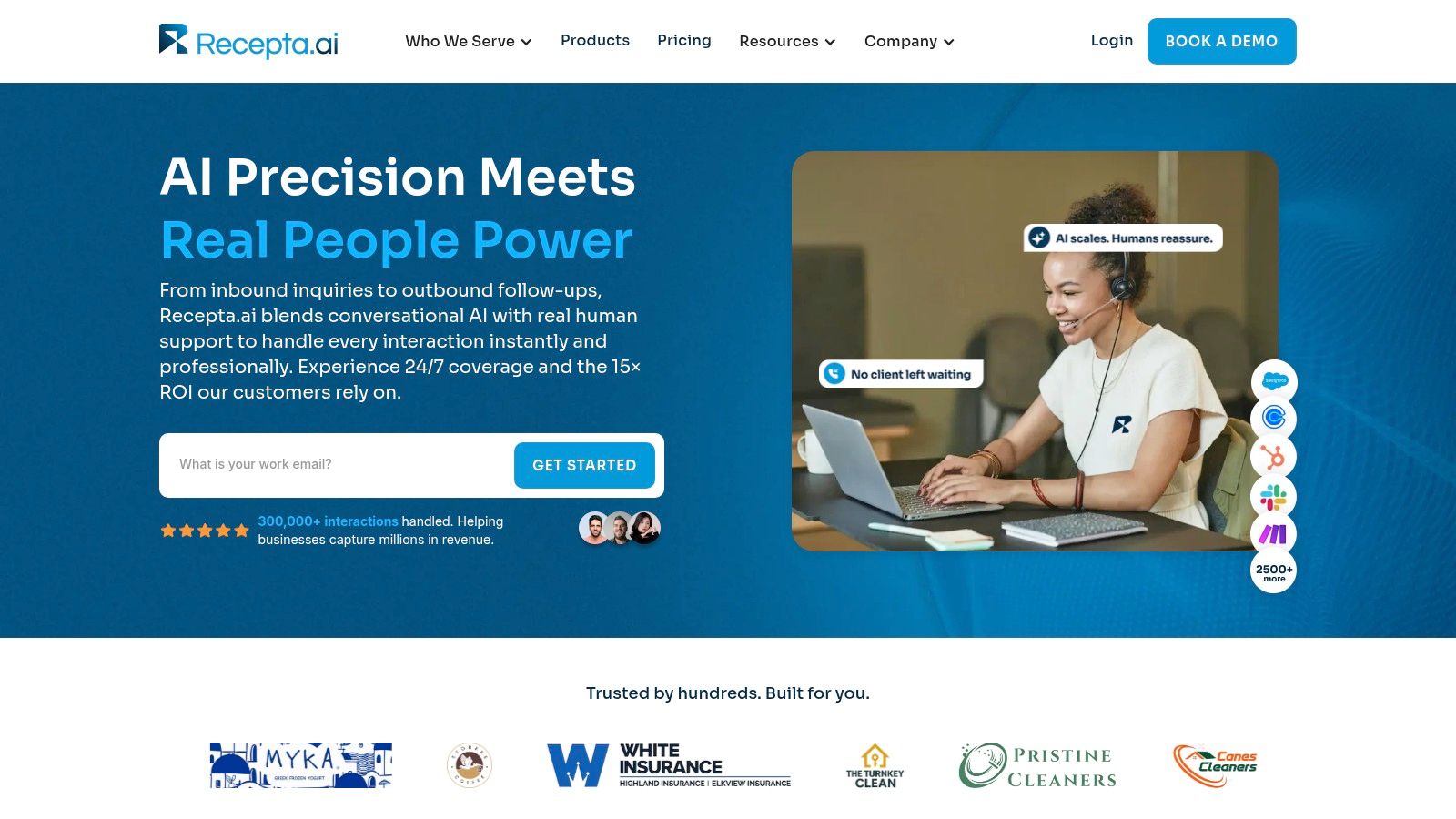
A maintenance request and a possible safety emergency need different responses. Recepta.ai combines conversational AI with trained human receptionists, with 24/7 call answering and custom workflows for qualifying callers, scheduling appointments, routing issues, and following up. AI can handle routine conversations; when a caller needs more nuanced support, the call can be handed to a human receptionist following the business's playbook.
For a home service company, the setup should specify what information to capture, which calls need urgent attention, and when to escalate. Those rules help ensure a caller reporting a potentially dangerous situation is not handled like someone booking routine maintenance.
Where the hybrid model earns its place
Recepta.ai works with CRMs, calendars, messaging platforms, and industry-specific systems. Call handling can include lead capture, scheduling, inbound and outbound calls, spam filtering, and follow-ups. Custom scripts help keep responses consistent across callers and locations.
- Operational strengths: Receptionists and AI tools can capture caller details, schedule appointments, document interactions, and route calls.
- Multi-location fit: Centralized call handling can follow branch-specific scheduling, routing, and messaging instructions.
- Commercial trade-off: Usage beyond plan limits may incur overage or usage-based fees. Check the rates in the pricing terms or order before choosing a plan.
For a franchise, set the location-routing rules before connecting calendars. A caller who needs the northern branch should reach that branch's scheduling workflow, rather than a shared calendar that leaves staff to sort out the booking later.
Recepta.ai reports a 30% increase in qualified leads and 80% cost savings versus in-house reception. Treat these as company-reported results, not a forecast for your business. Compare your own qualified bookings and total service costs when assessing the fit.
Practical rule: A useful handoff gives the human receptionist the caller's details and the next required action. Otherwise, callers may have to repeat themselves.
Security and compliance-ready practices are part of the service. Healthcare, legal, finance, and insurance teams should check that the proposed workflow and contractual protections fit the information callers may share.
2. Smith.ai
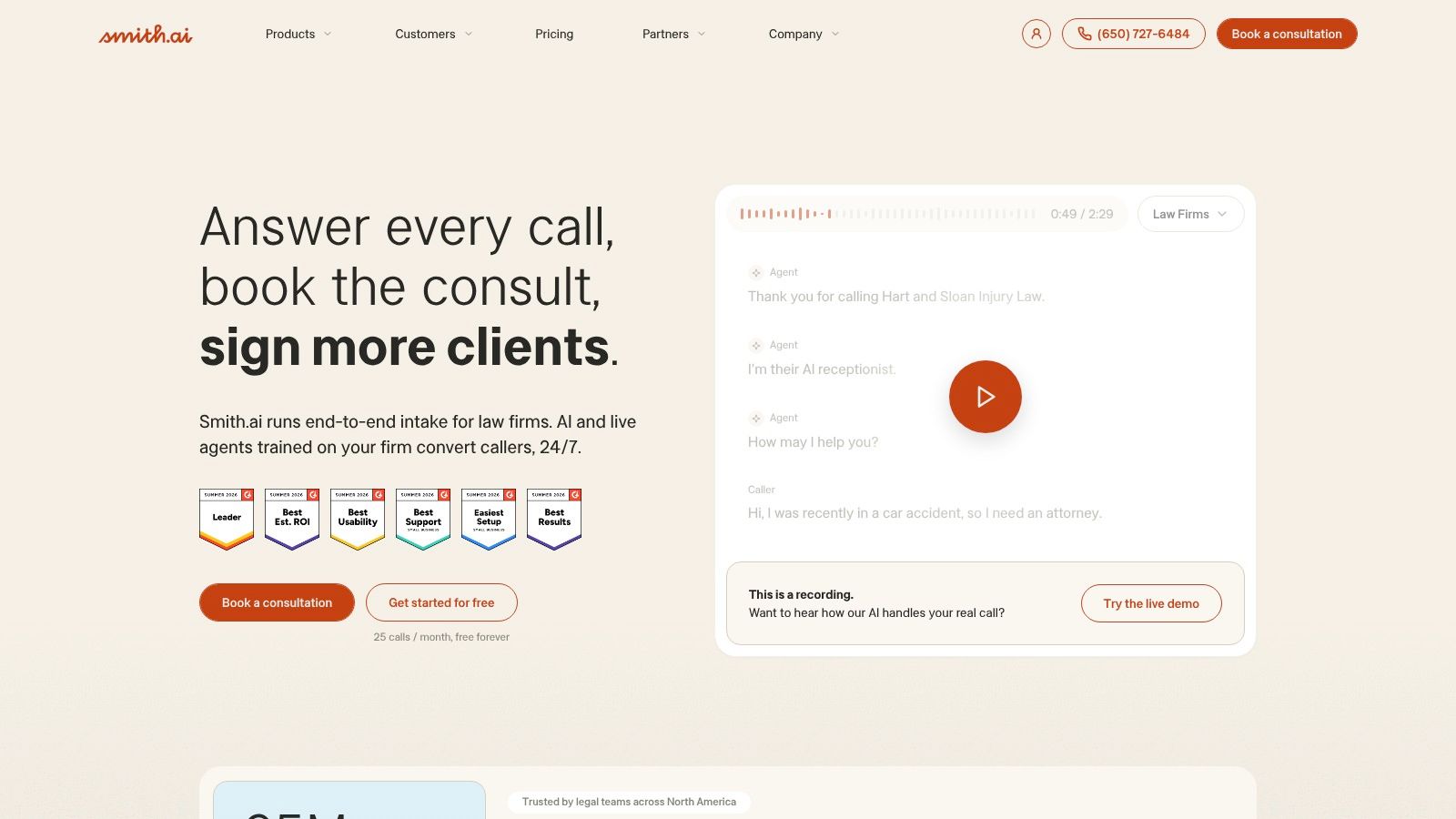
A law firm doesn't just need a caller's name. It needs a usable intake record, appropriate routing, and clear boundaries around what the receptionist may promise. Smith.ai is a strong shortlist option for lead-focused professional firms choosing between AI, live receptionists, and a combination of both.
Smith.ai offers round-the-clock AI and human answering options, an AI entry tier without a subscription charge, and per-call human receptionist plans. Lead qualification, appointment scheduling, and integrations including Clio and Zapier make it relevant when the next step matters more than a message notification.
Compare the intake workflow, not just the greeting
Say an estate-planning prospect calls with questions about fees and appointment availability. Configure the receptionist to collect contact details, identify the requested service, explain only approved information, and book a consultation rather than improvise legal guidance.
- What works: Per-call billing is less sensitive to conversation length than minute-based billing, which helps when a qualified prospect needs time to explain a request.
- What costs extra: Recording, transcription, and other useful capabilities may involve add-ons. Month-to-month availability doesn't eliminate the need to model the complete bill.
- Where it fits poorly: Frequent, brief calls can make per-call billing less economical, and human handling becomes more expensive as call volume rises.
For legal buyers, this comparison of answering services for lawyers helps frame intake requirements beyond general reception.
I'd favor Smith.ai when structured qualification and professional-services integrations outweigh the appeal of the lowest entry price. Test an existing-client call alongside a new inquiry so both reach the right destination.
3. Ruby
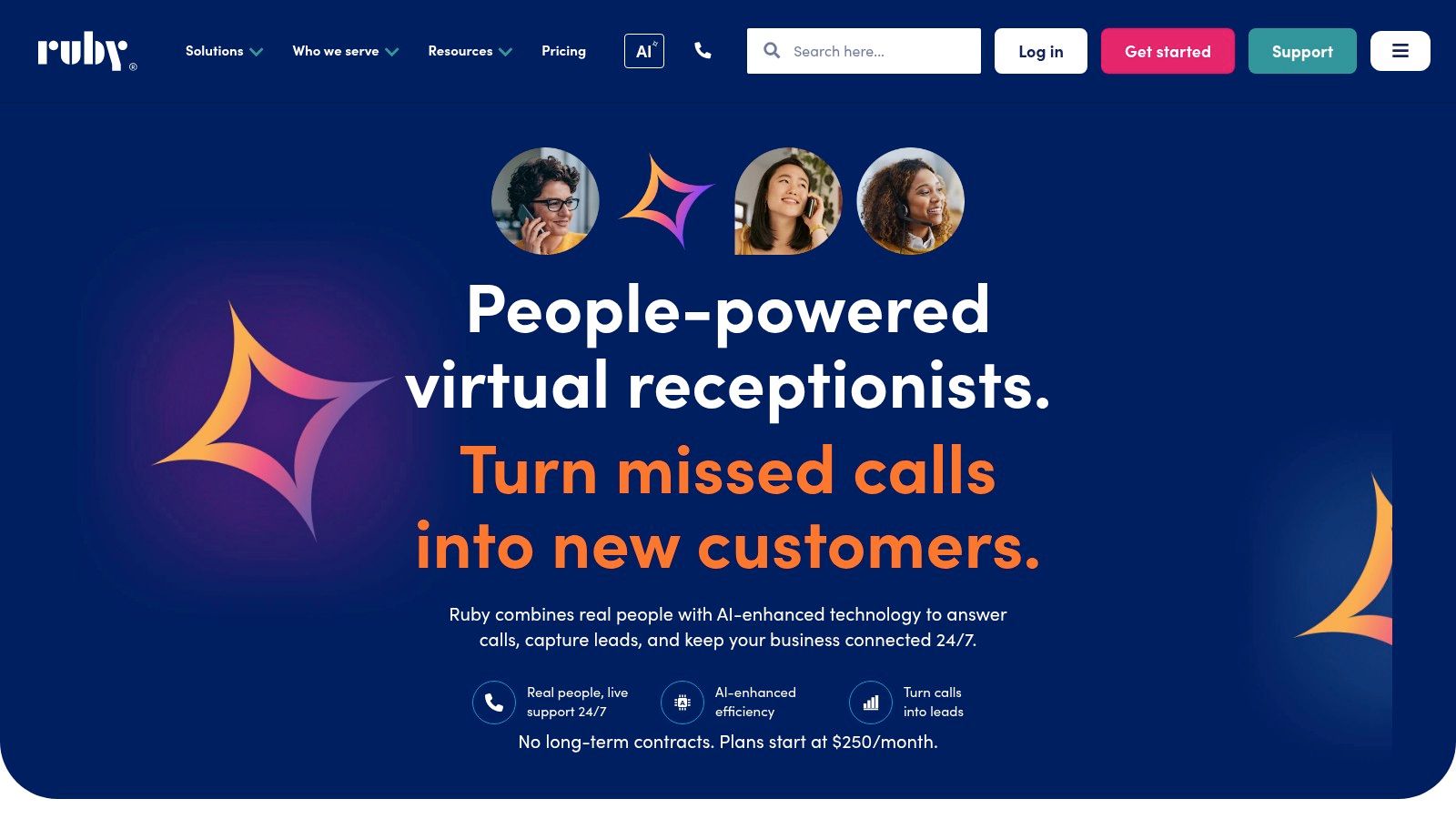
Choose Ruby when a live person answering is part of your service promise. Its human-centered approach suits professional practices and small offices that want receptionists to answer in the business's name, qualify inquiries, schedule appointments, and manage transfers.
Ruby lists live coverage including nights, weekends, and holidays, English- and Spanish-language answering, outbound assistance, and app and portal access. AI-supported transcripts and voicemail transcription help the office review communications without making AI the caller's primary point of contact.
For a dental office, a useful test is a nervous new patient asking about appointment availability. The receptionist should acknowledge the concern, collect approved intake details, and offer an appropriate slot without interpreting symptoms or promising insurance coverage.
Human answering is worth paying for when the conversation needs patience. It isn't a substitute for clear scheduling rules or accurate records.
Budget for conversation length
Ruby's minute-based model requires attention to both call frequency and duration. Its listed phone-plan allowances and prices vary across provider pages, so obtain a current written proposal rather than relying on a remembered starting price.
- Strengths: Custom handling, lead intake, scheduling, and access to the receptionist team support a small-office experience.
- Limitations: Long conversations consume allowances quickly, and high-volume businesses need to examine overages carefully.
- Buying test: Include transfers and outbound assistance in your cost review, not just inbound talk time.
Use this virtual receptionist pricing guide to distinguish an included minute allowance from a realistic monthly bill. Ruby belongs on the shortlist when human interaction is the priority and the budget can support it.
4. AnswerConnect
A restoration company receiving overnight calls needs more than a polite message. It needs someone to identify the property, capture the problem, and reach the correct on-call employee. AnswerConnect fits businesses purchasing human-led overflow and after-hours coverage.
AnswerConnect provides 24/7 live answering, custom scripts, lead capture, appointment scheduling, urgent transfers, and English- and Spanish-language service; its per-minute billing includes one-minute rounding. CRM connections, mobile and desktop apps, and live chat on some plans extend the workflow beyond the telephone.
Watch rounding and dispatch completion
The rounding rule matters when your traffic contains short calls. A brief wrong-number conversation or simple availability question can consume more billable time than the actual conversation suggests.
- Advantages: Human coverage, custom instructions, and appointment handling suit residential services, healthcare administration, and professional offices.
- Pricing traps: The entry plan has a setup fee, and overage minutes are charged separately. Include those costs when comparing published plans.
- Model limitation: This is a human-led option, not the natural starting point for buyers primarily seeking AI automation.
For a plumbing company, write an escalation ladder naming the primary technician, backup contact, and action if neither responds. Then test whether the receptionist records the failed transfer and alerts the office instead of treating an attempted transfer as completion.
The phone answering service pricing guide can help you compare billing units and incidental charges.
I'd shortlist AnswerConnect when the requirement is dependable human handling around the clock. The deciding test is whether an urgent request reaches an accountable person, not whether an agent answers.
5. PATLive
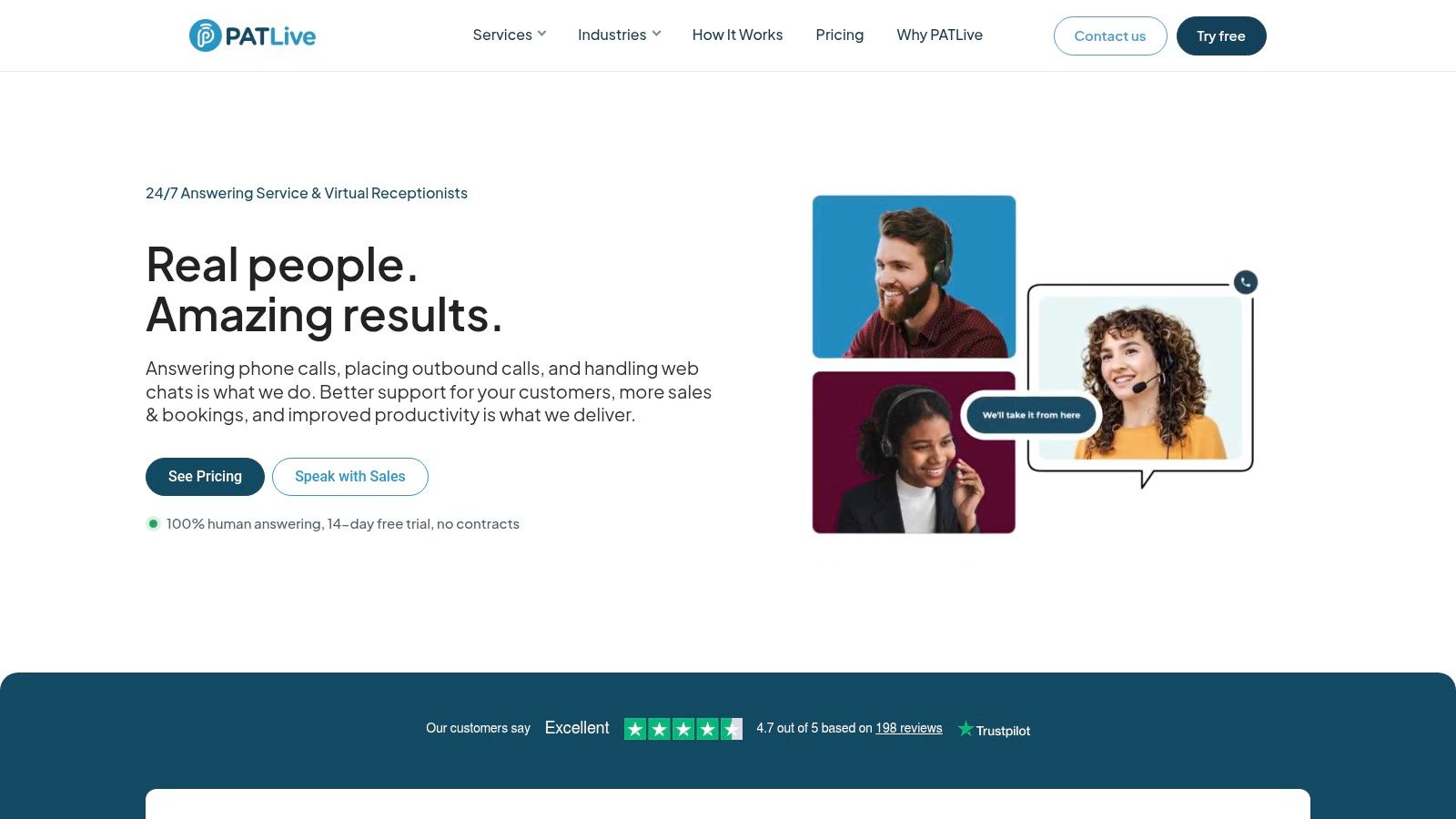
PATLive is the all-human pick for buyers who specifically want US-based receptionists. It supports message-taking, lead collection, new-client intake, appointment scheduling, transfers, and emergency dispatch.
PATLive lists 24/7 answering, Spanish-language service without a separate surcharge, no long-term contract, and a 14-day trial. Call recordings, reporting, apps, and integrations provide visibility into what receptionists captured and how they handled requests.
For a pest-control company, configure separate paths for a new infestation inquiry, an existing customer requesting a return visit, and a caller asking about an upcoming appointment. Those calls need different records and different next actions, even when the same receptionist answers them.
Buy the human workflow deliberately
PATLive makes sense when you've decided to keep callers with people rather than automate routine conversations. That choice can support complex intake, but it doesn't remove the need to constrain scripts and monitor usage.
- Broad answering scope: Core call-handling tasks support workflows beyond taking a name and number.
- Separate services: Outbound calling and live chat are priced separately, so an answering subscription isn't an all-channel communications package.
- Usage exposure: Per-minute billing becomes harder to predict when calls run long or seasonal demand changes.
Trial test: Give the receptionist an incomplete service address and an unavailable appointment request. Evaluate the clarification and fallback, not just the successful booking.
For healthcare and wellness offices, include a cancellation and rescheduling scenario. A receptionist who accurately releases the old slot and records the replacement has done more useful work than one who merely sends the front desk a message.
PATLive is less compelling for businesses whose main objective is AI automation. Choose it because you want human delivery of a defined playbook.
6. Abby
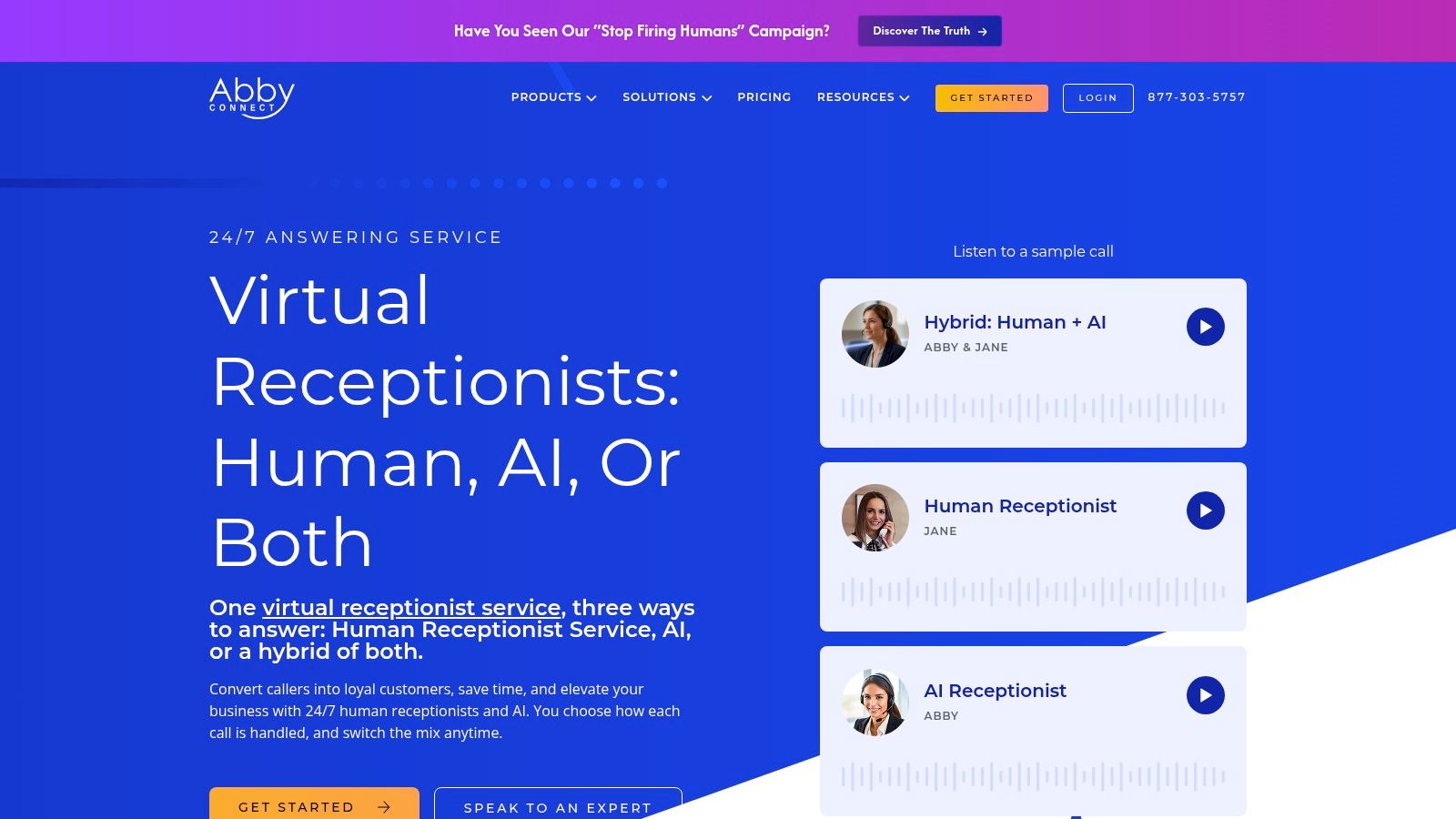
Abby suits buyers who want to adjust the AI-to-human mix under a shared subscription. Instead of committing every interaction to the same handling model, businesses can reserve people for complicated conversations and automate routine requests.
Abby says an AI-handled minute counts as half an Abby Minute, and lists 24/7 coverage without additional night or weekend charges. Its offering includes English/Spanish service, custom greetings, screening, transfers, intake, scheduling, recordings, summaries, and app and portal visibility.
Model the handoff as well as the allowance
Consider a property-management office. AI could handle approved office-hours questions and routine appointment requests, while a human handles an upset tenant or a request outside the script. The operational question is whether the receiving person gets the context already collected.
The billing question is separate: how much of each interaction uses AI, how much uses human time, and how does the mixed conversation appear on the invoice? Don't compare an Abby Minute allowance directly with another provider's human-minute allowance.
- Useful flexibility: Human, AI, or blended handling lets you allocate attention by call type.
- Commercial advantages: Month-to-month plans and a free trial support testing before a longer commitment.
- Trade-offs: Usage remains metered, overages matter, and AI and human workflows may not offer identical capabilities.
For patient-facing businesses, don't make a booking link the only way out. In Experian Health's 2025 survey, 55% of providers said patients were unsure how to use self-scheduling.
Test whether a caller can finish scheduling by phone. A blended model should preserve access, not just redirect administrative work back to the patient.
7. Posh
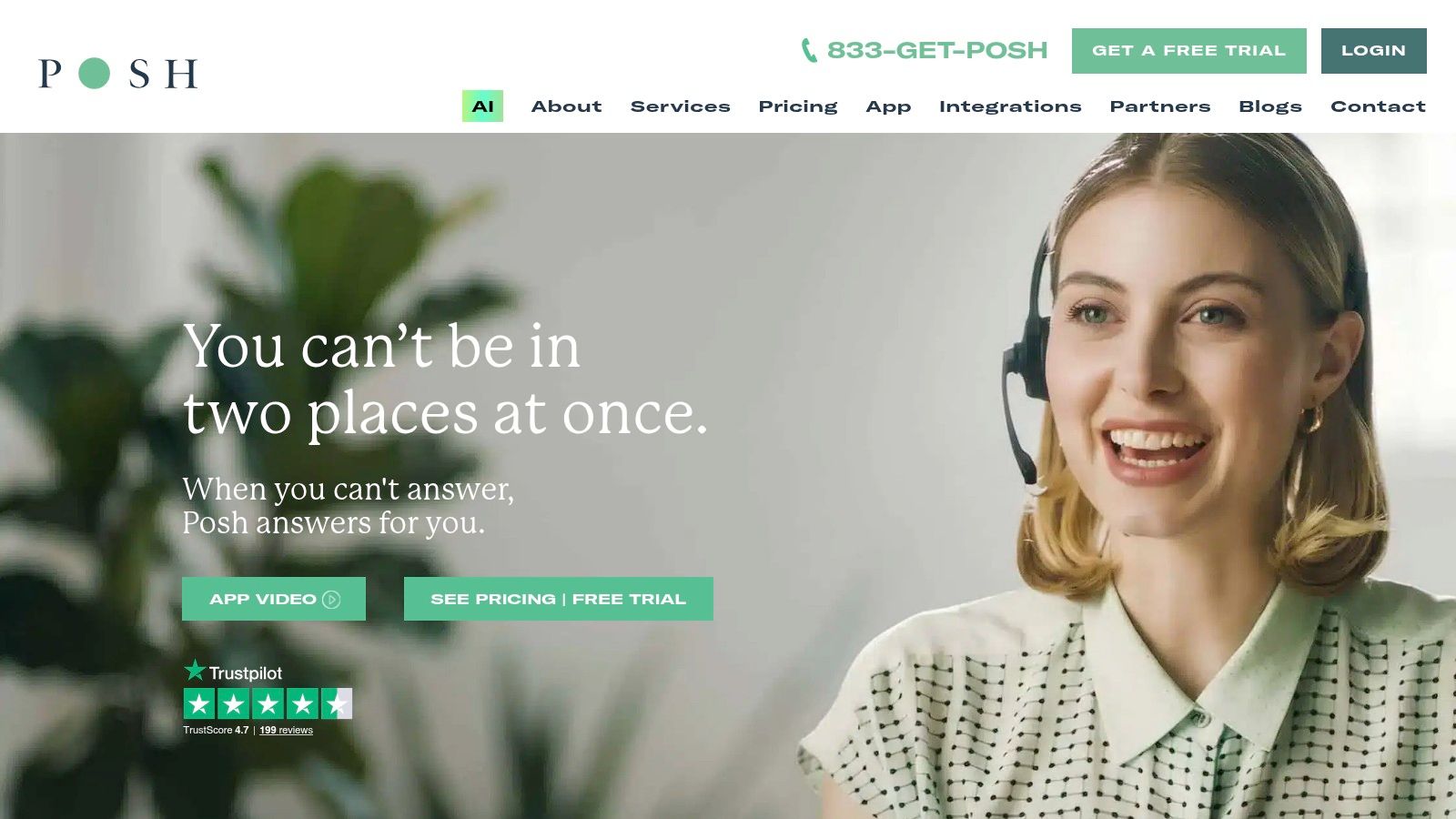
A solo consultant may need occasional overflow coverage, not a large monthly allowance. Posh is a budget-test candidate for modest usage, particularly when the owner wants live reception and shared tools for messages and business-number communications.
Posh offers round-the-clock availability, customizable call handling, client-success setup support, bilingual English/Spanish receptionists, software integrations, and an app and portal. It also describes AI-plus-human options, so establish the proposed handling model before comparing the quote.
Separate a small commitment from a small bill
The Chic entry plan combines a monthly base fee with per-minute charges. That structure can suit light usage, but the base fee isn't the total cost of having your calls answered.
Say a real-estate agent forwards calls only during property showings. The receptionist should distinguish an active client, a new buyer inquiry, and a vendor callback, then follow separate transfer and message rules.
- Good fit: Limited overflow, custom instructions, and teams that need shared access to messages and contacts.
- Convenient tools: Business-number calling and texting, voicemail transcription, and unlimited users support coordinated follow-up.
- Cost caution: Variable call length and volume make minute-based bills less predictable. Confirm allowances, overages, and the AI/human split.
Month-to-month billing and a trial reduce commitment, but they don't prove the service will be economical during a campaign or busy season. Test a representative period rather than a quiet afternoon.
If automation is the main objective, use this AI answering service comparison to distinguish AI-led reception from live answering with supporting software. Posh earns consideration when a flexible live-reception test is the immediate need.
7 Best Phone Answering Services at a Glance
| Provider | Answering Model | Pricing Structure | Best For |
|---|---|---|---|
| Recepta.ai | AI with trained human escalation | Pricing not disclosed; 30-day risk-free trial | Service businesses needing 24/7 coverage, integrations, and human backup |
| Smith.ai | AI, live human, or hybrid | Free AI entry tier; human plans priced per call | Small businesses and professional firms needing lead qualification and call routing |
| Ruby | Live human receptionists with AI-supported features | Minute-based; confirm current plan costs and allowances | Businesses seeking personal, bilingual call handling and appointment support |
| AnswerConnect | 24/7 live human receptionists | Published per-minute plans; setup fees and overages may apply | Businesses needing scripted answering, lead capture, and appointment scheduling |
| PATLive | 24/7 live human receptionists | Per-minute plans; outbound calling and live chat priced separately | Businesses wanting US-based answering and broad call-handling support |
| Abby | Human, AI, or a combination | Subscription with metered minutes; AI minutes count as half a plan minute | Teams automating routine calls while keeping human support available |
| Posh | Live receptionists with AI-plus-human options | Monthly base fee plus per-minute charges on the entry plan | Businesses with modest call volume seeking customizable receptionist support |
Your 7-Step Buyer's Checklist Before You Sign
Before routing live calls, decide what the service must do, what it must never do, and how you'll know it worked. Use these seven checks to compare providers against real caller scenarios.
Define the handling model. Sort calls into routine questions, urgent requests, and conversations requiring a person. A contractor might need urgent jobs routed to dispatch, while a law firm may want intake details collected without offering legal advice. Franchises should specify location-specific instructions.
Verify after-hours escalation. Test the primary contact, backup, and unanswered-transfer path. Confirm how AI and receptionists follow your routing instructions, and what happens when no one picks up.
Confirm the complete billing rules. Get the included usage, rounding method, overage rates, transfer fees, setup costs, and optional services in writing. Minute rounding can make short calls costly when each call is billed up to a full minute. For Recepta.ai, usage-based charges may apply if you exceed plan limits, at the rates in your order or pricing terms.
Test the script with a real call. Include interruptions, an unclear address, and a request the receptionist should decline. Try prompts like these:
- Home-services emergency: “I'll collect your address and callback number, then follow our emergency dispatch process. Is there an immediate safety concern?”
- Healthcare reschedule: “I can help change your appointment. Which appointment needs moving, and what callback number should the office use if we're disconnected?”
- Law-firm intake: “I can collect basic details for the intake team, but I can't provide legal advice. Who are the parties involved, and what's the general nature of the matter?”
Prove the integrations. Create, change, and cancel a booking during the pilot. Check that the correct calendar, location, and customer fields update, and that call details are recorded where your team expects them.
Validate confidentiality and recording controls. Review access, retention, deletion, and contractual protections before calls begin. Call-recording consent rules often depend on state law, so confirm that your greeting and disclosures fit the laws where your callers are located.
Measure before committing. Trial one or two finalists and compare missed-call rate, lead-detail completeness, booking outcomes, and total cost per answered call. Recepta.ai offers a 30-day risk-free trial with a money-back guarantee, so you can assess the workflow before committing.
Recepta.ai combines AI call answering with trained human receptionists who can handle nuanced conversations. Its workflows can capture leads, schedule appointments, and follow up according to your business's instructions. To assess the fit, compare a trial against your current missed calls and booking results.