

How to Improve Patient Experience in Your Healthcare Practice
A patient's experience with your practice doesn't start when they walk through the door. It begins the moment they decide to seek care.
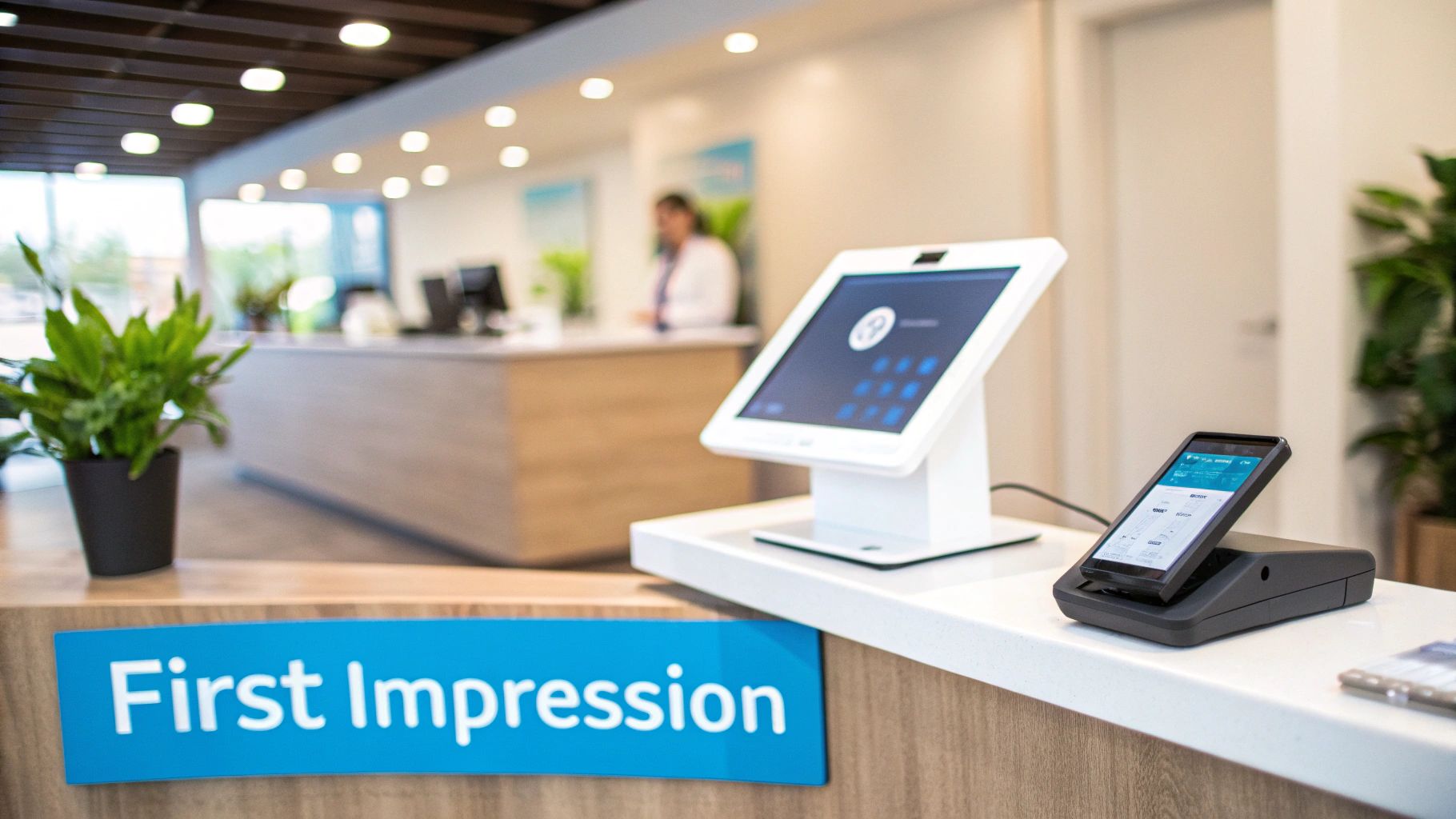
That first interaction—whether it’s a late-night search on their phone, a call to your office, or an attempt to book an appointment online—sets the entire tone. This is your "digital front door," and making it seamless and reassuring is your single best chance to build trust right away. Get it wrong, and you create frustration before you've even had a chance to help.
There’s a major disconnect happening right now. While patient satisfaction is generally up, a shocking 66% of patients still run into roadblocks when trying to get care. What are the biggest headaches? Difficult appointment scheduling (20%) and poor communication (49%) top the list.
But here’s the good news: patients are telling us exactly what they want. 53% of them believe technology is the key to a better experience. They’re practically asking for modern tools to fix these all-too-common friction points.
Make Scheduling Effortless and Accessible
Relying on a 9-to-5 front desk for scheduling just doesn’t cut it anymore. People are busy. They look for healthcare information after work, during their commute, or whenever they can find a spare moment. Forcing them to play phone tag is an instant barrier.
The solution is to give them options that fit their lives:
- 24/7 Online Self-Scheduling: Let patients see your real-time availability and book an appointment directly from your website, anytime. For example, a parent with a sick child at 2 AM can book the first available slot for the morning without waiting for the office to open. It puts them in control.
- Smart Software Integration: Your scheduling tool absolutely must sync with your EHR or practice management software. This simple connection prevents double-bookings and saves your staff from hours of manual data entry. For example, when a patient books online, the appointment should automatically appear in the doctor's calendar and create a preliminary patient chart.
- Text-to-Schedule: Many people prefer texting over calling. Give them a way to schedule an appointment through a simple text message exchange. For example, a returning patient could text "new appointment" and receive an automated reply with a link to available times.
A pediatric dental clinic in Austin, Texas, put this into practice by launching an online self-scheduling portal. In just three months, they saw a 20% drop in no-shows, all because patients got instant automated reminders the moment they booked.
Modernizing Patient Intake: A Before and After Comparison
The dreaded clipboard is one of the most universally disliked parts of a doctor's visit. It’s a clear opportunity for a massive upgrade. Moving from paper to digital isn't just a minor tweak; it fundamentally changes the check-in experience for the better. This table shows just how big the difference is.
By adopting these modern solutions, you’re not just saving time—you’re showing patients that you value their entire experience, from start to finish.
Don't Let a Phone Call Be a Dead End
Even with all the digital tools in the world, the phone is still a vital connection to your practice. A missed call is a missed opportunity. That patient isn't going to leave a voicemail; they're just going to call the next clinic on their Google search list.
Your goal should be to make every single call a positive interaction. A warm, efficient, and helpful voice on the other end can immediately put a prospective patient at ease. Getting this right is so important, and it starts with the very first words. You can find some great examples of effective phone greetings for businesses that help set a professional yet welcoming tone. For instance, instead of a curt "Doctor's office," try: "Good morning, you've reached Pine Valley Medical. This is Sarah, how can I help you today?"
While these strategies are specific to healthcare, the core principles of excellent service are universal. For a broader perspective, a modern playbook for improving customer satisfaction offers fantastic insights that can be adapted to create standout patient experiences.
Building Trust Through Better Communication
Great communication is the bedrock of any strong patient relationship, but honestly, it’s an area where many practices drop the ball. It’s easy to do. A missed message here, a robotic-sounding email there, and suddenly that fragile trust you’re trying to build starts to crack. To really nail the patient experience, you need a communication plan that feels human and meets patients where they are—whether that’s on their phone, in their email inbox, or on a call.

This all starts with a simple realization: not all messages are created equal. A quick appointment reminder is perfect for a text message, but a sensitive conversation about a confusing bill? That needs a human touch. The secret is to map out these different patient interactions and have a clear, empathetic game plan for each one.
Personalize and Automate Routine Messages
Automation can be your practice’s best friend, freeing up your team and ensuring patients get timely information. When it's set up thoughtfully, it doesn't feel cold or impersonal; it feels reliable and helpful.
Look at the predictable moments in a patient's journey—those are your prime opportunities for smart automation.
- Appointment Confirmations & Reminders: An automated text sent 48 hours before an appointment with a simple "Confirm" or "Reschedule" option is a game-changer. Example: "Hi [Patient Name], this is a reminder of your appointment with Dr. Smith on Wed at 10 AM. Reply C to confirm or call us to reschedule." This tiny step can make a massive dent in your no-show rate.
- Post-Visit Instructions: Don't let patients leave and immediately forget what you told them. Send an email right after their visit with a clear summary of their care plan, medication details, and any follow-up steps. For example, an email could have the subject "Your Visit Summary with Dr. Smith" and include a link to the patient portal with their specific instructions. It shows you’re still looking out for them.
- Feedback Requests: A day after their visit, ping them with a quick survey via text. Something as simple as, "How did we do today? Reply 1-5" will get far more responses than a long, formal email ever will.
These automated touchpoints handle the everyday logistics, which lets your team pour their energy into the more complex and emotionally charged conversations where they're needed most.
A crucial element in building rapport and understanding patient needs is mastering active listening, ensuring patients feel heard and valued during those critical human interactions. It's about hearing what's said and understanding the concern behind the words.
Handling Sensitive Conversations with Empathy
Let's face it, conversations about billing or unexpected test results are tough. They’re stressful for the patient, and this is where your team’s training and empathy really shine. Giving your staff a rough script for these moments can be incredibly helpful. The goal isn't to make them sound like robots, but to provide a compassionate and consistent framework to lean on.
Think about a patient calling about a bill. Instead of a jarring, "What's your account number?" try a softer approach.
Example Billing Script Opener:
"Thank you for calling about your bill. I know these statements can sometimes be confusing, and I'm happy to walk through it with you line by line to make sure everything is clear. Could you please share your name and date of birth so I can pull up your information?"
That small shift in language changes everything. It immediately lowers the tension and frames the conversation as a partnership, not a confrontation. It’s a subtle skill, and knowing how to keep a conversation going in a positive direction can turn a potential complaint into a moment that actually strengthens a patient's trust in you.
Finding the Right Balance of AI and Human Support
Modern patient communication isn't about choosing between tech and people; it's about blending them seamlessly. You want to use AI for its speed and efficiency, but always have a clear, easy off-ramp to a real person for empathy and complex problem-solving.
A hybrid approach means no patient ever feels like they've hit a dead end.
- AI as the First Responder: Let an AI-powered system handle the simple, after-hours questions instantly. If someone texts "What are your hours?" at 10 PM, the AI can fire back an answer right away.
- Seamless Human Handoff: If the AI picks up on an urgent or complex issue (like "I'm having a bad reaction to my new medication"), it must immediately offer to connect them to on-call staff or provide clear emergency instructions. For example, the AI's response could be: "I understand. This sounds important. Please press 1 to be connected immediately to our on-call nurse." No friction, no delay.
- Capturing Every Opportunity: When a potential patient calls after hours to book an appointment, the AI can grab their details and even schedule them directly. That single interaction could be the difference between them becoming your patient or calling a competitor the next morning.
By weaving together the instant response of automation with the warmth of a real human connection, you build a communication system that feels responsive, reliable, and deeply respectful of your patients' time and needs.
Train Your Team to Lead with Empathy
All the fancy technology and perfect workflows in the world can't replace a genuine human connection. At the end of the day, the real magic of a great patient experience happens with your team. They’re the ones on the front lines, turning a stressful visit into a caring and supportive one.
Investing in their skills—especially empathy—isn’t just a “nice-to-have.” It’s a core business strategy. A team that knows how to connect with patients can calm tense situations, make people feel understood, and completely change the feel of your practice. This is about more than just telling staff to "be nice"; it's about giving them real tools for navigating the tough, emotional conversations that are part of healthcare.
Get Them Practicing with Role-Playing
The only way to get good at handling difficult conversations is to actually have them. The best training is active, not a boring lecture. That’s where role-playing comes in—it lets your team practice in a safe space before they're face-to-face with a real, distressed patient.
Cook up some realistic scenarios based on things that actually happen in your office.
- The Upset Caller: A patient calls, frustrated about a bill they don't understand or a long wait for their next appointment. Have one person play the patient while another practices listening, showing they understand the frustration, and calmly finding a solution.
- The Nervous Patient: Someone in the waiting room is clearly anxious about their upcoming procedure. The goal here is for your staff to practice approaching them with warmth, offering a kind word, and clearly explaining what’s next to help ease their worries.
- The Late Arrival: A patient rushes in, late and stressed, worried they’ve missed their appointment. Instead of showing frustration, the team practices responding with understanding while efficiently getting them checked in. For example, a staff member could say, "We're so glad you made it. Let's get you checked in quickly and see what we can do."
After running through a scenario, talk about it as a group. What worked? What could have been done differently? This helps everyone learn together and builds a shared playbook for those high-stress moments.
Build an "Empathy in Action" Culture
Empathy shouldn't be reserved for just the tough situations; it needs to be part of every single interaction. To make it stick, you have to weave it into your practice's DNA.
An "Empathy in Action" checklist turns a vague idea into a daily habit. It's about consciously creating a calm, respectful environment from the first phone call to the moment a patient walks out the door.
This isn’t complicated. A simple checklist can reinforce the small things that make a huge difference:
- Really Listen: Am I letting the patient finish what they're saying without jumping in?
- Warm Welcome: Did I smile and make eye contact when they arrived?
- Explain Clearly: Am I using simple language, not medical jargon? For instance, instead of saying "You need to be NPO after midnight," say "Please don't eat or drink anything after midnight."
- Offer Help First: Did I spot someone looking lost and ask if I could help?
I once saw a pediatric office do something brilliant. During their monthly staff meetings, they started "patient story" time. A team member would share a recent interaction—maybe a challenge they overcame or a really positive moment. It was a simple, powerful way to reconnect everyone to their purpose. Unsurprisingly, both staff morale and patient satisfaction scores shot up.
The core principles of empathy in customer service are universal. When you apply them in a healthcare setting, you’re not just improving service; you’re delivering better, more compassionate care.
Greasing the Wheels: How Automation Creates a Flawless Patient Journey
Let's be honest: administrative friction is the silent killer of a great patient experience. It's the endless data entry, the software that doesn't talk to each other, and all those repetitive tasks that bog down your staff and frustrate your patients. Building a better journey means getting under the hood and automating those clunky workflows so every interaction feels smooth and effortless.
The key is getting your core systems—your EHR, patient relationship management (PRM) software, and scheduling tools—to finally work together. When these platforms are in sync, you can wave goodbye to the tedious copy-and-paste routine that eats up valuable time and invites human error.
Connect Your Systems for a Truly Unified Workflow
First things first, you need to find the bottlenecks. Where does information get stuck? Where is your team doing the same thing over and over again? These pain points are your golden opportunities for automation.
Most modern practice management software can be integrated, either directly through APIs or with a little help from third-party tools like Zapier. The goal is to set up simple "if this, then that" triggers that kick off actions automatically based on what a patient does.
- New Patient Scheduling: When a new patient books, a chart is instantly created in your EHR. No more manual entry.
- Post-Visit Follow-Up: A provider enters a specific diagnosis code, and bam—a follow-up call task is assigned to a nurse for the next day.
- Billing and Payments: The moment an appointment is marked "complete," the system generates the invoice and sends it directly to the patient's portal.
This kind of interconnected system ensures nothing ever slips through the cracks. It creates a reliable, invisible engine that supports both your team and your patients.
A neurology specialist I know in Chicago offers a perfect example. By integrating their scheduling software with their EHR, they slashed the time staff spent on manual patient data entry by a whopping 80%. Suddenly, their front desk team had more time to focus on what actually matters—engaging with and helping the patients standing right in front of them.
High-Impact Automation Triggers You Can Set Up Today
You don't have to overhaul your entire operation overnight. You can start with a few simple automations that solve the most common friction points in the patient journey.
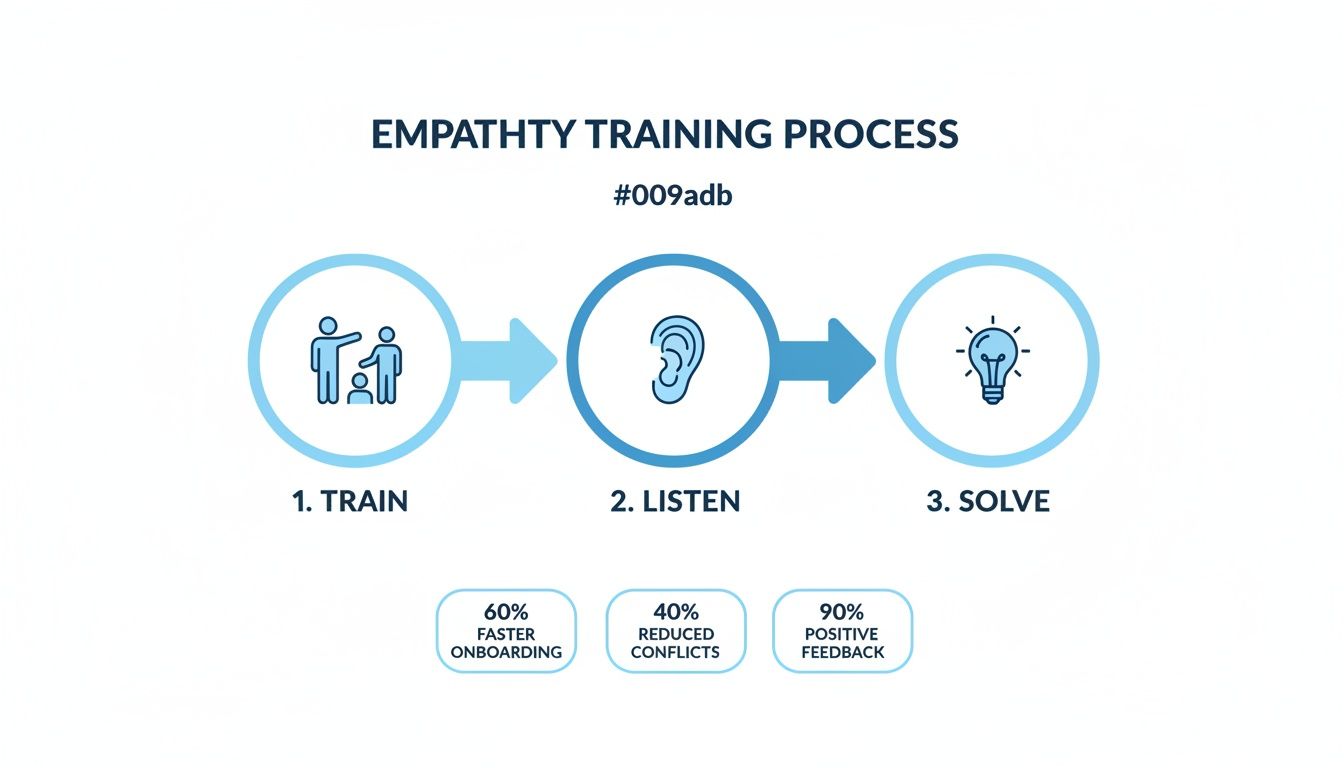
When you automate the routine parts of the patient journey, you give your team the bandwidth to focus on the human side of care: truly listening, showing empathy, and solving problems effectively.
Here are a few practical triggers to get you started:
The "Welcome Packet" Trigger: The second a new patient books their first visit, an automated welcome email goes out. This isn't just a confirmation; it should include a link to digital intake forms, clear directions to your office, a photo of their provider, and a quick note on what to expect. It's a small touch that makes a huge first impression.
The "Post-Procedure Check-In" Trigger: For anyone who's had a specific procedure, set up an automated text message to send 24 hours later. Something as simple as, "Hi [Patient Name], just checking in to see how you're feeling after your visit yesterday. Please reply or call us with any questions," shows you're thinking of them and can help catch potential issues before they escalate.
The "Review Request" Trigger: A few hours after an appointment wraps up, send an automated text or email asking for feedback. Timing is everything here. By asking while the experience is still fresh, you're far more likely to get a response and gather those priceless insights.
Even your phone system can join the party. Many practices now use an automated phone answering service to handle routine calls for things like business hours or directions, and some can even schedule appointments. This ensures no patient call goes unanswered and frees up your staff to handle more complex, high-touch conversations.
Using Patient Feedback to Drive Real Improvements
You can't fix what you don't measure. Shifting from hoping for a good patient experience to actively engineering one means you need a solid system for listening to your patients. Their feedback becomes your playbook for improvement. It’s all about creating a continuous loop where patient insights directly fuel real operational changes.
This isn't about sending out a generic satisfaction survey once a year. Real, meaningful improvement comes from tracking specific metrics that tell the true story of what it’s like to be a patient in your practice.
Key Metrics That Actually Matter
To get a grip on the patient experience, you have to look at numbers that reflect actual friction points. Focusing on a handful of key performance indicators (KPIs) can paint a very clear picture of where you’re knocking it out of the park and where you're dropping the ball.
Here are a few metrics I always recommend starting with:
- Average Patient Wait Times: This one’s simple. Measure the time from a patient's scheduled appointment to when they are actually seen by the provider. Actionable step: If wait times exceed 20 minutes, review your scheduling template—are you booking appointments too close together? Long waits are a universal top complaint and a huge red flag for scheduling or workflow problems.
- Call Abandonment Rate: What percentage of people hang up before they even talk to someone on your team? A high number here means you're literally losing business and frustrating current patients before you even get a chance to help. Actionable step: If your rate is high, consider adding an automated callback option so patients don't have to wait on hold.
- First-Contact Resolution: Keep track of how many patient issues—whether it's a billing question or a scheduling change—are completely solved on the very first interaction. A high score is a fantastic indicator that your team is well-trained, empowered, and efficient. Actionable step: Track which issues require multiple calls. This often reveals a need for more staff training on that specific topic.
Collecting data isn't just about spotting problems; it's about building a culture of accountability. When your team can see the direct impact of their work on these numbers, they become much more invested in the patient experience.
Systematically Collecting and Analyzing Feedback
To get the full picture, you need to pull insights from multiple places. A patient might ignore a long email survey but will happily leave a detailed Google review or fire back a quick reply to a text message.
Your feedback system should be multi-channeled:
- Post-Visit Text Surveys: A few hours after an appointment, send a simple, automated text. A question as easy as, "On a scale of 1-10, how was your visit today?" is incredibly easy for patients to answer and gives you immediate, raw feedback.
- Online Review Monitoring: You absolutely have to keep a close eye on reviews on Google, Healthgrades, and other platforms relevant to your specialty. These public comments are unfiltered gold, showing you exactly what patients are telling their friends and family.
- Targeted Email Surveys: For deeper dives, send short, focused email surveys. Don't ask about everything at once. Ask specifically about the check-in process or how clear the communication was from their provider.
The trick is to make it ridiculously easy for patients to share their thoughts. The fewer clicks and fields they have to navigate, the more likely you are to get the valuable feedback you need to make smart changes.
To truly understand what’s going on, you need a clear way to track your performance. Here’s a breakdown of some of the most important metrics to keep an eye on.
Table: Key Metrics for Tracking Patient Experience
This table breaks down the essential metrics, explaining how to measure them and what they reveal about your practice's performance in delivering a positive patient experience.
By regularly reviewing these numbers, you can move from guessing what patients want to knowing exactly where to focus your improvement efforts.
Applying Insights from Industry-Wide Changes
It’s also smart to keep an eye on broader shifts in healthcare. For example, recent HCAHPS survey updates now put a bigger emphasis on care coordination and the patient's overall environment. This signals a major industry move toward a more holistic view of the patient journey.
This is especially critical when you consider that nearly 20% of Medicare patients face 30-day readmissions, often because they didn't fully understand their post-care instructions. These trends highlight just how vital seamless communication and responsive systems are for boosting patient experience scores. You can learn more about navigating these HCAHPS survey updates to see how these big-picture principles can apply to a practice of any size.
By systematically gathering feedback, tracking the right numbers, and staying plugged into industry standards, you can finally close the loop. This transforms patient feedback from a simple suggestion box into the powerful engine that drives meaningful, lasting improvements across your entire practice.
Frequently Asked Questions About the Patient Experience
Even with a great plan, questions always come up when you start making real changes to the patient experience. Here are some of the most common ones we hear from practices, along with some practical advice from our experience.
If You Could Only Make One Change, What's the Single Most Impactful Thing to Do?
If you have to pick just one thing, zero in on your very first point of contact—how you handle your phones and scheduling. This is where most practices bleed patients and create a ton of frustration without even realizing it.
Fixing that initial friction sets a completely different tone for the rest of their journey. When a patient can easily get through, ask a question, and book an appointment, you're immediately showing them that you're accessible and you value their time.
A perfect example is setting up a system for text-to-schedule. When someone calls after hours and can’t get through, they get an automatic text inviting them to book an appointment right then and there. It's a simple fix that stops them from just calling your competitor the next morning. You capture revenue and a happy patient instead of a missed call.
How Can We Improve the Patient Experience on a Tight Budget?
You don't need a massive budget to make a massive difference. The best place to start is with low-cost, high-impact changes that focus on your people and your processes.
- Invest in your team: Training your staff on active listening and empathetic communication costs very little but delivers huge returns in patient trust. It’s about building skills, not buying software.
- Simplify your workflows: Take a hard look at your current processes. Could you switch a clunky paper intake form to a simple digital one using a free tool like Google Forms? Could you create a few email templates to answer common questions consistently and quickly?
- Choose tech that pays for itself: If you do spend money, pick a tool with a clear and immediate return. For instance, an AI-powered phone service can drastically cut down on front-desk busywork while also capturing appointments that used to go to voicemail. That new revenue often covers the cost of the service within just a few months.
How Do We Get Our Staff to Buy In to These New Initiatives?
Getting your team on board is all about framing. You need to show them how these changes will make their jobs easier and less stressful, not just create a better experience for patients.
The key is to involve them from the very beginning. They’re on the front lines, so they know exactly what’s broken. Ask for their input on the biggest headaches in their day-to-day work. When they help choose the solution, they’ll be far more invested in making it work.
And when you roll out a change, celebrate the wins. Share real data that shows the impact. For example, you could announce, "Thanks to the new scheduling tool, angry phone calls from patients who couldn't get through are down 40% this month." When your team feels the direct benefit of a calmer, more efficient workplace, they'll become the biggest advocates for change.
A patient's feeling of safety is the absolute foundation of a positive experience. When staff are less stressed and more present, they create a calmer, more reassuring environment that patients can feel.
What Role Does Patient Safety Play in Their Overall Experience?
Patient safety is everything. It's the bedrock of the entire relationship. A patient who doesn't feel safe—both clinically and emotionally—will never have a positive experience, no matter how great your scheduling system is.
The data on this is incredibly clear. According to the latest report from Press Ganey, there's a staggering 50+ point gap in 'Likelihood to Recommend' scores between patients who rated a hospital as 'very safe' (85.3) and those who did not (34.6). This shows a direct, powerful link between a patient’s perception of safety and their loyalty. You can discover more insights about patient experience trends in their full report.
This feeling of safety isn't just about clinical outcomes. It’s built through clear communication, an organized and calm environment, and staff who are attentive, empathetic, and not stretched thin. It's a non-negotiable part of truly knowing how to improve patient experience in a way that matters.
Ready to create a flawless first impression and capture every opportunity? Recepta.ai combines advanced AI with 24/7 human support to ensure your practice is always responsive. Stop losing patients to voicemail and start building better relationships from the very first call. Learn how Recepta.ai can transform your patient experience today.