
AI Voice Agent for Customer Service: Benefits & Guide 2026
You know the feeling. The front desk is busy, the owner is on a job site or with a patient, and the phone keeps ringing anyway. Every missed call is a chance for a new customer to slip into voicemail, call the next business, and book with someone else.
That is why an AI voice agent for customer service has moved from a nice idea to a practical tool for service businesses. It answers quickly, gathers the basic details callers expect, and keeps the conversation moving when staff are tied up. For a small business owner, that means fewer missed opportunities, less pressure on the team, and a cleaner path from ringing phone to booked job.
The practical question is not whether AI belongs in the phone process. It is how much of the routine call flow you can hand off without making the caller repeat themselves or forcing your staff to clean up bad routing later. If you are comparing options, this guide pairs well with an AI call answering service because the core decision stays the same, who answers, how often, and what happens next.
For service businesses, the best starting point is simple. Map the calls you already get, decide which ones follow a repeatable script, and set up the system to capture names, service needs, location, and callback details. A vendor that can also help you automate conversational AI for customer support should fit into that workflow without adding more work for your office staff.
If your business depends on local demand, the phone should support your visibility efforts, not undercut them. That is especially true for owners who want to dominate local search for landscapers, since every missed call can waste the lead you just paid to attract.
Stop Missing Calls and Start Growing Your Business
A roofing owner gets three calls during a job estimate. One becomes a booked inspection, one hangs up after six rings, and one lands in voicemail because the office line is already tied up. By the end of the day, the owner knows two things, the work is there, and the call handling process is leaking revenue.
That gap matters because missed calls rarely stay small. Each unanswered ring can turn into a lost booking, a slower callback, or a caller who moves on to the next provider. For service businesses that rely on quick response, an AI voice agent gives the phone a live response when staff are busy, after hours, or on another line.
It handles the routine calls that follow a repeatable path, captures the details that matter, and pushes the conversation toward a booking, transfer, or callback. For owners comparing options, this practical setup fits alongside an AI call answering service because the core question is still the same, what gets answered automatically, and what gets handed to a person.
Practical rule: if a call type happens often, follows a familiar script, and does not need judgment on every turn, the phone can usually be automated first.
The shift is already showing up in day-to-day use. Analysts tracking the market report that AI voice agents are handling a large share of routine inquiries without human intervention, and caller satisfaction has improved as businesses use them more consistently. That matters for a small business because callers care about getting an answer, a next step, and a fast resolution, not about whether every voice on the line is human.
For local service businesses, the phone can start behaving like a sales and service channel instead of a bottleneck. A cleaner, plumber, clinic, or law office can capture after-hours leads, keep intake organized, and reduce the “call me back tomorrow” problem that costs bookings. If the caller ID has to route through different systems, AI agent caller ID solutions also help keep the handoff clean, so the team sees who called and what they needed without extra admin work.
What Is an AI Voice Agent and How Does It Work
A caller dials in after hours, expects a quick answer, and gets routed through a digital receptionist that can listen, interpret, and respond in real time. No menu maze, no waiting for office hours, no repeated voicemail messages. The agent hears the request, decides what the caller needs, and moves the call toward the next step.
The workflow is easy to follow even if the technology behind it is not. First, Automatic Speech Recognition turns spoken words into text. Then NLU or an LLM reads the intent and selects the right action. Finally, Text-to-Speech turns the response back into spoken language, so the exchange feels like a conversation instead of a script.
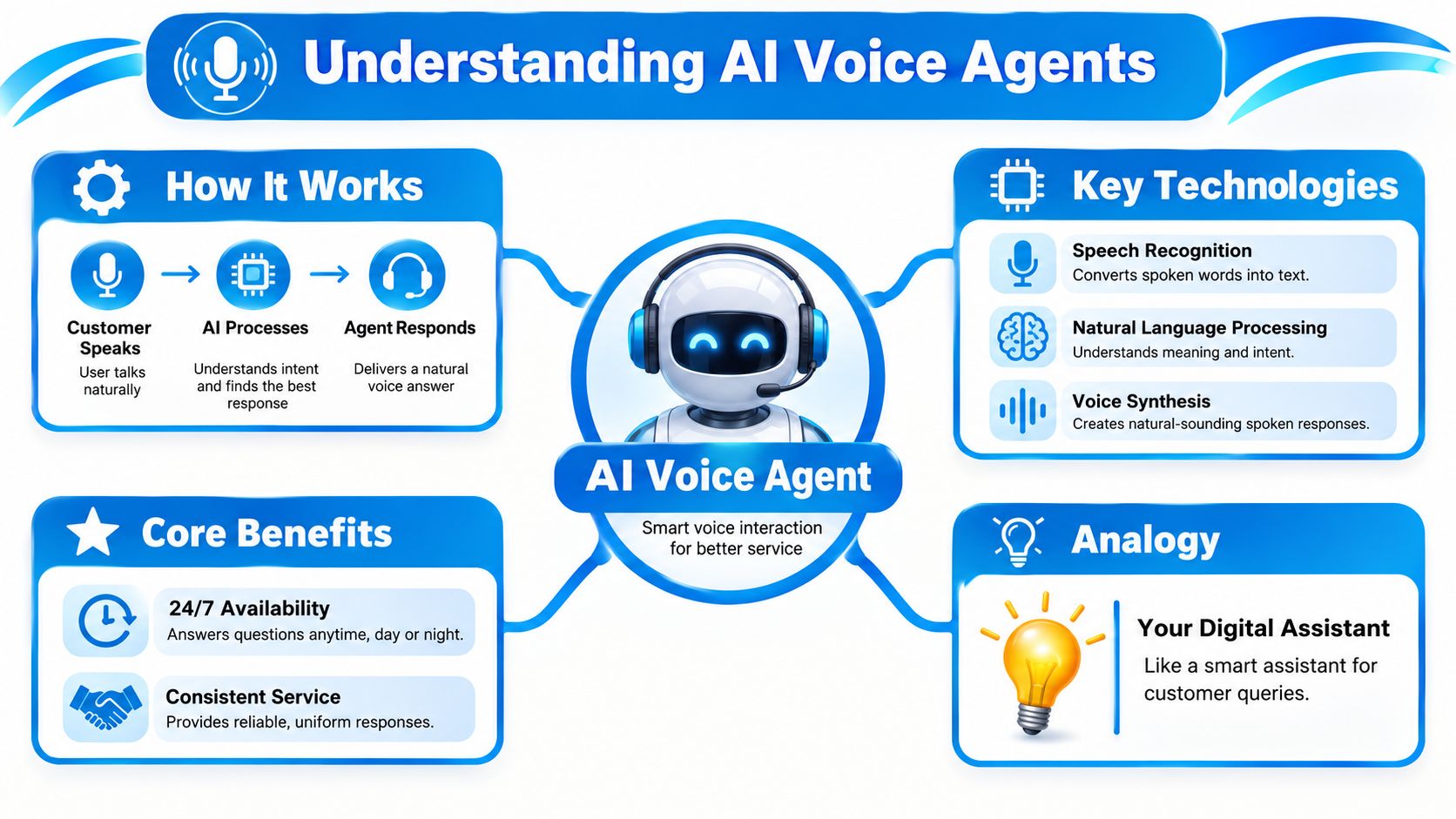
Why the pipeline matters
The value comes from the whole pipeline, not one piece in isolation. A well-built system can verify a caller, update records, trigger a workflow, and create a call summary at the end of the interaction. That is useful for customer service, booking, intake, and follow-up, not just basic FAQ handling how AI voice agents work in real time.
Speed is the part many owners underestimate. If the agent waits too long between listening, thinking, and speaking, callers interrupt, repeat themselves, or hang up. Real deployments have to keep turn-taking natural with streaming responses, barge-in handling, and orchestration that fits how people talk.
A voicemail box collects messages. A menu system routes calls. A voice agent completes tasks. That difference is what makes the phone a working operations channel instead of a dead-end inbox. For teams that want a broader support view, conversational AI for customer support shows how voice fits into the rest of the service workflow.
Where small businesses feel it first
A landscaping company can use the same setup to answer quote requests, collect addresses, and route urgent jobs. For operators who want to dominate local search for landscapers, fast voice response matters because an inbound call often arrives right after someone finds the business online. At that moment, the lead is still warm.
That is the practical takeaway. An AI voice agent is not just “AI on the phone.” It is an execution layer for calls, where speech becomes data and data becomes action.
Key Features That Transform Customer Service
A voice agent only earns its keep if it does more than say hello politely. The features that matter are the ones that remove friction from everyday service work, especially when callers are busy, upset, or trying to get something done fast. The best systems handle routine requests, capture context, and hand off the harder cases without making the caller start over.
The features that actually change operations
24/7 availability is the first obvious win. A plumbing business can catch an after-hours leak call, gather the address, and mark the job urgent instead of losing the lead until morning. A dental clinic can confirm whether a caller needs a same-day slot or a simple callback, which keeps the calendar from becoming a mess of missed voicemails.
Context-preserving escalation is the feature that separates a useful system from a frustrating one. When the AI transfers the call, the human receives the full conversation state and can resume without repeating questions context-preserving escalation and concurrent call handling. That's a big deal in service businesses because no one likes telling the same story twice, especially when the issue is urgent.
A good handoff feels like the AI stepped aside, not like the customer got dumped back at square one.
Appointment scheduling is another practical win. A clinic, salon, or home-services business can let the AI ask for preferred times, confirm availability, and push the result into the schedule. That trims back-and-forth and keeps the staff focused on the exceptions.
The infrastructure behind the experience
Integration is what turns those features into day-to-day utility. A voice agent that can sync with a CRM, calendar, or ticketing tool becomes part of the workflow instead of a sidecar. If you're comparing setup options, API connectivity for customer support systems is worth reviewing because most real value comes from how well the agent talks to the systems you already use.
Caller identification and routing matter too. Some businesses use AI agent caller ID solutions so calls can be recognized and directed appropriately before the conversation drifts or stalls sending forward inbound caller ID to an offsite AI agent. That's especially useful for franchises and multi-location teams where the right branch needs the right lead.
The highest-value deployments don't just answer phones. They reduce missed calls, organize the intake process, and move callers to the next right action with as little friction as possible. That's what turns customer service into a revenue-preserving function.
The Business Case Benefits and ROI for Service Providers
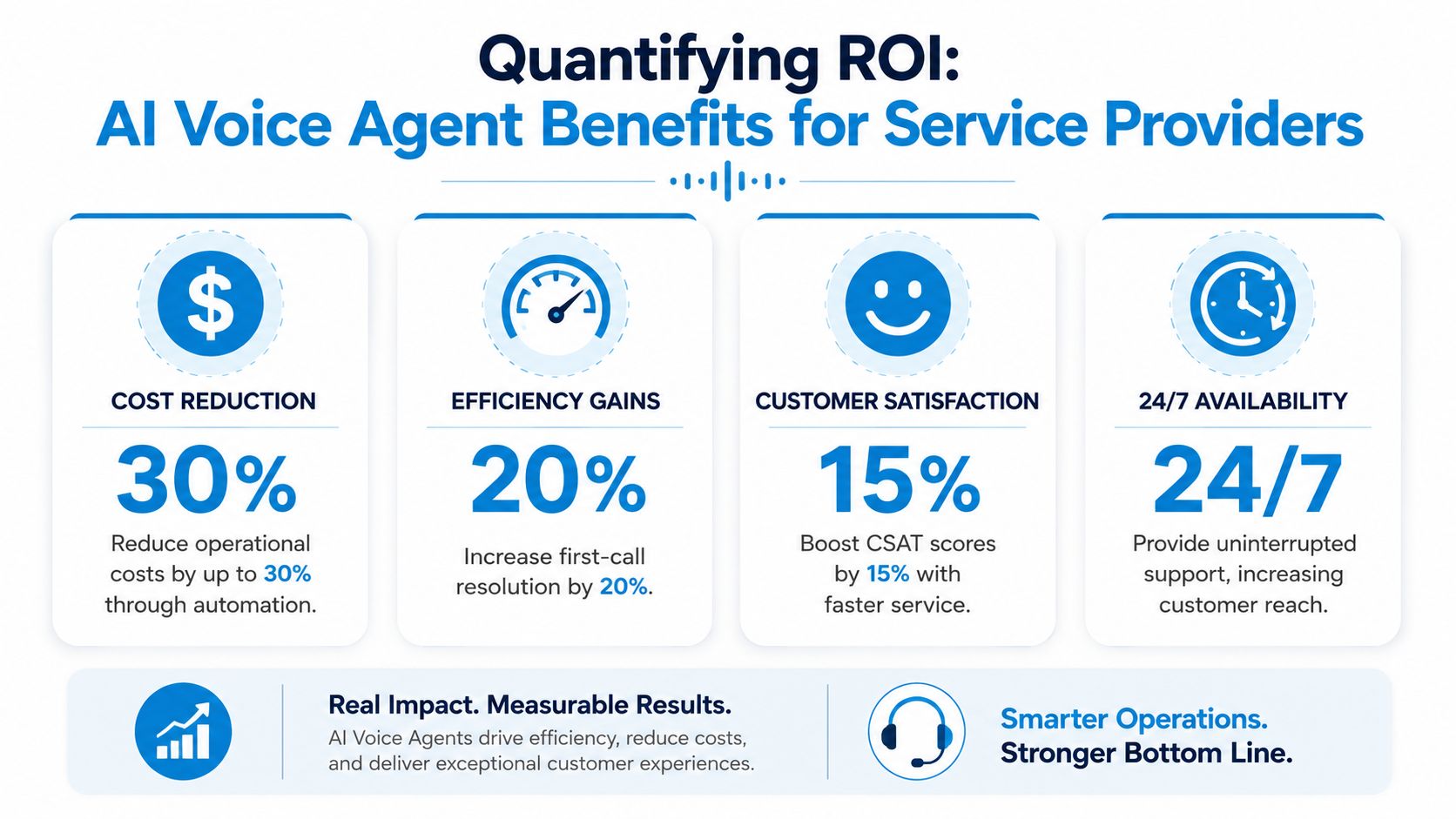
A small service business usually feels the business case in the first week, not in a slide deck. A voice agent cuts the time spent on repetitive calls, keeps staff from living in voicemail, and helps more inbound leads reach an actual next step. For an owner, that matters because one missed call can turn into one lost job.
The cost gap is hard to ignore. A 2026 source reports AI-powered interactions can cost as little as $0.25 to $0.62 per resolution, while human-agent interactions run $3.00 to $7.40 AI customer service statistics for 2026. The same source says AI handling can cut call cost from $12 to under $1 per call in benchmarked cases, which is why service businesses are starting to treat voice automation as part of operations, not as a novelty.
What ROI looks like for a small operation
The return usually shows up in three places. More calls get answered. More callers reach a useful outcome, like a booking or a qualified lead capture. Staff spend less time repeating the same intake questions all day.
That is also why market growth is useful as a signal, even if it does not tell you whether your business should buy today. One 2026 estimate puts the global market at $6.8 billion in 2026 after $4.2 billion in 2025, with a projected rise to $31 billion by 2030 AI customer service statistics for 2026. A separate market summary points to the same direction of travel, and the benefits of AI in customer service are easiest to judge when you map them to call volume, staffing gaps, and missed lead recovery instead of abstract efficiency language.
A quick way to judge payback
If your business gets steady inbound calls, the question is whether the system can answer the calls you are already paying to generate and convert enough of them to cover the monthly spend. A small HVAC shop, a clinic, or a cleaning company should think in terms of captured opportunities, not just labor savings.
Decision rule: if the agent prevents even a handful of missed bookings each month, it can justify itself faster than most owners expect.
A solid vendor should also make post-call outcomes visible, so you can see what got booked, what got escalated, and what still needs human follow-up. That is the difference between a tool that saves money and one that makes a real improvement to the front desk.
Real-World Examples in Your Industry
A cleaning franchise in three neighborhoods doesn't need a fancy call center. It needs one number to answer quickly, identify the caller's location, and send the lead to the right branch. An AI voice agent can do that by collecting the address, checking which location serves the area, and pushing the inquiry into the right queue before the customer gets impatient.
A law firm faces a different problem. The front desk can't spend ten minutes screening every caller, but a rushed intake also wastes attorney time later. A voice agent can ask for the basic facts, confirm the type of matter, and book a consultation if the lead fits the firm's intake rules, while sending the more complex or sensitive matters to a person with the full call summary attached.
An HVAC company usually feels the pain after hours. The phone rings at 9:30 p.m., the customer says the system is blowing warm air, and the office is closed. A voice agent can capture the address, triage urgency, and route severe cases to the on-call technician while logging the rest for morning follow-up.
The strongest use case is rarely the flashiest one, it's the call that would otherwise be missed, delayed, or misrouted.
A dental office manager has a similar pattern, just with more scheduling pressure. The agent can handle appointment requests, answer routine questions, and forward billing or clinical edge cases to staff without forcing the patient to wait on hold. That keeps the calendar moving and reduces the pileup at the desk.
The pattern across all of these businesses is the same. Use the AI for predictable intake, routine routing, and after-hours response, then reserve human time for judgment, reassurance, and exceptions. That keeps the phone line useful without turning the office into a call center.
Your Implementation and Vendor Selection Checklist
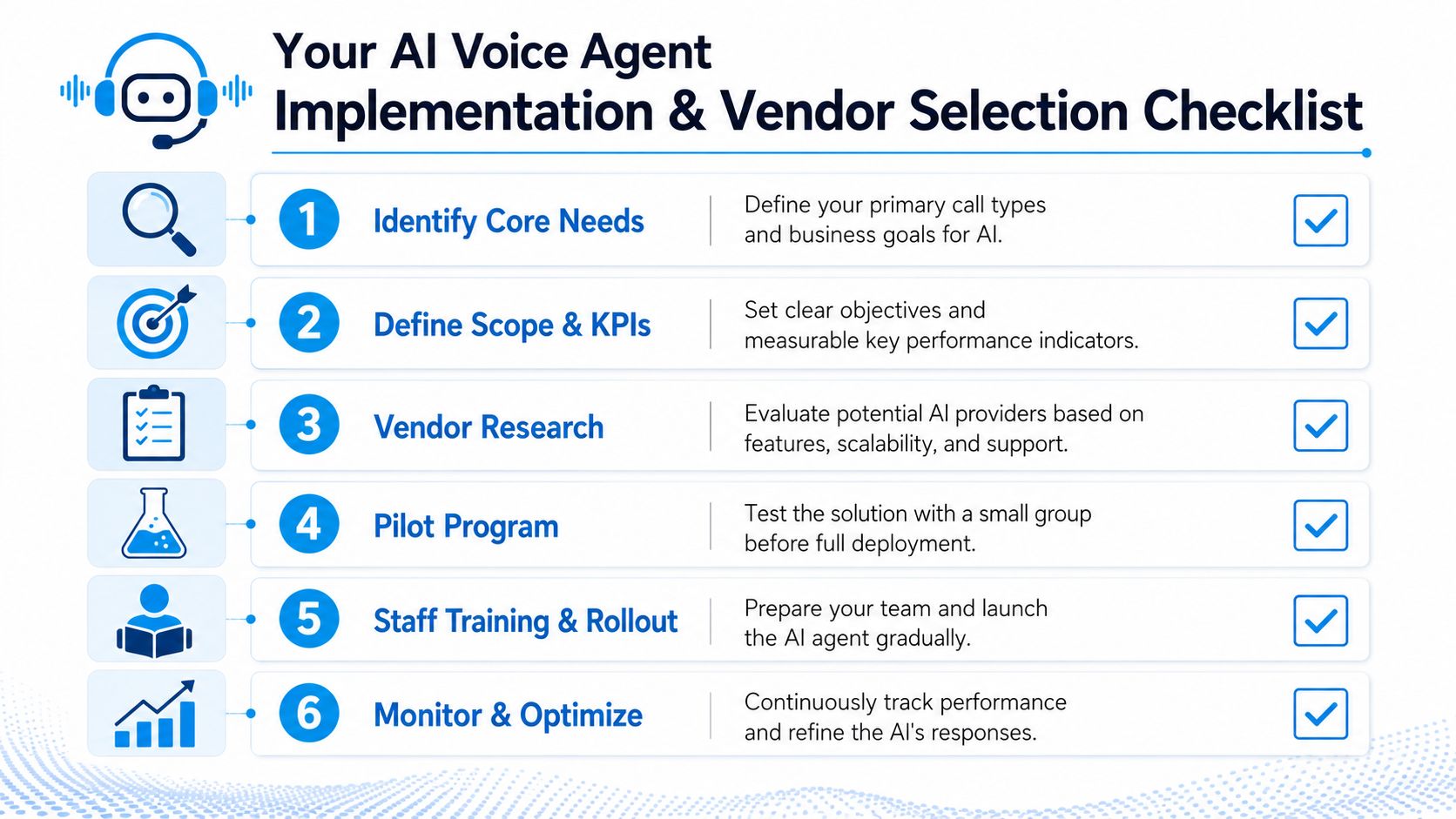
The smartest rollout starts with the call types that waste the most time and cause the most missed opportunities. If you try to automate everything at once, you'll create more noise than value. If you focus on the repeatable calls first, the system starts paying back quickly and the team can trust it.
What to check before you sign
| Criterion | What to Look For | Why It Matters for SMBs |
|---|---|---|
| CRM and calendar integration | Native connection or simple setup with the tools you already use | Cuts manual copying and keeps bookings and notes in one place |
| Escalation design | Warm transfer, call summary, and context preservation | Prevents customers from repeating themselves when a human steps in |
| After-hours handling | Ability to answer when staff is offline | Helps you capture leads you'd otherwise lose overnight |
| Setup speed | Clear onboarding, voice selection, and FAQ configuration | Gets the system live without a long IT project |
| Transparent pricing | Easy-to-understand usage or subscription structure | Makes the monthly cost easier to compare against staffing |
| Human backup | Access to real support when the AI hits an edge case | Reduces downtime and protects customer experience |
Successful deployments need planning for interruption, ambiguity, and emotional callers McKinsey on failure modes in AI voice agents. That's why the goal should be end-to-end resolution, not just keeping the call away from a human. If the caller is confused, upset, or dealing with a complicated exception, the AI should transfer with context instead of pretending it can solve everything.
How to evaluate vendors without getting lost
Start with the basics. Ask whether the system can answer the call, recognize the reason for calling, complete the routine task, and hand off to a human with notes intact. Then test what happens when the caller interrupts, changes the topic, or gives incomplete information.
Recepta.ai is one option in this category, it combines AI call handling with human support, appointment scheduling, lead capture, follow-ups, and integrations with a large tool stack. That kind of setup is useful for owners who want the phone answered while still keeping a human fallback in the loop.
A vendor should also make it easy to monitor what's working. You want call summaries, outcome tracking, and a clear record of which calls were resolved, which were booked, and which needed escalation. If the reporting is weak, it becomes hard to improve the workflow after launch.
The best buying decision is usually the least glamorous one. Choose the system that fits your current call volume, connects to your existing tools, and handles the messy calls gracefully. That's the combination that works for small businesses.
Getting Started in Three Simple Steps
Start with the calls you already know are repetitive. For most service businesses, that means after-hours inquiries, appointment booking, status checks, and basic intake. Once those are mapped, the first version of the agent is easier to design and much easier to measure.
- List your top call types. Focus on the two or three calls that repeat every day and take staff away from higher-value work.
- Choose a provider with fast setup and a trial period. You need a way to test the workflow before you commit fully.
- Launch one workflow first. After-hours answering or appointment booking is usually the cleanest starting point.
The point is to get a working system live, not a perfect one. A simple rollout teaches you how customers speak, where the handoff breaks, and which calls deserve more automation later.
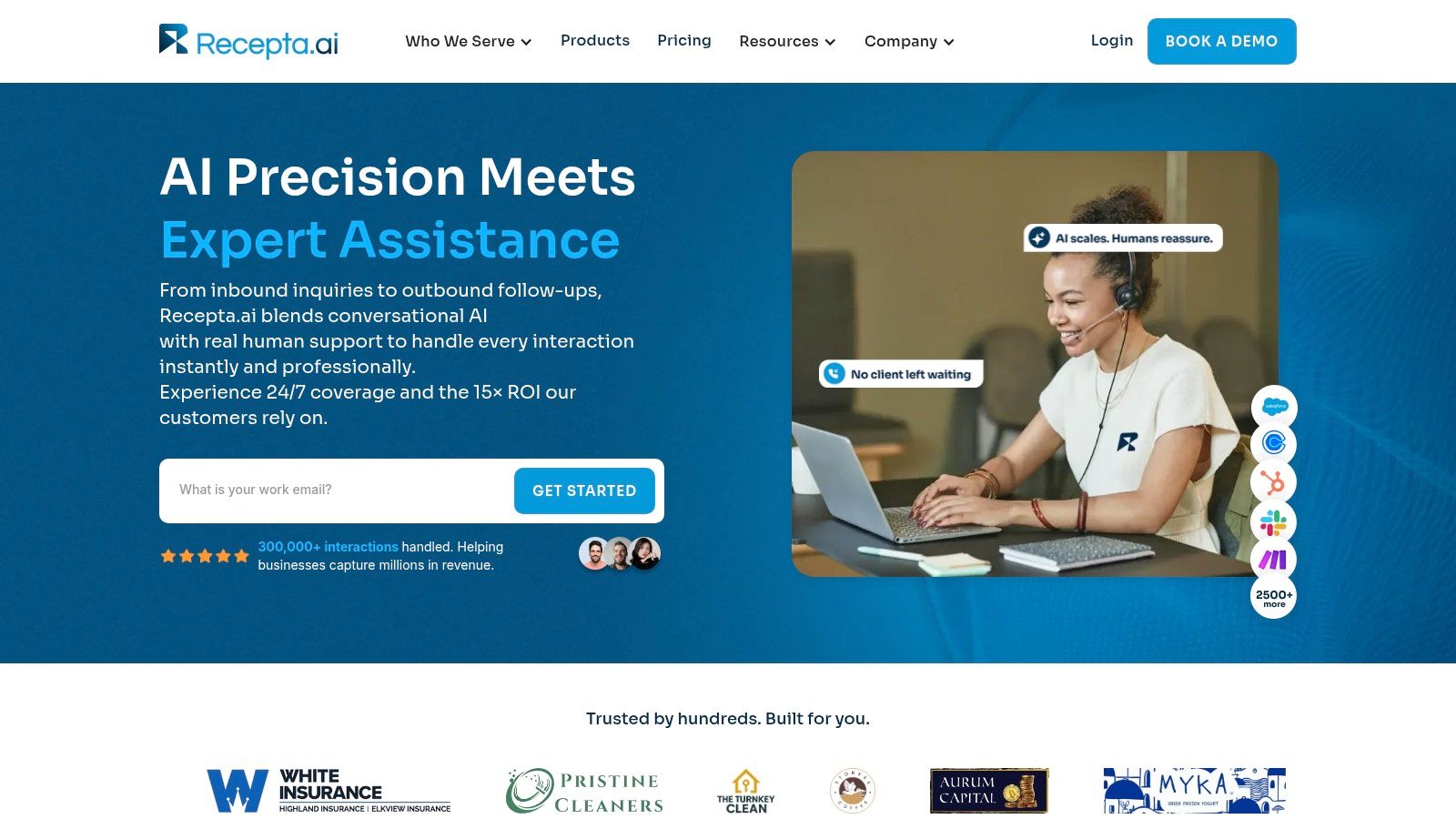
For small and midsize service businesses, the phone doesn't have to be a bottleneck anymore. If you want a practical way to answer every call, capture more leads, and keep humans focused on the conversations that matter most, visit Recepta.ai and see how its AI receptionist approach fits your workflow.