
Best Call Answering Service: 7 Options Compared for 2026
At 7 p.m., a homeowner calls a plumbing company about a leaking water heater. The line goes to voicemail. They don't leave a message. Instead, they call the next result in search and book the first available visit. The plumbing company may never know the lead existed.
That moment is the true test of the best call answering service. This roundup compares seven providers by AI versus human handling, 24/7 availability, integrations, security and compliance, pricing, and trial terms. It also considers fit by industry, because a dental office, law firm, HVAC contractor, and franchise network don't need the same call workflow. If you're also trying to generate trade leads with AI, answering those leads reliably is where the strategy becomes revenue.
1. Recepta.ai
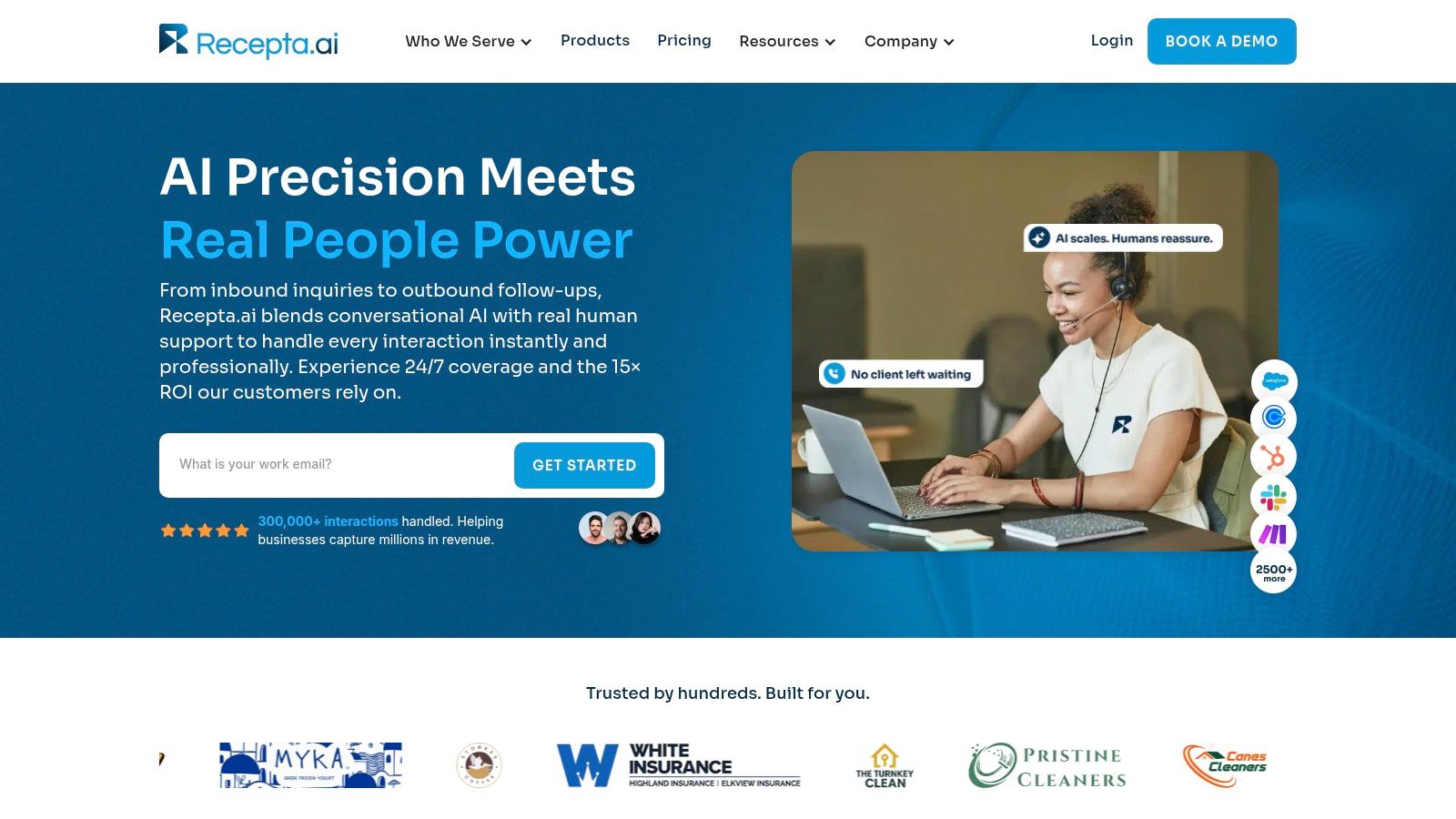
A missed after-hours call can mean a lost appointment before anyone on staff sees the voicemail. Recepta.ai suits businesses that want AI speed without giving up human judgment. Its 24/7 AI receptionist answers inbound calls, handles routine questions, captures lead details, schedules appointments, manages follow-ups, and records outcomes. Calls needing empathy, specialist knowledge, or a sensitive response can move to trained human agents.
The model fits plumbers, HVAC companies, dental practices, medical offices, law firms, insurance agencies, franchises, and other appointment-led businesses. A plumbing workflow can distinguish an emergency leak from a routine estimate, collect the service address, route urgent calls, and book a visit. A clinic can capture patient details and schedule an appointment. A legal intake flow can ask qualifying questions before sending the case to a person.
Why the hybrid model matters
Recepta.ai connects with 2,500+ tools, including CRMs, calendars, and industry systems. That lets a call create an operational task rather than sit in an inbox as an unworked message. The platform also provides call summaries, real-time analytics, workflow guidance, and automatic data logging.
The performance claims require a controlled test. Recepta.ai reports up to 30% more qualified leads, 80% cost savings compared with in-house reception, and a 15× ROI, and says it has handled more than 300,000 interactions. These are company-reported figures. During a pilot, compare booked appointments, qualified leads, recovered calls, and revenue with your existing process.
Practical rule: Ask Recepta.ai to demonstrate the exact handoff your team needs, including the information a human agent receives and whether the caller must repeat anything.
Security and compliance-ready practices, encrypted communications, and secure infrastructure may support professional use. Regulated businesses should confirm their specific requirements before launch, including data handling and access controls.
Setup can take 15 minutes, and a 30-day risk-free trial allows teams to test call quality, integrations, and escalation before committing. Public flat pricing is not listed, so the quote may depend on call volume, industry, human coverage, and workflow complexity. Multi-location operators should also allow time for configuration and tuning across branches.
For teams measuring revenue recovered from missed calls, Recepta.ai offers a broad AI-human operating model, provided its handoffs and results match the business's test-call data.
2. Smith.ai
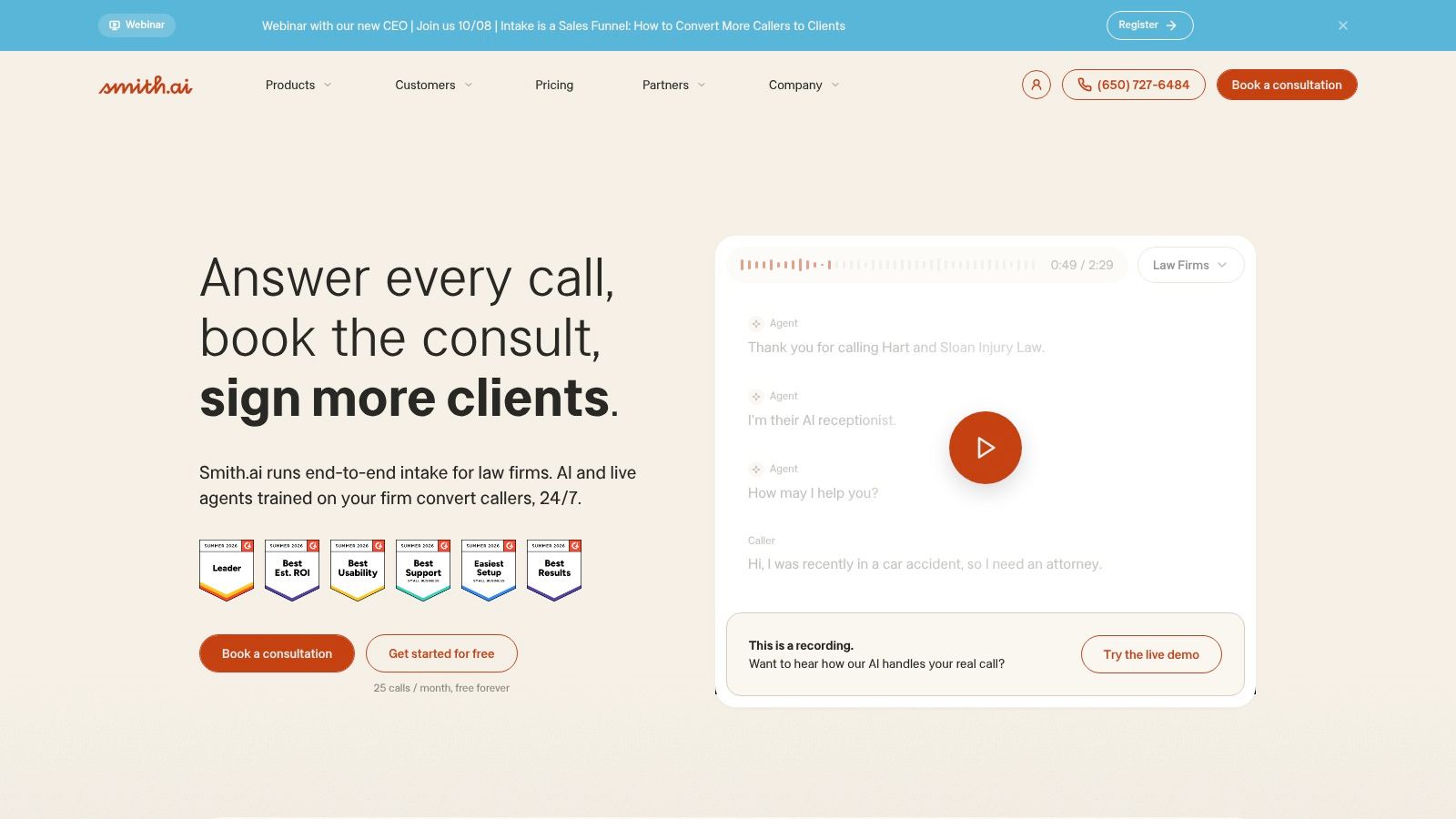
Smith.ai is a practical choice for law firms, clinics, and professional service businesses that need AI to handle routine intake while live North America-based agents handle exceptions. Its AI receptionist can qualify leads, collect intake details, schedule appointments, process payments, filter spam, and escalate to a person when the conversation becomes complex.
The useful distinction is outcome-based handling. A caller seeking a consultation can answer qualification questions and book time on a calendar. Someone asking for a sensitive legal or medical response can move to a human rather than being forced through a rigid script.
Where Smith.ai fits
Native connections include Clio, Zapier, and calendar systems, with custom workflows available at higher tiers. Transcripts and analytics make it easier to review calls, while the service includes a 10% spam-removal allowance. Month-to-month terms and a free AI tier make testing less difficult than signing a long contract.
The trade-off is billing predictability. Per-call AI pricing is clear for short, repeatable calls, but a long legal intake can consume more value than a simple appointment request. Published AI pricing also doesn't fully describe the cost of a human-led service, so ask for a separate estimate if every call needs a live receptionist.
For a law firm, test whether the agent records the practice area, opposing-party information, deadline, and consultation preference in the right CRM fields. For a medical office, confirm how the system handles urgent symptoms, identity checks, and human escalation.
Teams comparing AI and live reception can use this guide to understand the AI answering service model before choosing a workflow.
3. Ruby
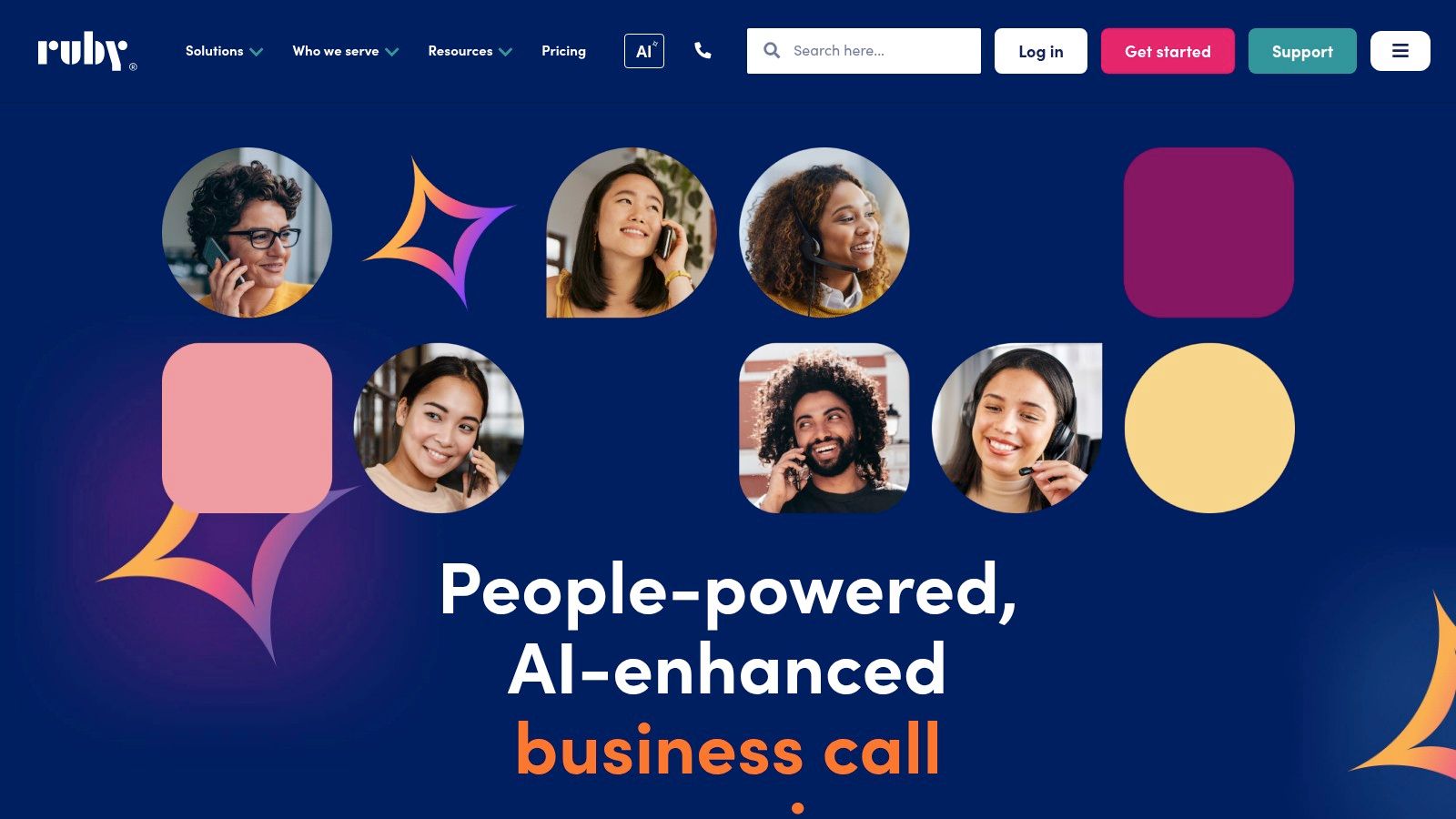
Ruby is built for businesses that want a live receptionist on every important interaction. It provides 24/7/365 answering, bilingual options, personalized call handling, scheduling, payment collection, phone hosting, and a mobile app or portal. Optional AI features add transcripts, sentiment insights, and assistance with call flows, but the core experience remains human-led.
That makes Ruby a strong fit for healthcare offices, legal practices, home service companies, and small businesses where callers expect warmth and patience. A dental patient who needs to reschedule, a homeowner explaining a complicated repair, or a prospective client describing a legal issue may benefit from a live conversation rather than an automated response.
The cost control question
Ruby publishes minute-bundle plans with inclusive features, which makes the service easier to compare than a custom-only provider. The same structure creates the central risk. If seasonal demand pushes calls beyond the bundle, overage costs can rise. A busy HVAC company should model summer volume instead of using an average month.
Ruby can also bundle managed live chat with reception. That may suit a local business that receives both website inquiries and phone calls, but it adds another channel to configure and monitor. Before choosing it, ask whether appointment details, payment information, and caller notes reach the same system your staff already uses.
A live receptionist is valuable only when the script gives agents enough context to make decisions without repeatedly putting callers on hold.
Spanish or bilingual coverage can matter for service businesses serving multilingual communities. Test that capability directly, including transfers and scheduling, rather than checking only whether bilingual support appears on the feature list. Businesses looking for a broader market comparison can review these virtual receptionist companies.
4. PATLive
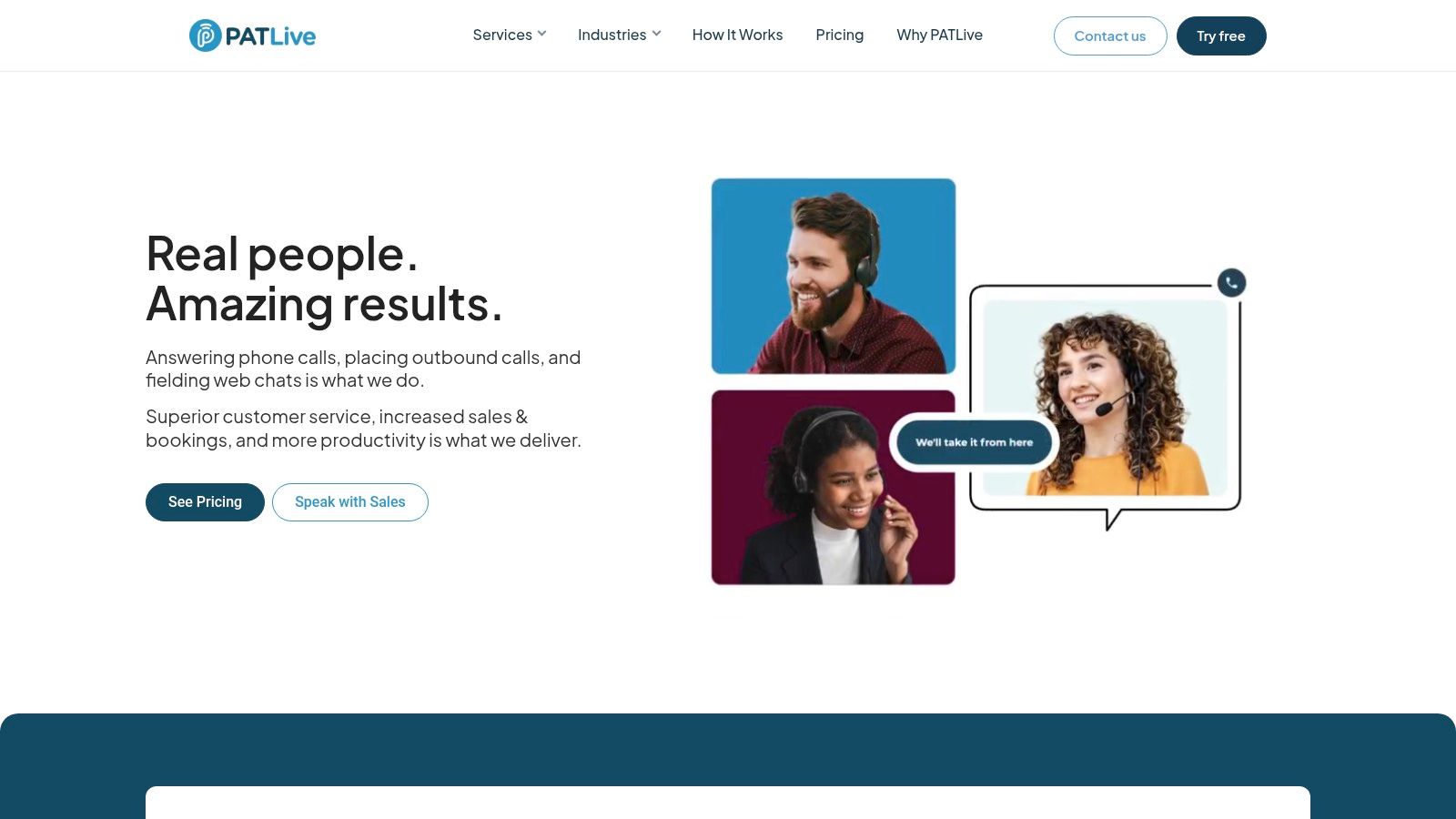
PATLive is the clearest option for a business that wants 100% live, U.S.-based answering and doesn't want an AI layer. Agents answer around the clock, screen calls, transfer callers, record conversations, and provide reporting. The service also offers apps, integrations, optional outbound calling, and 24/7 live chat.
Its all-inclusive model is attractive for companies that want fewer billing surprises. There aren't separate night, weekend, or feature surcharges, and the service offers pay-as-you-go options. A 14-day free trial and no-contract approach make it straightforward to test with real customer scenarios.
Best for human-first coverage
PATLive suits contractors, clinics, professional services firms, and small businesses that want callers to reach a person immediately. A caller asking a detailed question about a remodeling project can explain the situation naturally. A patient who sounds distressed can be routed according to a human-reviewed script rather than handled entirely by automation.
The limitation is equally clear. PATLive doesn't offer AI answering for hybrid workflows. If your goal is to automate routine booking, answer simultaneous calls during a campaign spike, or reduce the cost of repetitive interactions, a human-only model may be less efficient.
Per-minute billing can also become expensive when calls involve long intake conversations. Test a realistic call that includes service questions, qualification, scheduling, and transfer. Don't test only a short “please call me back” message.
5. Abby Connect
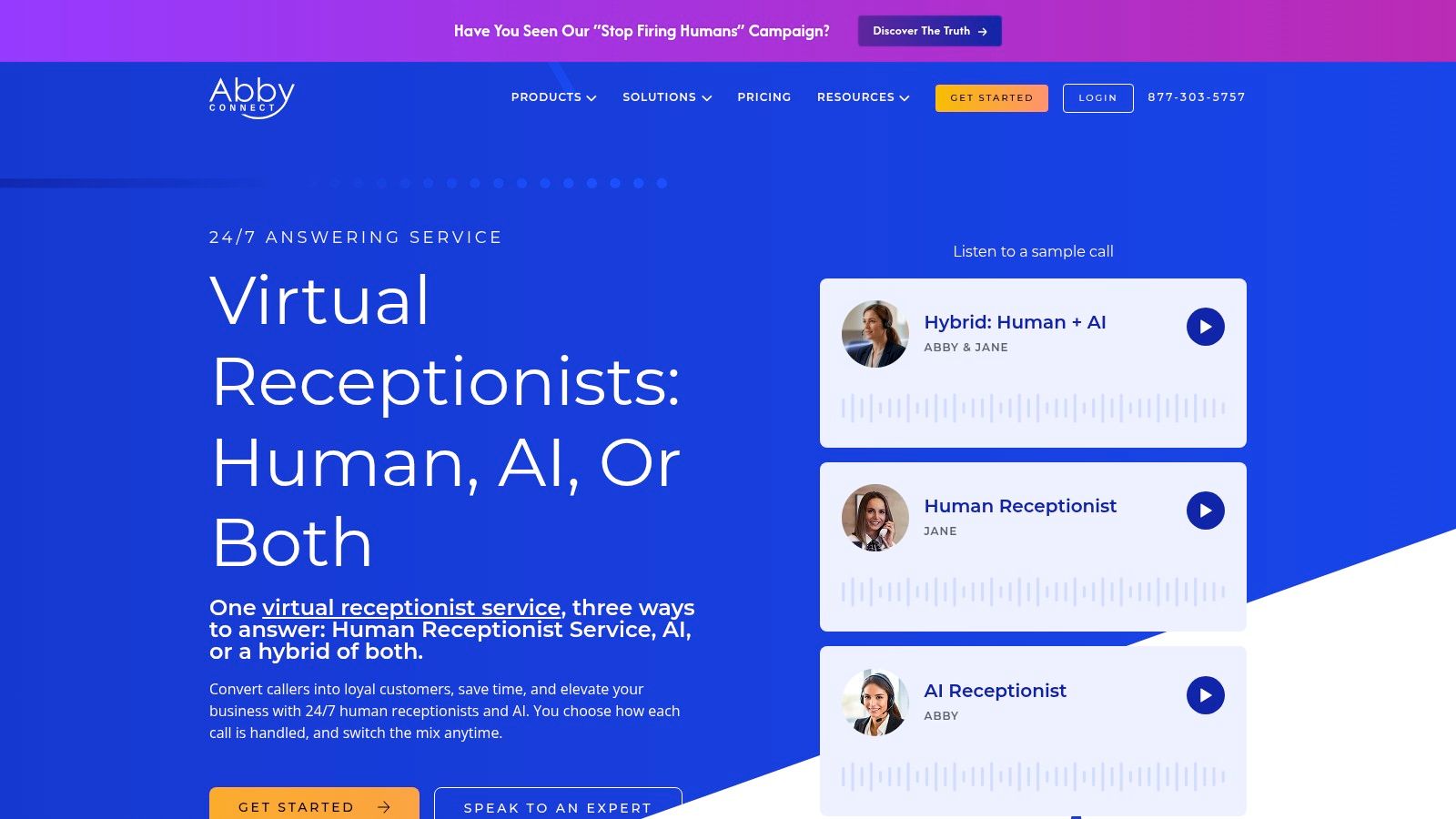
Abby Connect combines AI, dedicated human receptionists, and hybrid handling in one service. A business can decide which calls should start with AI and which should go directly to a receptionist. Human teams can provide bilingual support and 24/7 coverage, while the portal and app provide recordings, call insights, and summaries.
This flexibility makes Abby Connect appealing to growing businesses that want to automate simple calls without losing a personal touch. An HVAC company might use AI for hours, service areas, and estimate requests, then send emergency calls to a dedicated team. A law firm might automate basic intake but send prospective clients with urgent deadlines to a human.
Watch the unit economics
Abby Minutes can stretch further when AI handles part of a call, but that mixed accounting takes time to understand. Compare the number of included minutes, what counts as usage, how transfers are billed, and what happens when a human takes over. A low starting price isn't useful if your actual call pattern creates repeated overages.
The service offers a starter plan, free trial, no setup fees, and month-to-month terms. Human answering has HIPAA-compliant options, but businesses handling protected health information should confirm whether their specific AI workflow, integrations, recordings, and transcripts meet their requirements.
For a dental office, test appointment booking, cancellations, insurance questions, and escalation to staff. For a franchise, test whether each location can maintain its own hours and routing rules without creating inconsistent records. This guide to the cost of an answering service can help frame the comparison around actual call volume rather than headline pricing.
6. Nexa Receptionists
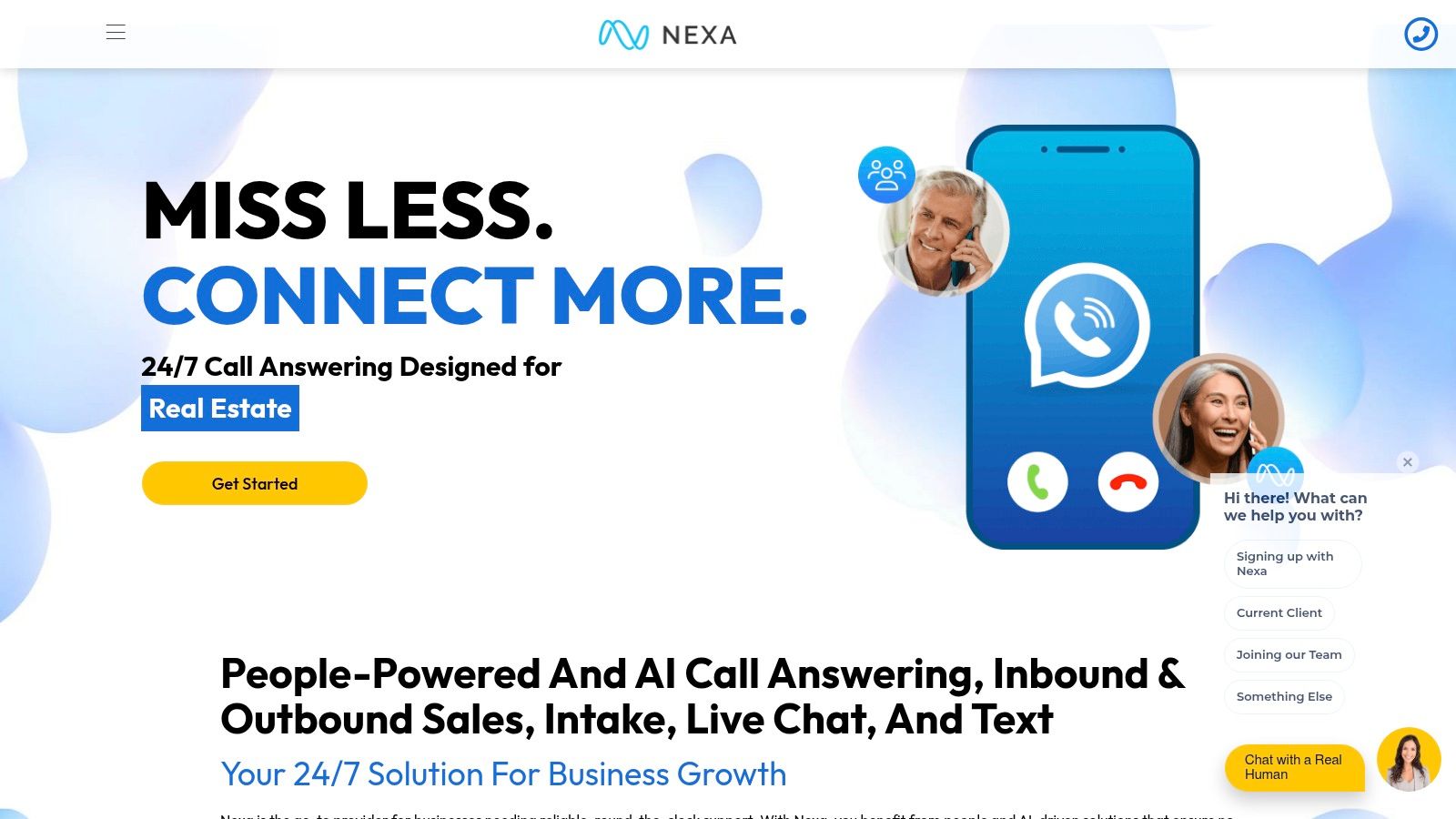
Nexa is designed for organizations that need more than message-taking. Its 24/7 live receptionists support appointment scheduling, lead qualification, client or patient intake, inbound and outbound calls, dispatch workflows, and sales follow-up. The service has a strong vertical focus in home services, healthcare, and legal, where scripts and escalation rules often differ by industry.
A plumbing business can use a trade-specific intake flow that records the job type, address, urgency, and preferred appointment time. A medical practice can route new-patient calls differently from existing-patient requests. A law firm can qualify the matter before sending a structured summary to the intake team.
Strong workflows, less pricing visibility
Nexa offers local and toll-free numbers, a portal, analytics, CRM integrations, bilingual options, and U.S.-market coverage. Its industry-trained teams are useful when staff need to follow a detailed script or coordinate dispatch rather than just pass along a name and number.
The drawback is quote-based pricing. You'll need to explain call volume, after-hours requirements, outbound follow-up, and the amount of after-call work agents perform. That last point matters because minutes may include receptionist work after the caller hangs up, which changes the effective cost.
Ask Nexa to show a complete workflow from call answer to CRM record, calendar booking, dispatch notification, and callback task. If the provider can't show where each field lands, the integration may be less useful than the sales presentation suggests.
7. Specialty Answering Service
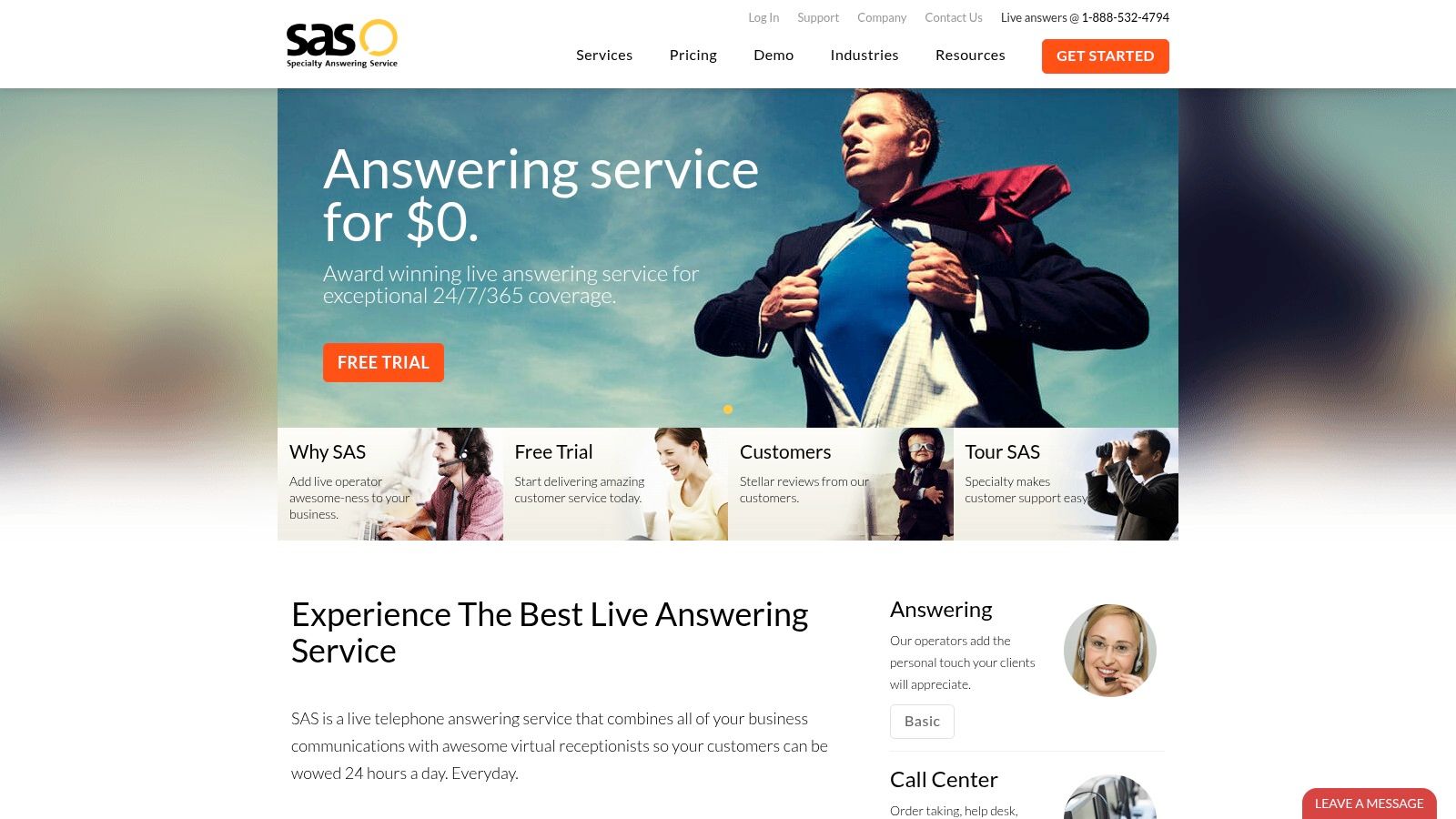
Specialty Answering Service suits businesses that need 24/7 human answering with granular billing and want to control usage costs. SAS offers per-minute billing measured to the second, per-call options, public plan tiers, portal alerts, and tools for adjusting plans. There are no setup fees, and the service includes a 14-day or 200-minute free trial. If you are new to the category, this guide to what is an answering service explains the baseline before you compare per-second billing models.
Per-second billing can work well for short calls. A local cleaning company handling brief booking inquiries may pay more accurately than it would under a broad rounding rule. The per-call option may fit businesses whose conversations are short and predictable.
Where SAS falls short
SAS provides fewer white-glove extras than premium providers. Complex routing, multiple locations, custom escalation, or added features can narrow the savings from a low per-minute rate. Confirm whether the service books appointments directly or mainly records messages and transfers calls.
Use the trial to place three test calls: a routine question, a new lead that needs qualification, and an urgent request outside normal hours. Measure how quickly each call produces a useful action, whether the message is accurate, and whether staff can respond without requesting missing details.
Billing test: Calculate the cost of a normal call, a long intake call, a transferred call, and a call requiring post-call notes. The effective rate gives a clearer comparison than the advertised entry plan.
Choose SAS when your call log shows mostly short, repeatable bookings. Move to a provider with stronger workflow support when calls regularly require qualification, dispatch, or post-call CRM work.
Top 7 Call Answering Services: Comparison
| Service | Implementation complexity 🔄 | Resource requirements ⚡ | Expected outcomes ⭐📊 | Ideal use cases 💡 | Key advantages |
|---|---|---|---|---|---|
| Recepta.ai | 🔄 Low → Moderate: 15‑min setup; advanced integrations may need tuning | ⚡ Hybrid AI + human agents; integrates with 2,500+ tools; minimal internal staff | ⭐📊 High: reported ~30% more qualified leads, 15× ROI, 80% cost savings; 300k+ interactions | 💡 Service‑led industries, multi‑location scaling, revenue capture | AI+human escalation, deep integrations, real‑time analytics, 30‑day trial |
| Smith.ai | 🔄 Low: quick onboarding; fully human plans require scoping | ⚡ AI‑first with on‑demand North America agents; native CRM/calendar integrations | ⭐📊 Reliable lead qualification and outcome‑focused handling; predictable per‑call costs | 💡 Small businesses, law firms, lead‑qualification workflows, pay‑per‑use testing | Clear per‑call pricing, free tier, month‑to‑month, NA live backup |
| Ruby (Ruby Receptionists) | 🔄 Low: public plan tiers; optional AI enhancements | ⚡ Live U.S. agents, bilingual options, phone hosting and app | ⭐📊 Consistent personalized live handling and 24/7 coverage | 💡 Businesses needing bilingual/live reception and brand consistency | Established provider, transparent tiers, chat bundles, mobile portal |
| PATLive | 🔄 Low: 100% live human model, simple onboarding | ⚡ U.S.‑based agents; pay‑as‑you‑go or plan options | ⭐📊 Predictable live coverage with inclusive billing (no surcharges) | 💡 Teams preferring pure human reception or regulatory compliance | Inclusive pricing, no night/weekend surcharges, 14‑day trial, no contracts |
| Abby Connect | 🔄 Low → Moderate: hybrid per‑call mixing; guided onboarding | ⚡ Dedicated human teams with optional AI; HIPAA options for human service | ⭐📊 Improved minute/value efficiency via hybrid routing; flexible usage | 💡 Practices needing HIPAA, dedicated teams, flexible human+AI mix | Clear pricing, hybrid "Abby Minutes", strong onboarding, month‑to‑month |
| Nexa Receptionists | 🔄 Moderate: custom scripting and quote‑based setup | ⚡ Industry‑trained U.S. receptionists; tailored workflows and CRM integrations | ⭐📊 High: specialized vertical intake and outbound follow‑up | 💡 Home services, healthcare, legal requiring vertical expertise | Vertical focus, custom scripts, outbound/sales support |
| Specialty Answering Service (SAS) | 🔄 Low: public plan grid with standard models | ⚡ Live agents; per‑second billing or per‑call options; portal tools | ⭐📊 Cost‑effective for short calls; transparent per‑second billing and plan optimization | 💡 Budget‑conscious businesses, high volume of short interactions | Low entry pricing, per‑second billing, 14‑day/200‑min trial, no setup fees |
Shortlist Providers With a Real Test Call
Start with your own call data. Separate new leads from existing customers, emergency calls from routine questions, and booked appointments from simple information requests. If you don't have reliable logs, export call records from your phone system and establish a baseline before forecasting what an answering service will recover.
The conventional service-level target is 80/20, meaning at least 80% of inbound calls answered within 20 seconds. Also review average speed of answer and abandonment rate. Common benchmark ranges place ASA at 20 to 40 seconds and abandonment at roughly 3% to 8%, with below 5% generally viewed as strong. These benchmarks are summarized in contact-center performance metrics from COPC. Track them by business hours, after-hours, campaign, location, and call type so an overall average doesn't conceal missed emergency or booking calls.
Then narrow the field to two or three providers. Choose based on the workflow, not the demo voice.
- AI-first coverage: Pick Recepta.ai or Smith.ai when routine calls should be automated but complex conversations need a human path.
- Human-first coverage: Consider Ruby or PATLive when empathy, live conversation, and detailed intake matter more than automation.
- Vertical workflows: Look closely at Nexa for home services, healthcare, or legal operations.
- Budget testing: SAS can make sense when transparent usage billing is more important than advanced workflow automation.
- Mixed handling: Abby Connect is worth testing when you want AI and dedicated receptionists in the same operating model.
Confirm CRM and calendar integrations in a live workflow. Ask the provider to book an appointment, update the correct record, trigger a notification, and transfer a call with its context intact. A claimed integration isn't enough if your team still has to retype every important field.
Security and compliance need their own review. The FTC Telemarketing Sales Rule restricts outbound telemarketing calls to 8 a.m. to 9 p.m. in the recipient's local time unless prior consent allows different hours. For prerecorded or autodialed marketing calls to wireless numbers, FCC guidance generally requires prior consent, with written consent for prerecorded telemarketing calls. The FCC also says consumers can revoke consent through any reasonable method, with the cited requirement applying from April 11, 2025, so suppression events need to sync across the CRM and phone platform.
Accessibility matters too. Under the ADA, businesses must accept and treat telephone relay calls like other calls. Staff should know that a caller may use 7-1-1 and may need additional time for the relay exchange, as explained in this ADA Title III primer.
Finally, run your own test call during business hours and after hours. Use the actual greeting, intake script, calendar, escalation rules, and emergency scenarios. Compare answer speed, transcript accuracy, data capture, transfer quality, callback handling, abandonment recovery, overage fees, and the number of calls that produce a completed business action. The best call answering service is the one that performs reliably in your workflow, not the one with the most impressive feature list.
Recepta.ai combines 24/7 conversational AI with white-glove human escalation, appointment scheduling, lead capture, follow-ups, analytics, and connections to 2,500+ tools. Test how it handles your real calls, integrations, and industry workflows by visiting Recepta.ai.