
8 Best Personal Voice Mail Greeting Scripts for 2026
Your phone rings while you're under a sink, between patients, walking into court, or driving to the next estimate. You miss the call. It rolls to voicemail. In that moment, your personal voice mail greeting becomes the voice of your business.
That message does more than fill silence. It tells callers whether they've reached the right person, whether you'll respond promptly, and whether it's worth leaving a message at all. With so many calls hitting voicemail worldwide, the greeting itself has to do real work, not just announce the beep. SellCell notes that 80% of smartphone and mobile phone calls go to voicemail globally, yet only 20% of those callers leave a message, which is why the words callers hear next matter so much in practice global voicemail behavior.
Treat your voicemail like a powerful digital front door that earns trust. If it sounds careless, rushed, or outdated, callers assume the rest of your operation is the same. If it sounds clear, calm, and useful, you keep the conversation alive.
Below are the voicemail scripts I recommend most often. Each one serves a different purpose: credibility, warmth, urgency, routing, inclusion, or modern call handling. Pick the one that matches how your business operates, then customize it so callers know exactly what to do next.
1. Professional Service Standard Greeting
Some businesses don't need charm first. They need confidence, clarity, and control. If you run a law office, financial practice, insurance desk, or medical office, your personal voice mail greeting should sound steady and precise.
Use a script like this:
Hello, you've reached Smith & Associates Law Firm. This is Jordan Smith. I'm unavailable right now, but I'll return your call within one business day. Please leave your name, phone number, and a brief reason for your call.
Or this:
Thank you for calling Riverside Family Dental. This is Dr. Patel. I'm with a patient right now. Please leave your name, phone number, and the reason for your call, and we'll return your message during business hours.
The strength of this style is that it confirms identity fast. Callers know they reached the right office, they know what information to leave, and they get a realistic response window.
What makes this version work
A professional greeting needs four parts in this order:
- Business identification: Say your business name first so callers don't wonder if they dialed the wrong number.
- Personal identification: Give your name or role if the line belongs to a specific person.
- Availability statement: Keep it simple. "I'm unavailable right now" is enough.
- Clear instruction: Ask for name, number, and the reason for the call.
What doesn't work is legalese, overexplaining, or long disclaimers. I've heard solo attorneys record greetings that sound like policy manuals. Most callers stop listening before the message ends.
For consistency, match your voicemail tone to your live phone answer and your business telephone greeting standards. If your front desk sounds polished but your voicemail sounds casual and improvised, callers notice the mismatch.
Practical example
A financial advisor should say, "Please leave your name, number, and the best time to reach you." A dental office should ask for "your name, phone number, and whether you're a current or new patient." Those tiny changes make follow-up easier because they collect the information your team needs.
2. Warm & Approachable Welcome
Friendly beats formal in a lot of local service businesses. If you own a plumbing company, cleaning service, landscaping business, med spa, or neighborhood clinic, a warmer personal voice mail greeting often gets better responses because it sounds human.
Try this:
Hi, thanks so much for calling ClearFlow Plumbing. I'm Marcus. I'm either helping another customer or out on a job right now, but I'd love to help. Please leave your name, number, and what's going on, and I'll get back to you today.
Or this:
Welcome to Fresh Nest Cleaning. This is Tiana. We're out serving clients at the moment, but your call matters to us. Leave your name, number, and what you need, and we'll follow up as soon as we can.
The right warmth feels personal, not performative. You don't need jokes. You need a voice that sounds glad the person called.
Where people get this wrong
Many owners try to sound relaxed and accidentally sound sloppy. "Hey, can't get to the phone, leave something" might feel casual, but it doesn't build trust. The caller still needs structure.
Keep the language conversational, but keep the instructions crisp:
- Open with appreciation: "Thanks for calling" immediately softens the experience.
- Explain your absence naturally: "I'm with another customer" sounds better than "not available."
- Invite details: Ask what they need so you can return the call prepared.
A warm greeting should sound like a capable person who's busy, not a business that's disorganized.
If you use an AI receptionist before voicemail, this style also translates well. The same voice and phrasing can carry over into your automated phone experience, so callers don't feel like they're talking to two different brands.
3. Time-Specific Availability Greeting
A generic greeting creates avoidable frustration. A time-specific greeting reduces it fast. If your office closes early on Fridays, runs seasonal hours, or handles after-hours emergencies differently, your message should say so.
Here’s a solid version for an HVAC company:
Hello, you've reached Summit Air. Our office is currently closed. We're open Monday through Friday from 7 AM to 5 PM, and Saturday from 8 AM to 2 PM. Please leave your name, number, and service address, and we'll return your call during the next business day. If this is urgent, use our after-hours emergency line.
That style works especially well because it answers the caller's first question before they ask it: "When will someone get back to me?"
Why this matters in real operations
If you have changing coverage windows, update the greeting before holidays, storm seasons, vacations, or staffing changes. Businesses often forget this, and callers end up hearing "we'll call back shortly" on a weekend when no one is checking messages.
The voicemail service market itself reflects how much businesses still rely on these systems. Wise Guy Reports values the global voicemail service market at USD 5.67 billion in 2024 and projects it to reach USD 8.2 billion by 2035, with personalized greetings remaining part of that shift toward more customized messaging voicemail service market projection.
Better script details
Use these fields based on your business:
- Business hours: State them only if they're accurate and current.
- Next action: Tell callers whether you'll return the call, text them, or confirm the appointment later.
- Urgent path: Give a real emergency option if you offer one.
If your phones roll after hours, pair this message with after-hours answering services so the caller doesn't have to wait for the next open window just to ask a basic question.
A multi-location cleaning company should also name the location in the greeting. That avoids the classic problem where a caller leaves a detailed message for the wrong office.
4. Call Routing and Department-Specific Greeting
Once your business has multiple functions, one voicemail box stops making sense. Billing questions, appointment scheduling, refill requests, and sales calls shouldn't all land in the same place.
A routing-based greeting keeps people moving:
Thank you for calling Harbor Medical Group. For scheduling, press 1. For billing, press 2. For prescription refill requests, press 3. To stay on the line for reception, please hold.
Or:
Welcome to Greenfield Law. For family law, press 1. For estate planning, press 2. For business matters, press 3. To speak with our receptionist, press 0.
This setup works when the menu is short and obvious. It fails when businesses overbuild it. Five or six choices is already too many for most callers, especially if they're in a hurry.
The trade-off with phone trees
Routing reduces wasted messages, but it also increases friction. If every option leads to another recording, people hang up. Keep the first menu tight and give callers a live-operator path whenever possible.
I usually recommend this structure:
- One sentence of orientation: "To reach the right team member, choose from the following options."
- No more than four choices: Beyond that, people forget the first option before they hear the last.
- A receptionist option: Some callers don't know which department they need.
For businesses with more complex phone systems, call forwarding options can reduce how often callers ever hit voicemail in the first place.
Practical example
A dental group with three locations shouldn't use one generic mailbox for all appointment calls. Route by location first, then by function if needed. A law firm should route by practice area, not by attorney surname, because most new callers know their legal problem, not who handles it.
5. Value Proposition & Service Highlight Greeting
A voicemail greeting can market your business, but only in small doses. This approach works when your differentiator is simple and relevant, and when the service request itself benefits from a little context.
A pest control company could say:
Thanks for calling Green Shield Pest Control. This is Elena. I'm out on service calls right now. We provide eco-conscious pest treatment for homes and small businesses. Please leave your name, number, address, and the issue you're dealing with, and I'll call you back with next steps.
A dental office might say:
Welcome to Northside Dental. This is Dr. Lee. We're currently with patients. We provide family and cosmetic dentistry, and we'd be glad to help. Leave your name, number, and whether you're a new or current patient, and we'll return your call soon.
What to mention and what to skip
One short differentiator is enough. Two at most. Good options include licensed service, emergency availability, family care, eco-conscious methods, or a specialty area. Bad options include long award lists, slogans, and promotions that make the greeting sound like a radio ad.
This style works best when your highlight helps the caller leave a better message. If someone hears "Please include your address and the pest issue," they tend to leave a more useful voicemail than if you just ask for a callback number.
Useful filter: If the service highlight helps the caller explain the problem better, keep it. If it only flatters your brand, cut it.
Practical example
A roofer can ask callers to mention whether the issue is a leak, storm damage, or an estimate request. A cosmetic dentist can ask whether the caller wants routine care, whitening, or veneers. You're not just branding the greeting. You're improving the quality of the callback.
6. Callback Commitment & Urgency Greeting
This style is for businesses where delay feels expensive. Plumbers, restoration companies, locksmiths, urgent-care-adjacent practices, and some legal services benefit from a voicemail that signals responsiveness.
A strong script sounds like this:
Hello, you've reached Rapid Rooter. This is Danielle. If you leave your name, best callback number, and a brief description of the problem, I'll return your call as soon as possible during business hours.
Or this:
Thanks for calling Westbrook Home Services. I'm helping another customer right now, but if you leave your name, number, and what you need, we'll contact you the same business day.
The promise matters, but only if you keep it. A voicemail that says "immediately" and gets answered the next afternoon damages trust more than a modest promise that you reliably meet.
Set a promise your team can actually keep
If your office manager checks messages every hour, say that the team returns calls during business hours. If you batch callbacks at lunch and end-of-day, don't promise anything faster.
Voicemail's role has long been that of a fallback channel, not a high-speed one. By 2004, 78% of Americans had voicemail, following decades of cost reductions and broader adoption that pushed the technology well beyond large enterprises history of voicemail adoption.
Real-world use case
A plumbing business should ask for the problem and the property type. A family law practice should ask whether the matter is new representation or an existing case. A medical office should ask callers not to leave highly sensitive health details and instead provide a callback number and general reason for calling.
That extra instruction protects privacy and helps your team triage faster.
7. Multilingual & Inclusive Greeting
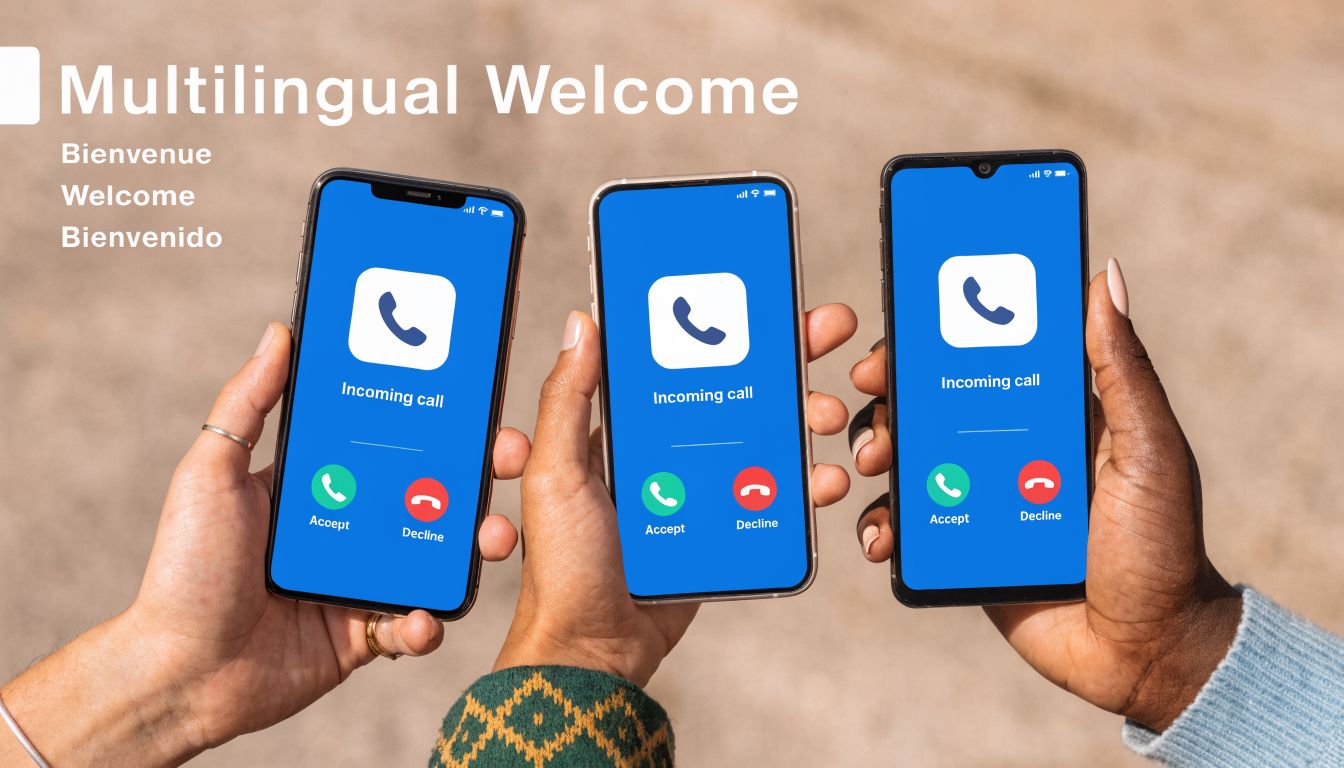
If your callers speak more than one primary language, your voicemail should acknowledge that immediately. A multilingual personal voice mail greeting doesn't need to be complicated. It needs to be clear, correctly recorded, and backed by staff who can respond.
A simple version:
Thank you for calling BrightCare Clinic. For English, press 1. Para español, presione 2.
Or for a smaller service business:
Thank you for calling Rivera Roofing. We serve customers in English and Spanish. For English, press 1. Para español, presione 2. Please leave your name, number, and the service you need.
Inclusion has to be operational, not cosmetic
The biggest mistake here is offering language support in the greeting that your business can't in practice provide. If nobody on your team can return the call in Spanish until next week, don't imply immediate bilingual support.
A good multilingual setup includes:
- Native review: Have a fluent speaker approve the exact wording before you record it.
- Parallel information: The second language should include the same instructions, not a shortened version with missing details.
- Staff readiness: Make sure your team knows how to handle the callback path for each language offered.
This section also applies to accessibility. Speak slower than you think you need to. Enunciate names, appointment instructions, and callback requests. That's not just polite. It reduces errors.
Practical example
A pediatric clinic in a bilingual community should mention appointment requests, refills, and urgent concerns in both languages. A landscaping company might offer language selection and ask callers to leave their address and service request. Keep it aligned with the actual calls you receive most often.
8. AI-Enhanced Smart Greeting with Call Screening
Traditional voicemail starts after you've missed the moment. Smart call screening tries to save the moment before it's lost.
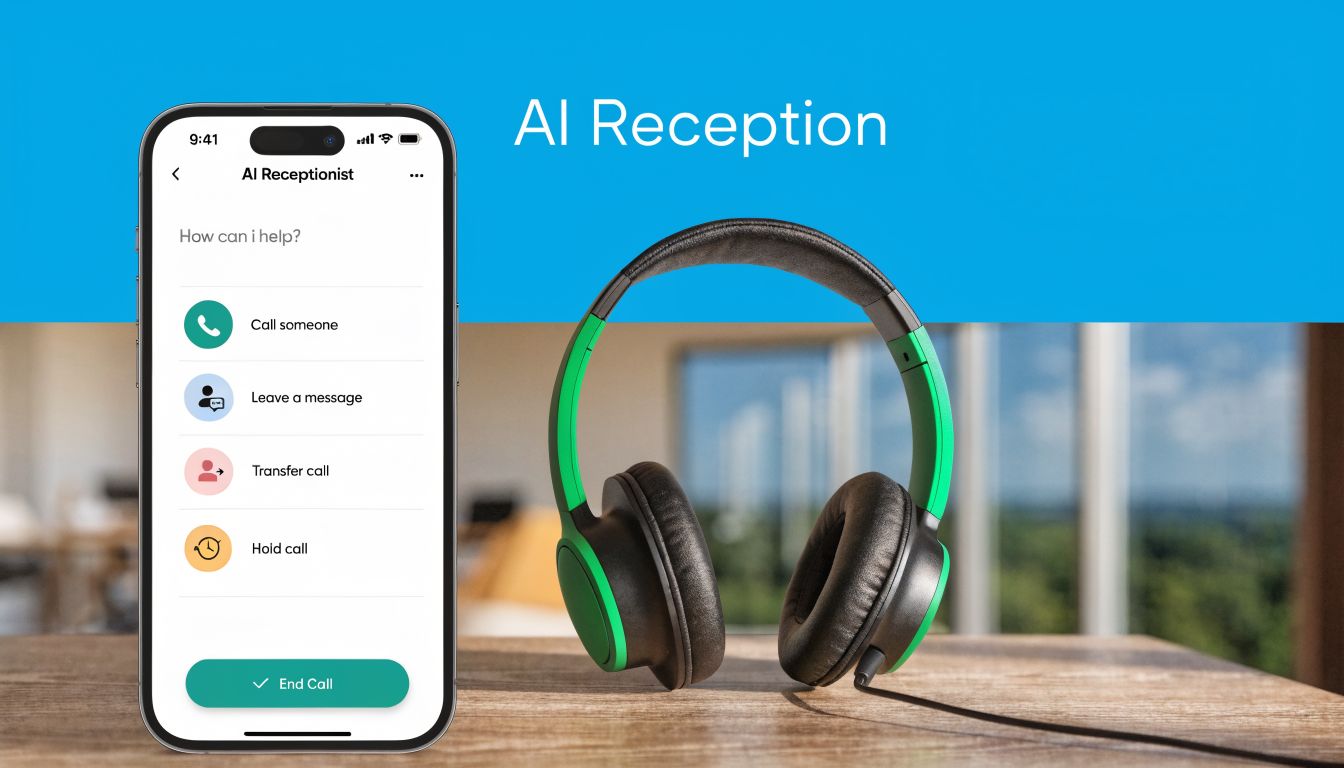
A modern setup sounds less like a recording and more like a guided conversation:
Hi, thanks for calling Northgate Plumbing. I'm here to help. Are you calling about a leak, maintenance, or a new installation?
From there, the system can gather the caller's name, urgency, address, or preferred appointment time before handing the call to a person or logging the request properly. If you want to understand that handoff model, call screening service workflows are the operational piece that makes this less chaotic than a standard voicemail tree.
The practical advantage is simple. The caller doesn't have to guess what details to leave. The system asks for them.
Where AI fits and where it doesn't
AI screening works best for common call types with predictable next steps. Plumbing, HVAC, dental, med spa, legal intake, insurance inquiries, and franchise scheduling are good fits. It works less well if every call is emotionally sensitive, highly bespoke, or full of edge-case exceptions.
The product context for Recepta.ai is relevant here because the platform combines conversational AI with human escalation and integrates with 2,500+ tools. In practice, that means a business can customize the opening script, capture information in real time, and escalate when a human needs to take over.
Don't replace a thoughtful greeting with a robotic one. Replace dead-end voicemail with guided intake.
This is also where the economics change. In the business context provided for this article, users report up to 30% more qualified leads, 80% cost savings versus in-house reception, and a 15× ROI when missed calls are handled more effectively through AI-assisted workflows rather than dropping straight to voicemail.
Here’s a quick visual example of the experience in action:
Practical example
A dental office can let AI separate emergencies from appointment requests and gather insurance basics before transfer. A cleaning company can use it to ask for square footage, frequency, and preferred days. That makes the follow-up call shorter and far more productive.
8-Point Comparison: Personal Voice Mail Greetings
| Greeting Type | 🔄 Implementation Complexity | ⚡ Resource Requirements | ⭐ Expected Outcomes | 📊 Ideal Use Cases | 💡 Key Advantages |
|---|---|---|---|---|---|
| Professional Service Standard Greeting | Low, simple script, basic phone system setup | Minimal, recording equipment, occasional updates | High professionalism and trust; clear callback expectations | Law firms, finance, medical and dental practices, insurance | Establishes credibility; reduces caller confusion |
| Warm & Approachable Welcome | Low–Medium, needs natural delivery and tone coaching | Low, voice talent or trained staff; occasional refresh | Increased rapport and message detail; higher caller comfort | Small businesses, home services, wellness, franchises | Builds connection; encourages detailed voicemails |
| Time-Specific Availability Greeting | Medium, requires time-based messages or automation | Medium, scheduling system or dynamic recordings | Clear availability info; fewer frustrated callers and missed expectations | Multi-location businesses, seasonal providers, clinics | Sets accurate expectations; reduces missed callbacks |
| Call Routing & Department-Specific Greeting | High, IVR/menu design and professional setup | High, PBX/IVR system, maintenance, regular updates | Faster routing to correct teams; improved first-contact resolution | Large firms, multi-department practices, call centers, franchises | Directs callers efficiently; reduces individual message volume |
| Value Proposition & Service Highlight Greeting | Low–Medium, marketing copy integration into greeting | Low, copywriting and periodic updates | Reinforces brand and promotes services; converts prospects | Competitive markets, home services, real estate, specialty practices | Uses voicemail as marketing touchpoint; differentiates brand |
| Callback Commitment & Urgency Greeting | Low–Medium, requires alignment with operations | Medium, staff/process reliability to honor commitments | Increased caller confidence; more detailed messages and urgency | Emergency services, home repair, healthcare, insurance | Demonstrates responsiveness; motivates prompt callbacks |
| Multilingual & Inclusive Greeting | Medium–High, multilingual recordings and routing logic | High, native speaker recordings, translations, upkeep | Broader reach; improved satisfaction and reduced miscommunication | Diverse urban markets, healthcare, legal, real estate | Increases accessibility and cultural competence |
| AI-Enhanced Smart Greeting with Call Screening | High, AI integration, training, and testing required | High, platform costs, integrations, monitoring and updates | Significant reduction in voicemail; 24/7 handling; more qualified leads | High call volume businesses, franchises, healthcare, home services | Automates lead capture/scheduling; scalable and reduces staffing burden |
Beyond the Greeting Make Voicemail Obsolete
A better personal voice mail greeting fixes a real problem. It gives callers confidence, sets expectations, and increases the odds that they leave useful information. For many small businesses, that's a meaningful upgrade right away.
But voicemail is still a delay. The caller wanted help now, not a promise of help later. If your business depends on speed, missed calls turn into missed estimates, missed appointments, and missed trust.
That matters even more because voicemail remains such a common endpoint in phone communication. The broader market continues to grow, and businesses are still investing in more customized voicemail experiences rather than abandoning the channel entirely. At the same time, the strongest operational improvement often comes from reducing how often callers need to leave a message at all.
In practice, the best system is layered. Start with a clean, current greeting. Make it specific to your business. Ask for the information your team needs. Then build a live-answer path for the calls you can't afford to lose.
For some businesses, that means tighter routing, better after-hours coverage, or multilingual support. For others, it means adding AI so the caller hears an interactive welcome instead of a dead-end recording. That shift is especially useful when your team is in the field, in treatment rooms, in court, or otherwise unavailable for long stretches.
If you stay with voicemail, keep these standards in place:
- Keep it current: Old hours, outdated names, and stale promotions make the business sound neglected.
- Keep it short: Callers should know what to do within seconds.
- Keep it useful: Ask for the details that help you return the call prepared.
- Keep it honest: Promise only the callback speed you are able to deliver.
If you're ready to move past voicemail as your default safety net, an AI receptionist is one practical next step. Recepta.ai is one option built around that model. It combines conversational AI with human support, handles call intake around the clock, syncs with business systems, and escalates when a person should step in. For teams that are tired of phone tag, that changes the role of voicemail from primary backup to occasional exception.
The greeting still matters. It always will. But the key success is building a phone experience where fewer callers ever need it.
If you want fewer missed opportunities and a more responsive phone experience, take a look at Recepta.ai. It gives businesses a way to answer calls with customized AI greetings, capture lead details, book appointments, and escalate to humans when needed, so voicemail becomes a backup instead of the main plan.