
What Do Receptionists Do? Roles, Skills, & AI in 2026
A customer calls while your team is in the field, with a patient, or buried in paperwork. No one picks up. The caller hangs up, tries a competitor, or starts the relationship annoyed before you've even spoken.
That's why the question what do receptionists do matters more than most small business owners think. A receptionist isn't just the person at the front desk. They protect your first impression, keep work moving, and stop small communication failures from turning into lost revenue, scheduling problems, or security issues.
In practice, the front desk is less like a chair near the entrance and more like an air traffic tower. Calls, visitors, messages, appointments, deliveries, and urgent interruptions all pass through one function. If that function is strong, your business feels responsive and organized. If it breaks, customers feel the problem immediately.
Your First Impression Is Your Only Impression
The fastest way to understand the receptionist's role is to look at the moment things go wrong. A missed call from a new HVAC lead. A patient who walks into a clinic and isn't acknowledged. A legal client who arrives unsure where to go and starts wondering whether the firm is as organized as it claims.
Those moments feel small, but customers use them to judge the whole business.
Receptionists sit at the front edge of operations. They greet people, answer phones, route questions, and keep traffic moving so owners and specialists can do their actual jobs. The role is common for a reason. The Bureau of Labor Statistics receptionist occupation profile notes that receptionists are a cornerstone of office administration, with over 1 million employed in the U.S. and 128,500 job openings expected annually due to turnover, even though projected growth is low.
That tells you something important. Businesses keep needing this function, even when staffing it is hard.
Practical rule: If customers regularly meet your voicemail, your front desk isn't an admin issue. It's a sales and service issue.
A busy owner usually sees the receptionist as overhead until the role is missing. Then the gaps show up everywhere. Calls don't get returned. Appointments get booked incorrectly. Visitors wait too long. Staff get interrupted because no one is screening routine questions.
Think of the receptionist as the business function that turns incoming attention into orderly action. Someone reaches out. Someone arrives. Something needs to be scheduled, logged, redirected, or solved. The receptionist makes sure that next step happens cleanly.
The Three Core Functions of a Receptionist
Most job descriptions bury the role in a long list of chores. That makes the work sound simple when it isn't. A receptionist usually owns three business functions at once.
Director of first impressions
This is the visible part of the job. The receptionist welcomes visitors, checks them in, tells them where to go, and sets the tone for the interaction. In a clinic, that might mean calmly greeting a nervous patient. In a law office, it might mean handling a walk-in client with privacy and professionalism. In a plumbing company, it may be less about foot traffic and more about how the first phone call sounds.
Small details shape trust fast. Is the customer acknowledged right away? Does the office feel organized? Does the person greeting them sound confident?
A good receptionist makes the business feel under control before any technical work begins.
Hub of communication
The role of a receptionist is frequently underestimated. Receptionists answer and direct calls, take messages, respond to routine questions, and make sure information reaches the right person. They often become the filter between your team and a stream of interruptions.
The OysterLink receptionist demographics overview notes that the profession is 91.6% women and that average tenure is only 1 to 2 years. For owners, that short tenure matters because communication quality can drop every time a new person learns the phones, the scripts, the team, and the customer base.
If you want a deeper task-by-task view, this guide to front desk receptionist duties is useful. It helps separate core communication work from the extra clerical tasks owners often pile onto the role.
When front desk turnover is high, customers don't experience "staffing issues." They experience confusion.
Guardian of operations
Receptionists also keep the machine running. They schedule appointments, maintain calendars, enter customer details, sort mail, handle deliveries, and support light admin work like filing and data entry. In many offices, they also watch who comes in and out.
Here are common tasks that fall into this pillar:
- Scheduling work: Booking appointments, avoiding double-booking, and matching the right person to the right time slot.
- Maintaining records: Entering customer data accurately so the next staff member isn't working from incomplete notes.
- Managing physical flow: Checking in visitors, handling deliveries, and keeping the reception area usable and professional.
- Supporting the team: Relaying urgent updates, flagging conflicts, and reducing interruptions for specialists.
One useful way to think about the role is this. The receptionist doesn't just do tasks. The receptionist reduces friction. Every handoff becomes smoother when one person is managing the front edge of the business well.
A Day in the Life of a Front Desk Professional
A receptionist's day rarely unfolds in a straight line. It comes in waves. The phone rings while a visitor walks in. A technician needs a schedule update. A client wants to reschedule. A delivery arrives. An internal message needs to get to the right person now, not later.
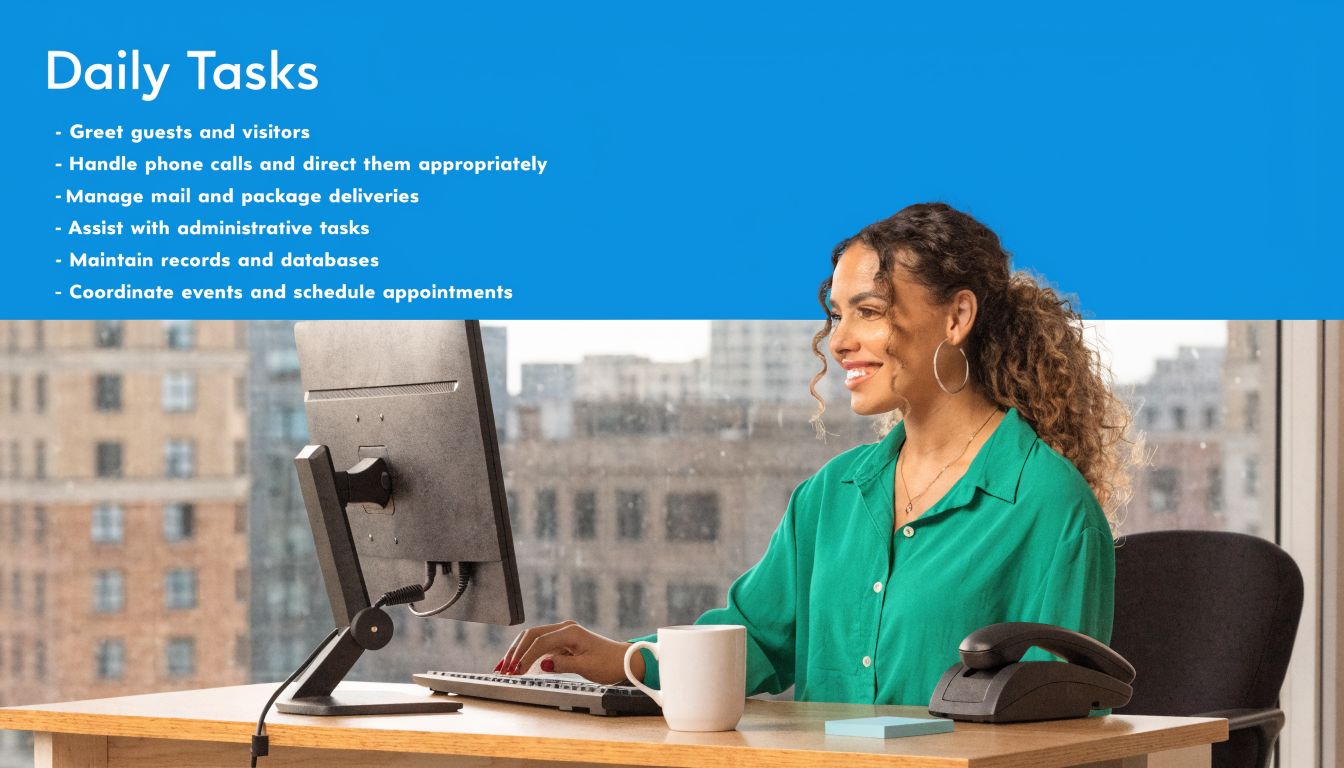
Let's follow a fictional receptionist, Sarah, through a normal workday in a busy service business.
Morning rush
At opening time, Sarah isn't easing into the day. She's triaging. Overnight voicemails need review. The calendar needs a quick scan for conflicts. The first calls start coming in from customers who want the earliest available slot.
In high-volume businesses, receptionists can spend over 60% of their day on inbound calls, often handling 50 to 100 calls daily. The Indeed employer guide to receptionist responsibilities also notes that triaging those calls within 30 seconds can reduce abandonment by 15% and cut appointment no-shows by 20% to 30%.
That sounds abstract until you translate it into a real morning.
A customer calling about a leaking pipe doesn't want a long hold. They want to know two things fast: "Can you help?" and "When can someone come?"
Sarah answers a new inquiry, captures the address, checks the schedule, and routes the issue correctly. Mid-call, a walk-in visitor arrives. She greets them, lets them know she'll be right with them, finishes the urgent booking, then checks the visitor in without making either person feel brushed off.
Midday admin and interruption management
By late morning, the work shifts from pure intake to coordination. Sarah confirms upcoming appointments, updates customer records, and passes along messages that matter while filtering out noise that doesn't.
That middle part of the day is where strong receptionists save teams from death by interruption. Instead of every call reaching a provider, attorney, or field manager, Sarah screens the issue first. She can answer common questions, route billing concerns, and hold non-urgent requests until the right person is free.
Here's a quick visual explainer if you want to see the role in action:
Afternoon problem-solving
The afternoon usually brings exceptions. A client is late. A provider's schedule changes. A technician calls in with a delay. Someone wants to squeeze in an urgent appointment.
Sarah's job isn't just to "answer phones." It's to absorb disruption and keep the day usable.
- When timing slips: She updates affected customers before frustration builds.
- When details are missing: She gathers the information the team will need later, instead of creating another callback.
- When someone is upset: She de-escalates, acknowledges the issue, and routes the case to the right person.
"I can help with that. Let me confirm the schedule and give you the next available option."
That kind of sentence does more than sound polite. It signals ownership.
End-of-day reset
Before closing, Sarah checks the next day's appointments, flags gaps, confirms messages were passed on, and makes sure the front desk doesn't hand tomorrow a pile of unfinished confusion.
That's the hidden value of the role. A strong receptionist doesn't just survive today's traffic. They prepare tomorrow's flow.
How Receptionist Duties Vary By Industry
The core function stays the same across businesses. Receive, route, schedule, document, protect. But the details shift a lot by industry. That's where many owners get hiring wrong. They look for a pleasant personality when they should also be looking for workflow fit.
Healthcare and wellness
In a clinic or dental office, the receptionist manages a high-trust environment. People arrive anxious, late, confused about paperwork, or unsure whether their insurance information is current. The receptionist has to keep things moving without sounding rushed.
That means greeting patients, handling check-ins, updating records, coordinating schedules, and protecting sensitive information. In many practices, the front desk is also the place where errors create larger compliance problems.
If you're evaluating that environment, this overview of a medical office answering service helps show how healthcare communication workflows differ from a standard office front desk.
A practical example: a patient calls to reschedule, asks about a form, and mentions a medication concern in the same conversation. The receptionist has to separate scheduling from clinical issues and send the medical question to the proper person without creating a privacy problem.
Home services
In HVAC, plumbing, pest control, cleaning, or electrical work, the receptionist often acts like a traffic controller for revenue. The role is less about walk-in visitors and more about lead intake, urgency assessment, dispatch coordination, and schedule protection.
A good home services receptionist knows the difference between a same-day emergency and a standard estimate request. They collect the details the field team needs, not just a name and phone number. They also manage the expectation side of the business. If a technician is delayed, customers want an update before they start calling back angry.
Common duties in this setting include:
- Capturing leads: Logging service type, location, urgency, and contact details accurately.
- Supporting dispatch: Matching incoming jobs to available technicians and realistic time windows.
- Protecting the calendar: Avoiding messy overbooking and reducing wasted drive time.
- Handling repeat questions: Hours, service areas, arrival windows, and pricing process.
Owners feel the impact fast because every intake mistake touches the job board.
Legal and professional services
Legal offices need a different kind of front desk discipline. The receptionist must sound calm, organized, discreet, and consistent. A client may be calling during a stressful life event. They may also be sharing confidential information before speaking with an attorney.
This environment rewards precision. Names, dates, callbacks, document handling, and message routing all need to be clean. A receptionist who gets casual with details can create confusion for attorneys and discomfort for clients.
The Workforce receptionist job description guide notes that in professional services and franchises, receptionists are part of the security protocol, controlling building access and monitoring visitor logs. That function can mitigate unauthorized entry risks by up to 40% and is important for compliance standards such as HIPAA or GDPR.
In legal and professional settings, the receptionist isn't just welcoming visitors. They're controlling access, protecting confidentiality, and preserving trust.
What stays the same
Even though the workflows differ, owners in every industry should ask the same practical questions when defining the role:
| Question | Why it matters |
|---|---|
| Who contacts us first and why? | It shapes scripts, systems, and training. |
| What information must be captured correctly every time? | It reduces errors downstream. |
| Which requests need empathy and which need speed? | It helps separate routine tasks from sensitive ones. |
| Where can a front desk mistake create risk? | It reveals compliance, safety, or revenue weak points. |
The best receptionist for your business isn't always the friendliest voice. It's the person, or system, that can handle your specific operating reality cleanly under pressure.
Comparing Your Front Desk Options
Once you understand the job, the next question is operational. Who should handle this function? Most small businesses end up choosing between three models: a traditional in-house receptionist, an outsourced or virtual service, and an AI receptionist.
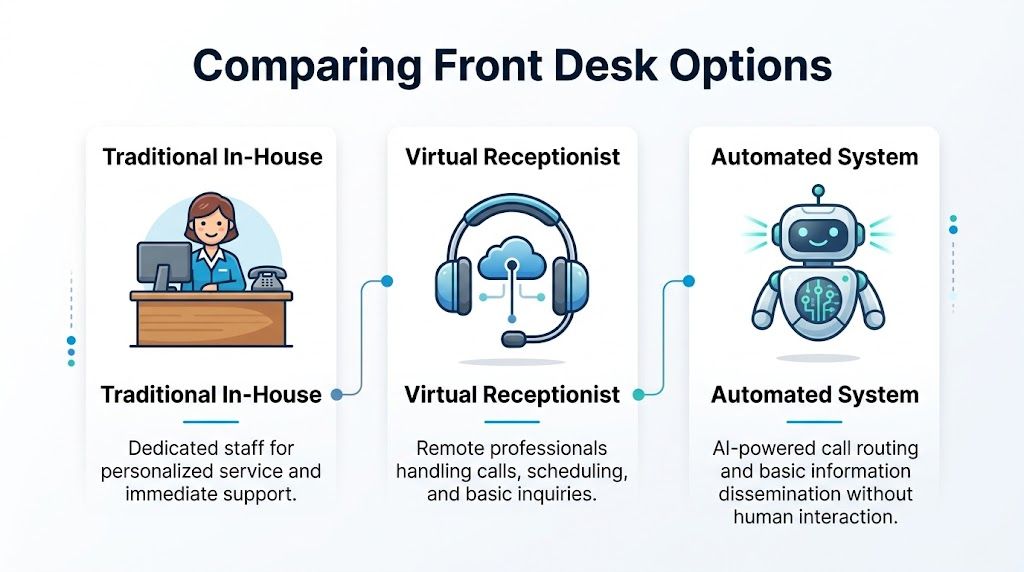
The right answer depends on call volume, budget, hours, complexity, and how much management attention you can realistically give the front desk.
Traditional in-house receptionist
This model gives you direct control. One person learns your customers, your team, and your office rhythm. For businesses with steady daytime volume and lots of in-person traffic, that's often valuable.
The downside is fragility. If that person is out, quits, or burns out, service quality drops fast. The Homebase article on receptionist job descriptions notes that receptionist turnover can cost 50% to 200% of annual salary once you account for hiring, training, and lost revenue from service gaps.
That cost isn't just payroll-related. It's operational instability.
Outsourced or virtual receptionist service
This option gives you human coverage without hiring directly. A remote team can answer calls, book basic appointments, and handle common inquiries, often across longer hours than one in-house employee can cover.
This can work well if your main need is phone coverage rather than in-person reception. It usually reduces hiring burden too. The tradeoff is distance from your day-to-day reality. If scripts are weak or updates aren't shared quickly, customers may get generic answers.
If you're weighing providers, this roundup of the best virtual receptionist options for small business can help frame the decision criteria.
AI receptionist
An AI receptionist handles repetitive front-desk work through automated conversation, routing, scheduling, and lead capture. This model is useful when speed, consistency, after-hours coverage, and scale matter most.
It isn't a fit for every interaction. Sensitive legal intake, distressed patients, and unusual edge cases may still need a person. But for standard questions and structured workflows, AI can remove a lot of front-desk friction.
The real comparison isn't human versus technology. It's whether your current model can respond consistently when demand spikes.
Receptionist Model Comparison
| Factor | In-House Receptionist | Outsourced/Virtual Service | AI Receptionist |
|---|---|---|---|
| Customer experience | Personal and familiar, especially for repeat visitors | Human interaction, but often less embedded in your team | Consistent for routine interactions, less ideal for emotionally complex cases |
| Availability | Limited to staffed hours | Often broader coverage | Can handle inquiries around the clock |
| Scalability | Harder to scale without adding headcount | Easier to extend coverage | Handles repetitive volume well |
| Management overhead | Highest, because you hire, train, schedule, and backfill | Moderate, because scripts and workflows still need oversight | Moderate upfront setup, lower day-to-day handling for routine tasks |
| Consistency | Depends heavily on the person in the seat | Depends on provider quality and handoff process | Strong for structured tasks and standard questions |
| In-person support | Yes | No | No |
| Best fit | Offices with steady foot traffic and hands-on supervision | Teams needing flexible phone coverage | Businesses with high inquiry volume and repeatable workflows |
The mistake isn't choosing one imperfect model. The mistake is pretending the front desk doesn't need a deliberate operating model at all.
How AI Augments the Modern Receptionist
The old picture of a receptionist sitting at one desk and answering one phone line no longer matches how many businesses operate. Customers call, text, email, fill out web forms, and expect quick answers across all of them. The Indeed career guide on receptionist job descriptions points out that the traditional in-person image is outdated and that modern reception work now includes digital-first workflows across phone, text, email, and AI-powered chatbots.
That shift matters because it changes the job from simple switchboard work to coordination across systems.
What AI should handle
AI works best on the parts of reception that are repetitive, rules-based, and time-sensitive. Think of tasks like answering common service questions, collecting lead details, booking standard appointments, sending confirmations, and routing calls based on clear logic.
That doesn't eliminate the need for people. It narrows where people add the most value.
For example:
- Routine inquiries: Hours, directions, service areas, availability windows.
- Structured intake: Name, issue type, preferred time, location, and callback details.
- Basic scheduling: Booking into available slots on connected calendars.
- Triage and routing: Sending billing, sales, support, or urgent cases to the right queue.
Teams that are already exploring broader automation often use resources like these AI marketing tools to understand where AI fits across customer communication, not just at the front desk.
What people should still own
Humans still matter most when the issue is emotional, ambiguous, high-stakes, or unusually complex. A worried family member calling a clinic, a legal client in distress, or a homeowner furious about a missed arrival window often needs judgment and empathy, not just efficiency.
That's why a hybrid model makes operational sense. An AI layer handles the repetitive first-contact work, then escalates when context or emotion demands it.
One example is an AI receptionist for small business such as Recepta.ai, which handles inbound interactions, appointment scheduling, and lead capture, then passes more sensitive or complex conversations to human support. That setup is less about replacing a receptionist and more about redesigning the front desk so routine demand doesn't overwhelm the people handling exceptions.
Good augmentation removes low-value repetition first. It doesn't remove accountability.
The businesses that benefit most from AI usually have one thing in common. Their front desk is busy enough that inconsistency is already costing them.
Building the Front Desk of the Future
Receptionists do far more than greet people and answer phones. They protect first impressions, keep schedules from breaking, reduce interruptions, support compliance, and help turn inquiries into booked work.
For small business owners, the lesson is simple. The front desk isn't a minor admin role. It's a business function. You can staff it in-house, outsource it, automate parts of it, or blend those approaches. What matters is building a setup that stays reliable when volume rises, staff changes, and customers expect faster responses across more channels.
Frequently Asked Questions About Receptionist Roles
Do receptionists need formal qualifications?
Many receptionist roles are learned on the job. What matters most is communication, organization, professionalism, and comfort with office tools like calendars, email, and customer records systems. In healthcare and legal settings, industry-specific training matters more because privacy and documentation standards are tighter.
What skills make a receptionist effective?
The strongest receptionists combine patience with speed. They listen well, stay calm when several things happen at once, and know how to gather the right details without making customers repeat themselves.
Can receptionists move into other roles?
Yes. Reception work often leads to office manager, executive assistant, client service, scheduling coordinator, intake specialist, or operations support roles. It's a strong foundation because the role teaches communication, prioritization, and workflow discipline.
If you're rethinking how your business handles calls, scheduling, and first-contact customer service, Recepta.ai is worth a look. It combines AI-driven reception workflows with human escalation support, which can help small businesses create more reliable front desk coverage without relying on a single person to catch every call or message.